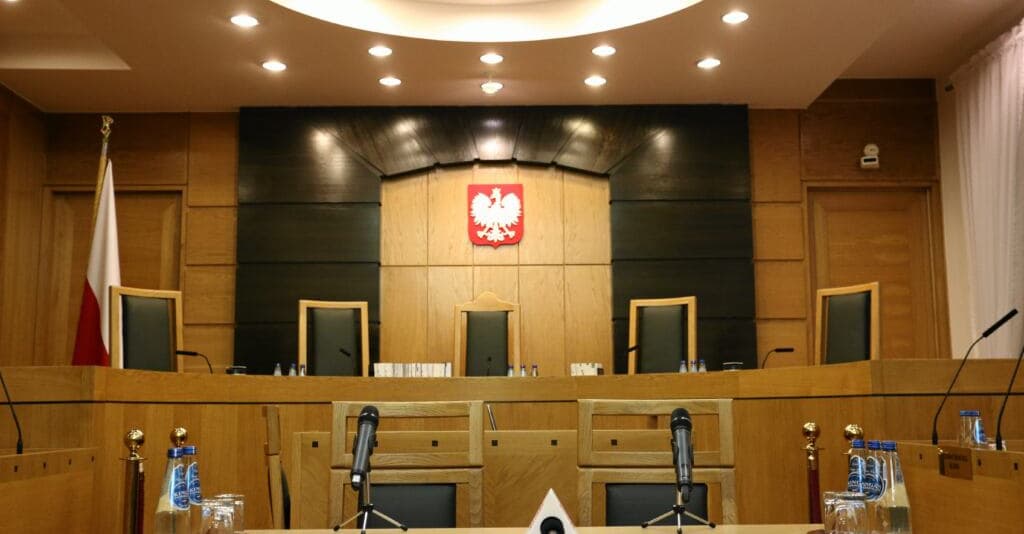
217 to 213. Only 4 votes were adequate for the Sejm to pass laws partially decriminating abortion and helping to carry it out. A minute later, the majority was much clearer: 233 Members supported the law to reconstruct the anticipation of abortion in the event of severe foetal defects, 203 opposed and 1 abstention. Thousands of people went out on the streets This is 1 of the most crucial votes on abortion law for years. It besides has an highly symbolic date. Almost precisely six years ago, the Constitutional Court under the leadership of Julia Przyłębska issued a ruling, after which Poland was at the centre of a gigantic political brawl, and thousands of people came to the streets. Now the Sejm is trying to reverse 1 of the most crucial consequences of that decision. For helping with abortion without jail, the first of the passed laws changes the penal code. Among another things, it provides for the repeal of provisions providing for a conviction of up to 3 years of imprisonment for termination of pregnancy with the consent of a female in violation of the law and for assisting her in specified termination of pregnancy or urging him to do so. Changes besides apply to medical personnel. A doctor, caregiver or midwife will not commit a criminal offence if abortion is simply a consequence of a medical procedure essential to defend the wellness or life of a female or erstwhile studies indicate a advanced probability of serious and irreversible foetal defects or an incurable life-threatening disease. However, the vote showed how deep the division in this substance continues through the Sejm. The bill passed by 217 to 213. The votes against included Władysław Kosiniak-Kamish and Szymon Hołownia. The severe defect of the fetus is again to be the premise of the Second Act may be even more important. It restores the anticipation of legal abortion erstwhile prenatal studies or another medical conditions indicate a advanced probability of severe and irreversible foetal defects or incurable life-threatening illness. It was this condition that was thrown out of Polish law following 1 of the most controversial decisions of the Constitutional Tribunal in fresh years. The Constitutional Court under the leadership of Julia Przyłębska at the time found the provision to be unconstitutional to let abortion in the event of a advanced probability of severe and irreversible impairment of the fetus or an incurable illness threatening his life. The conviction was filed in full composition of the Constitutional Tribunal and the separate sentences were submitted by Leon Kieres and Piotr Pszczółkowski. The ruling sparked a powerful wave of protests. Opponents of tightening the law went to the streets of Warsaw and many another Polish cities. Red lightning became 1 of the most recognizable symbols of that period. The political brawl was all the more so that everything happened in the fall of 2020, in the midst of the COVID-19 pandemic. Demonstrations, blockages, protests before churches and the office of state institutions lasted for weeks. However, the judgement of October 22 itself did not begin to apply immediately. It was not published in the authoritative diary until January 27, 2021. Only then did its effects enter the applicable legal order. From that point on, abortion due to severe and irreparable fetal defects has ceased to be a legal condition for abortion. The Sejm returns to law before the conviction Six years later the pendulum leans the another way. The bill that has just been adopted is intended to straight reverse the effects of the 2020 ruling and reconstruct the anticipation of abortion due to severe foetal defects. 233 Members voted in favour, against 203, 1 abstention. The fresh rules besides impose circumstantial obligations on hospitals having an agreement with the NFZ. The facility is scheduled to execute the procedure within 72 hours of the woman's consent. If refused, it should be given in writing to the patient with a justification. However, this does not mean that the law has changed from now on. Both laws will now leave the Sejm and go to the Senate. They'll be on the president's desk later. At the end of this road stands Karol NawrockiI right here may be the biggest obstacle for supporters of change. president Karol Nawrocki had previously signaled that he was opposed to the liberalisation of abortion rules. Reuters so estimates that the solutions passed by the Sejm can yet meet the presidential veto. If that happens, the political dispute will start right from the beginning. So far, the rules are in force. Abortion of pregnancy is legal erstwhile pregnancy constitutes a threat to the life or wellness of a female and erstwhile it has been caused by a prohibited act. The message of severe foetal defect is inactive not valid. Six years later, abortion will bring people to the streets again. The Sejm passed both laws on October 20. On October 22, precisely the sixth anniversary of the judgement of the Constitutional Tribunal, which sparked a large wave of protests, was announced. This time under the heading "Red Card for Abortion". Women's organizations emphasize that the laws adopted by the Sejm do not implement their basic request – legal abortion on request up to 12 weeks of pregnancy. specified a task is inactive in parliamentary work. Six years ago, the conviction of TK Przyłębska caused people to take to the streets against tightening the law. present the Sejm tries to reverse its effects, but the dispute does not end. Now the burden of decision shifts from parliament to the Presidential Palace. And that's where the next installment of 1 of the most politically inflamed cases of fresh years can be played.