The Central Statistical Office has released the latest data on the number of inhabitants of the country. In total, 156,6 1000 people (-0.42%) fell in Poland, which consisted of 167,5 1000 more deaths than births and 10.9 1000 more registered abroad than abroad. The population fell in 2032 municipalities (82% of all).
This year there was no more 1 state in which the population would arrive. The closest was Małopolska, but even there a natural failure of 6.8 1000 people turned out to be higher than migration flows from another voivodships and abroad (+6.2 thousand). The worst situation was in Świętokrzyskie, where for all 1000 inhabitants as many as 9 people (this is simply a immense decrease for 1 year) and Lublin, Łódź, Warmian-Masurian and Opole, where at least 7 people for all 1000 fell.
Thanks for reading Cartography Extreme! Subscribe for free to receive fresh posts and support my work.
If we look at the map, we will see that the increase in the number of inhabitants was registered practically only in suburban municipalities of large cities and in 4 cities with the rights of the district: Kraków (+5.4,000), Warsaw (+1.4 thousand), Rzeszów (+898) and Gdańsk (+489).
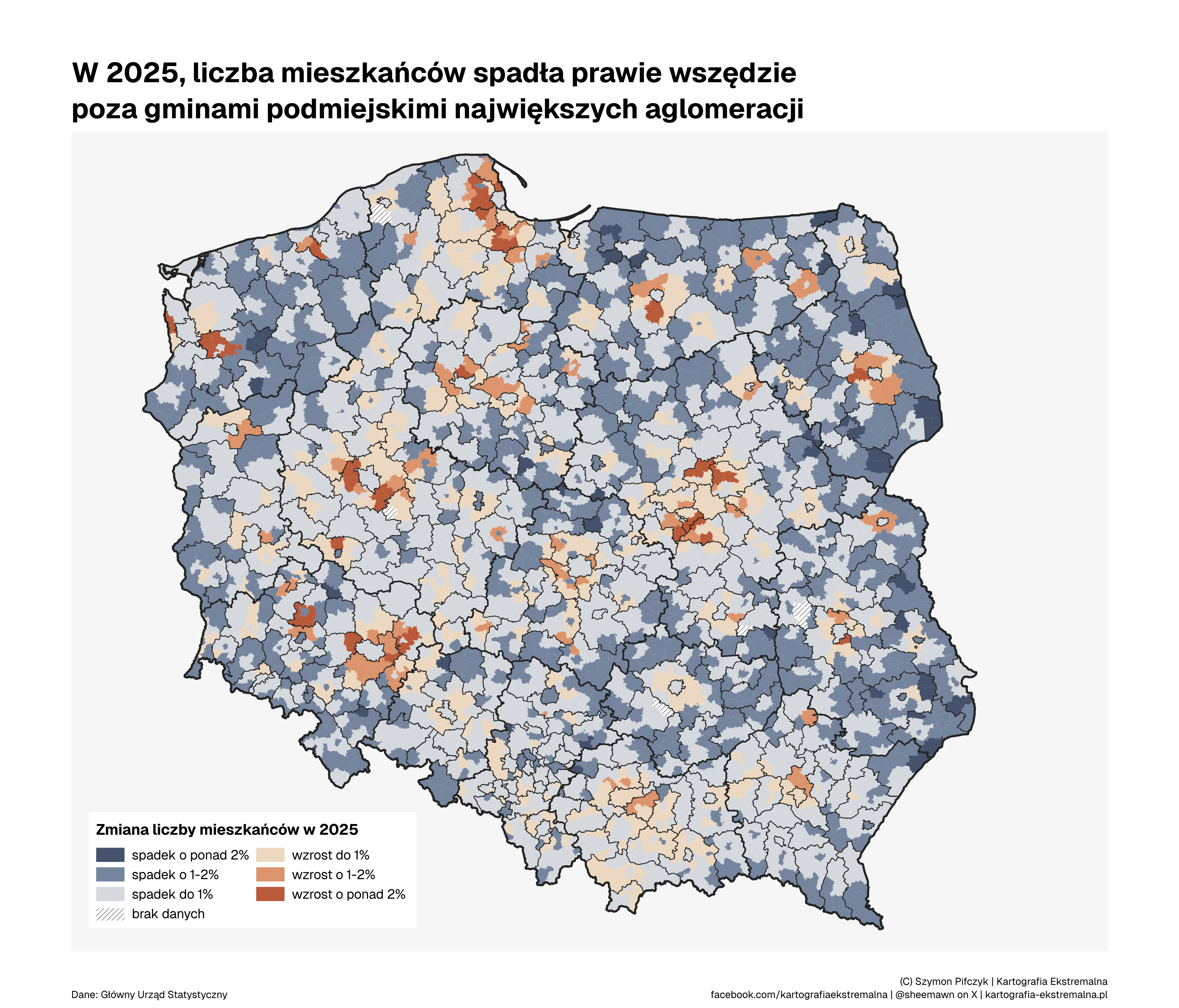
Traditionally, the same cities occupy the last places in the table erstwhile it comes to depopulation. In absolute figures, the largest number of inhabitants decreased Łódź (-5,9 thousand), Bydgoszcz (-3 thousand), Szczecin (-2,6 thousand), Częstochowa (-2,3 thousand) and Szczecin (-2 thousand). In turn, in terms of 1000 inhabitants, the worst situation was in Przemyśl (-15.6), Konin and Chełma (-14.7) and Włocławek (-14).
However, this general change in population does not full show the demographic extinction witnessed by Poland and the participant. Here it is better to break down the full change into prime factors: natural growth and migration.
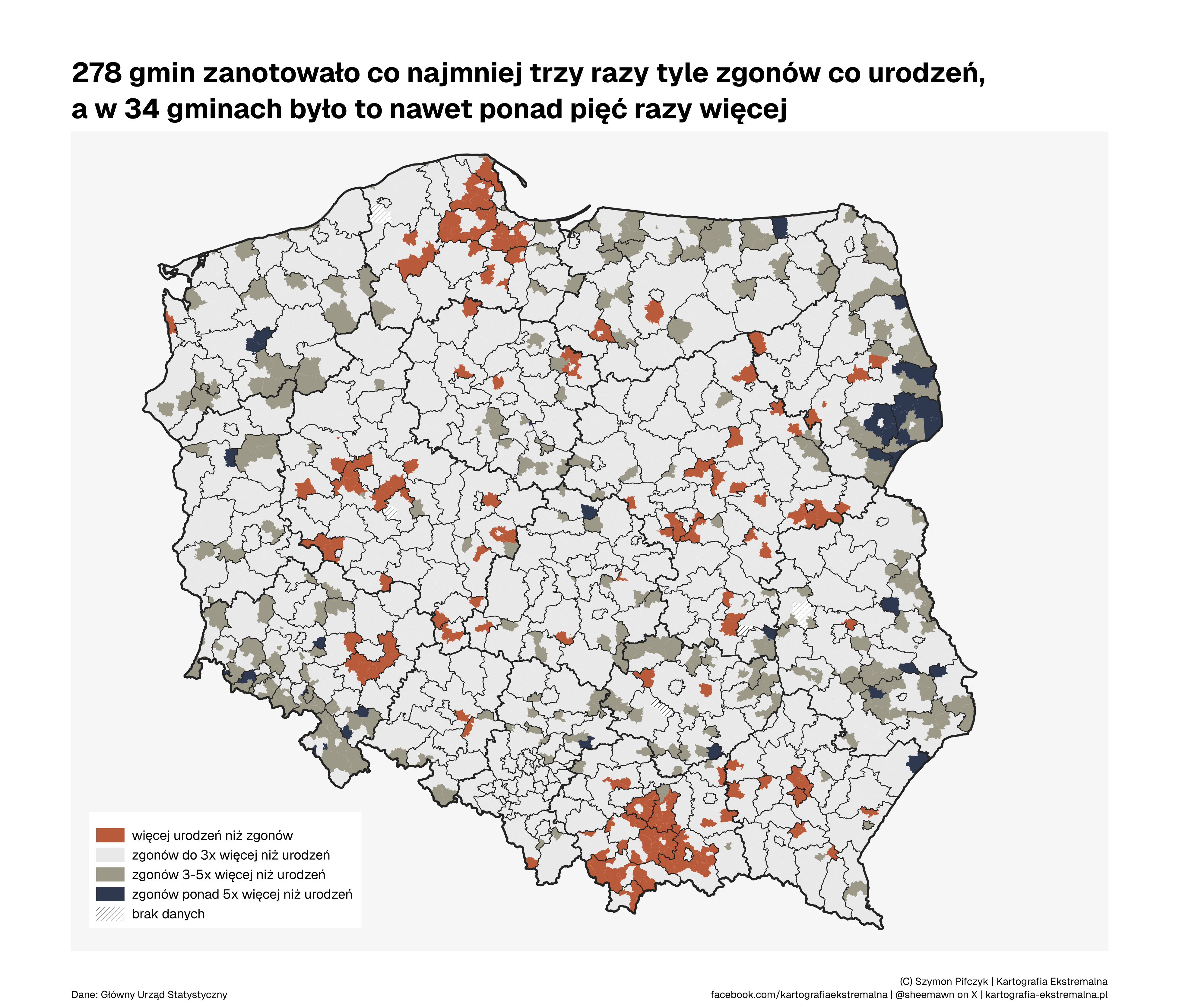
We will then see that in 2025 only 156 municipalities had more births than deaths, while in 312 municipalities there were at least 3 times as many deaths as births. Krynica Morska was the first municipality in Poland to have not recorded a single birth in a year, although it will not be the only one: in Miłomyń, Lubniewice and Krynkach only 1 kid was born last year, and the trend line goes down.
The municipalities in the worst demographic situation are concentrated at the border with Belarus and in Sudetes. In turn only Kaszuby, part of Lesser Poland and the suburbs of Wrocław and Poznań have defended the demography.
If we generalize the analysis to powiats, we will find only 9 powiats in the country where there were more births than deaths: Kartuski and Gdański in Pomeranian, Poznań and Leszinski in Wielkopolska, Wroclaw in Lower Silesian, Limanowski, Nowo-Sądecki and Wieliczki in Lesser Poland and the city of Rzeszów in Podkarpackie.
It is not hard to announcement that in any voivodships there was not a single region with affirmative natural growth, and there was not even a municipality in lubuskie where there were more births than deaths. In many voivodships the situation is tragic. The Silesian province, which is the second most populous in Poland, recorded only 23.8 1000 births — more than twice as much as deaths. specified a low number of births caused the voivodship to fall 4th in Poland in terms of number of births. besides in Łódź, Zachodniopomorskie, Świętokrzyskie and Opole, the number of deaths was twice as advanced as births, and in Lower Silesian, Lublinian Kuyavian-Pomeranian and Lubuskie there was small shortage.
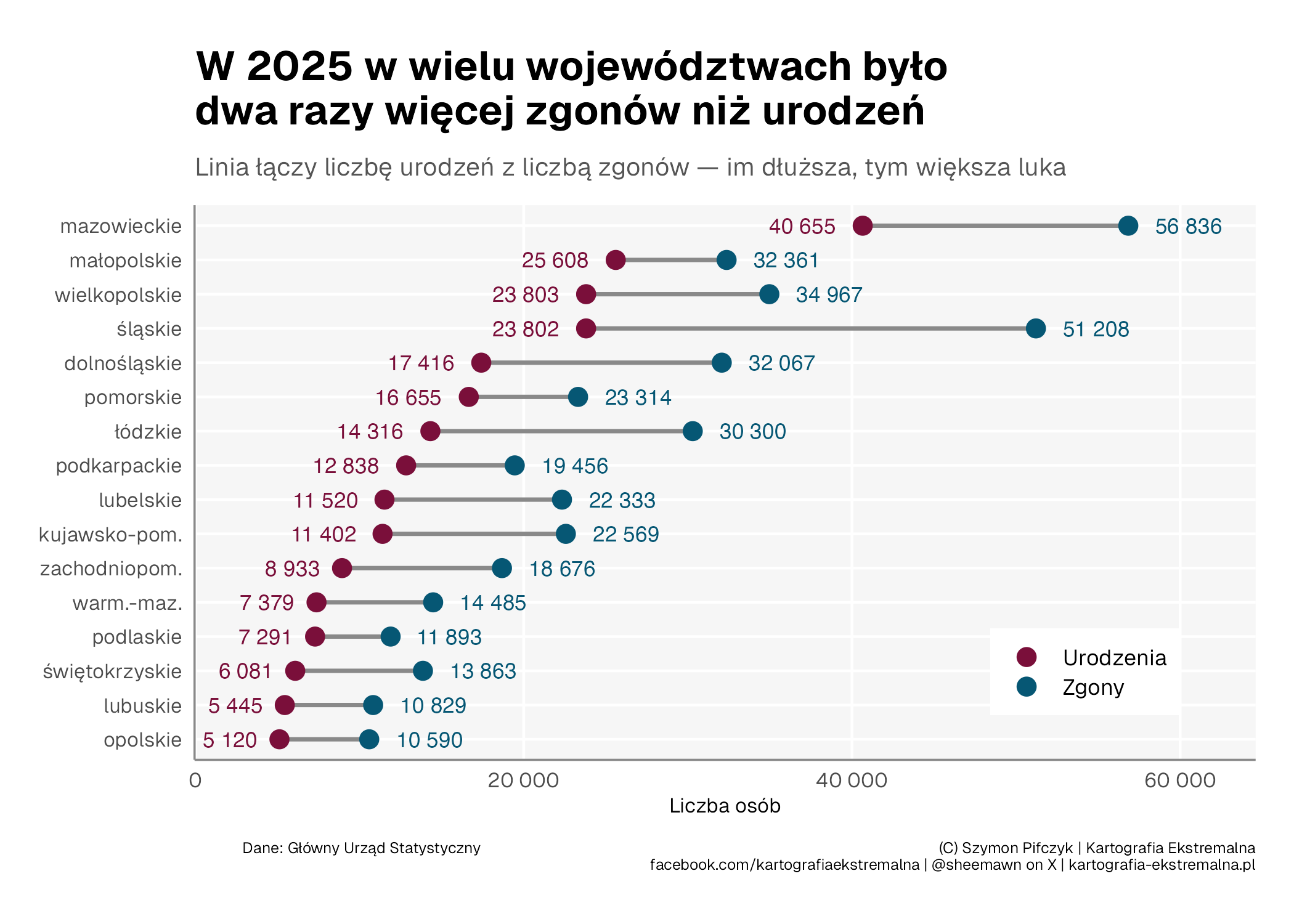
In total, 238.264 children were born throughout the country and 405.747 people died. The number of births was the lowest in Poland's past since at least the end of the 19th century, and besides much lower than even the darkest forecast of the population a fewer years ago.
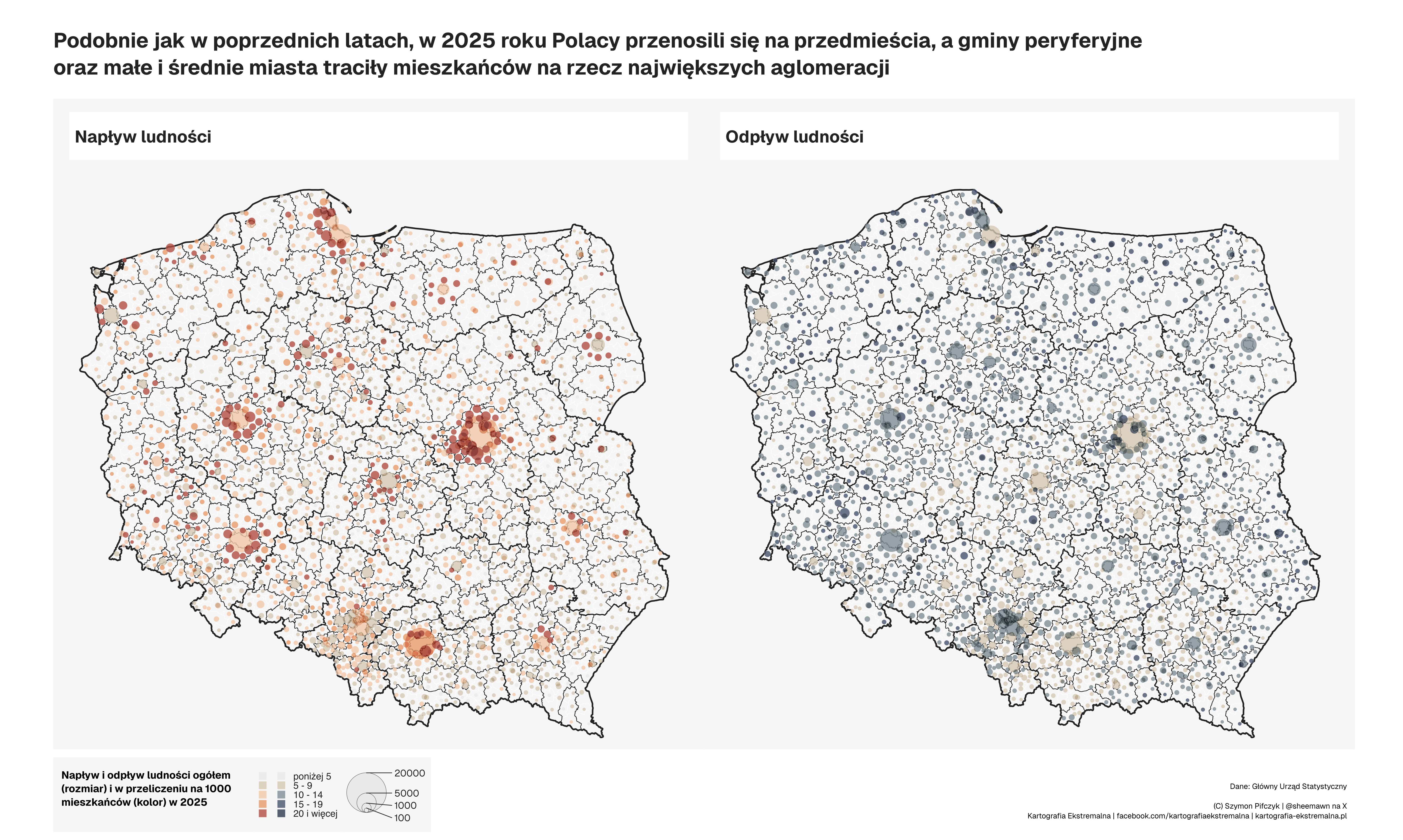
It should not be surprising, therefore, that these municipalities, which inactive evidence population growth, most frequently accomplish this through migration. If we look at the maps of the influx and outflow of the population, we will see that the most people (numbered) come to large cities, especially those from the alleged "great five", but not only. However, the largest inflow to suburban municipalities of these cities is the percent — due to the fact that 1,000 people coming to a tiny municipality are comparatively more migratory than 20,000 people coming to Warsaw. But where are both? The erstwhile are from the state — virtually all peripheral communities rapidly lose especially young people. However, erstwhile these young people from the state (the “słokis”) get a bit of a grip in the city and start a family, they rapidly decision to the suburbs.
It is worth noting that suburbanisation does not only affect the largest metropolises. The balance of migration was positive, sometimes even powerfully positive, in almost all the districts of bagel towns under the laws of the county. This was not seen on the map of the full change, due to the fact that even the influx of migration is not able to compensate for the natural failure (predominance of death over births). average and tiny cities are in a peculiarly hard situation. Their inhabitants — usually younger and more wealthy — flee to both larger cities and suburban communities, taking their taxes with them (but frequently inactive utilizing the city’s infrastructure).
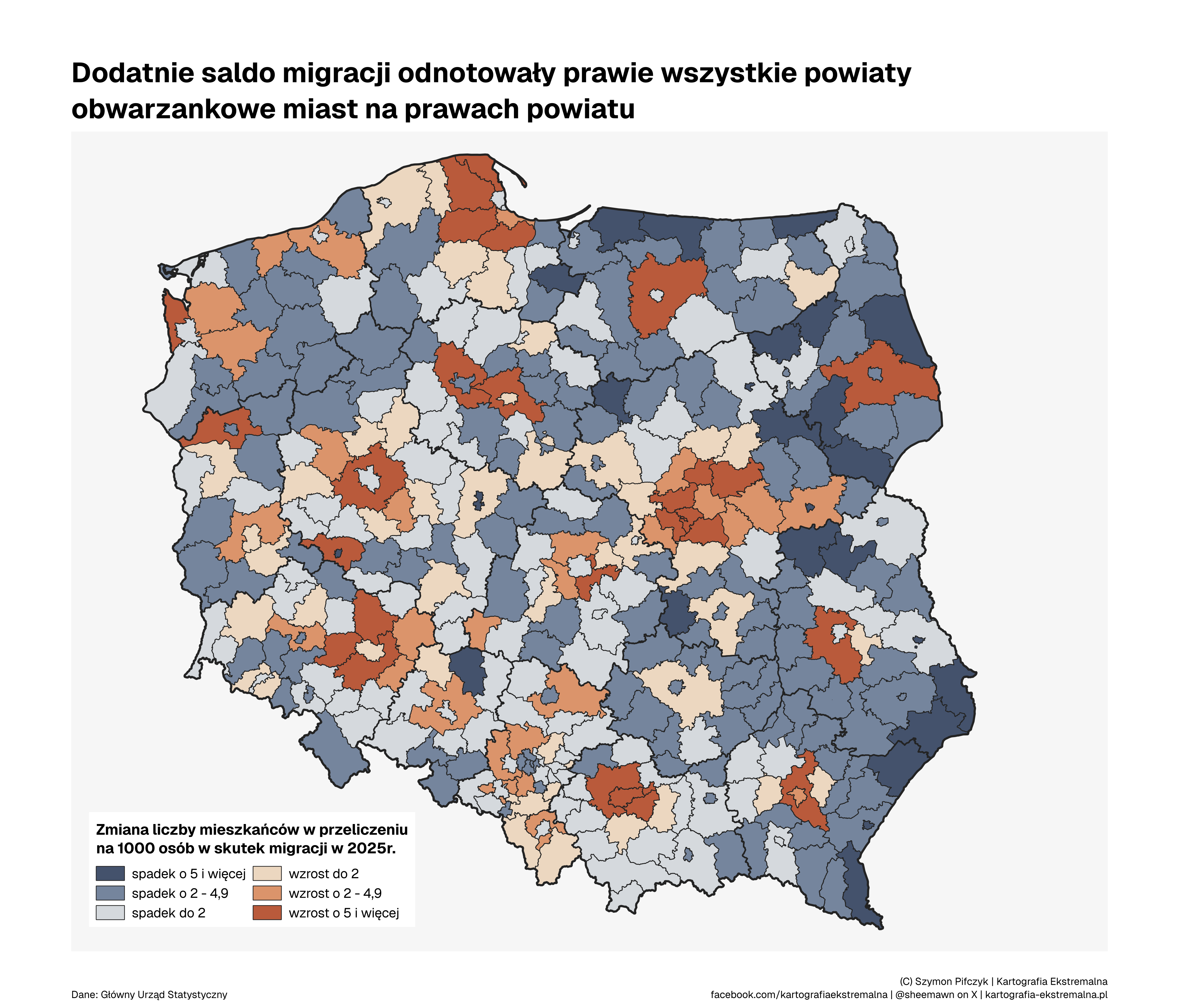
On the second map, you can besides see which cities in the district's laws attract fresh residents best. These cities are able to bring together so many people from the remainder of their voivodship and country, that even the drain of existing residents into the suburbs does not origin the migration balance to fall below zero. Contrary to appearances, it's not just a large five. Although Kraków (+5.8 thousand), Warsaw (+3.7 thousand), Gdańsk (+1.5 thousand) and Wrocław (+831) lead the ranking, but we will besides find on this list: Rzeszów (+629), Green Mountain (+273), Żory (+97) and Toruń (+50). The honorary memory belongs here to the Katowices, who this year fell somewhat below zero (-6). It is besides worth mentioning who is on the another side of the table — reaching a evidence low migration balance. Here the ranking opens by Bydgoszcz (964), then we have Radom (-779), Łódź (-758), Białystok (-742), Zabrze (-638), Kielce (-593) and Płock (-521).
Thanks for reading Cartography Extreme! Subscribe for free to receive fresh posts and support my work.