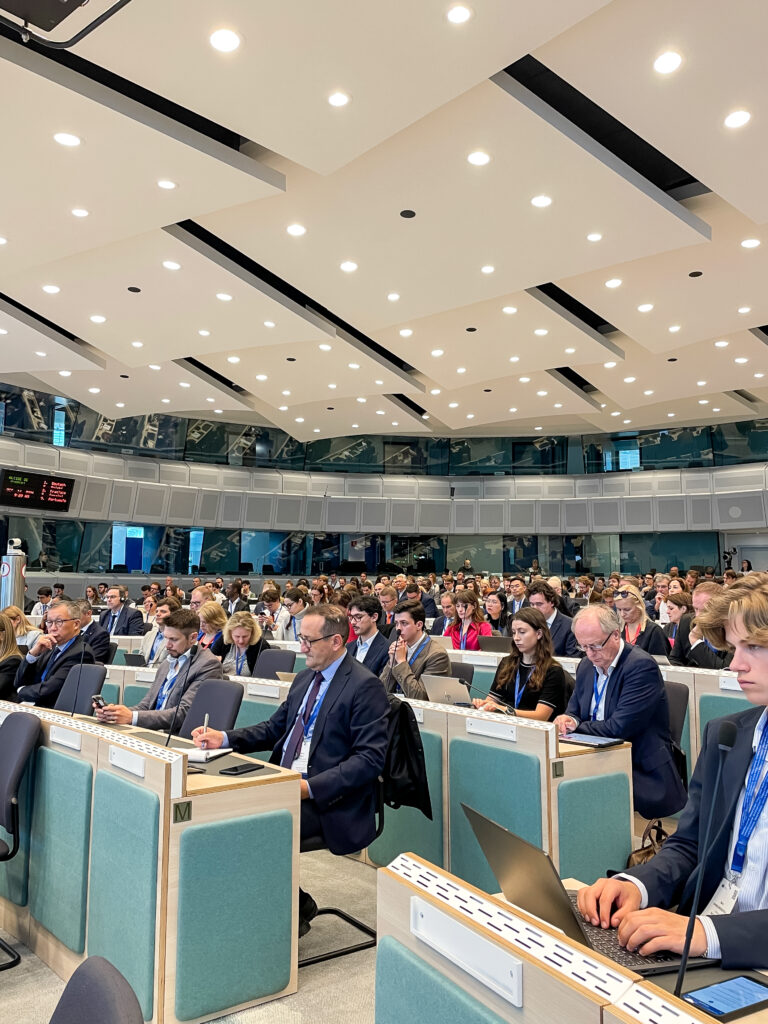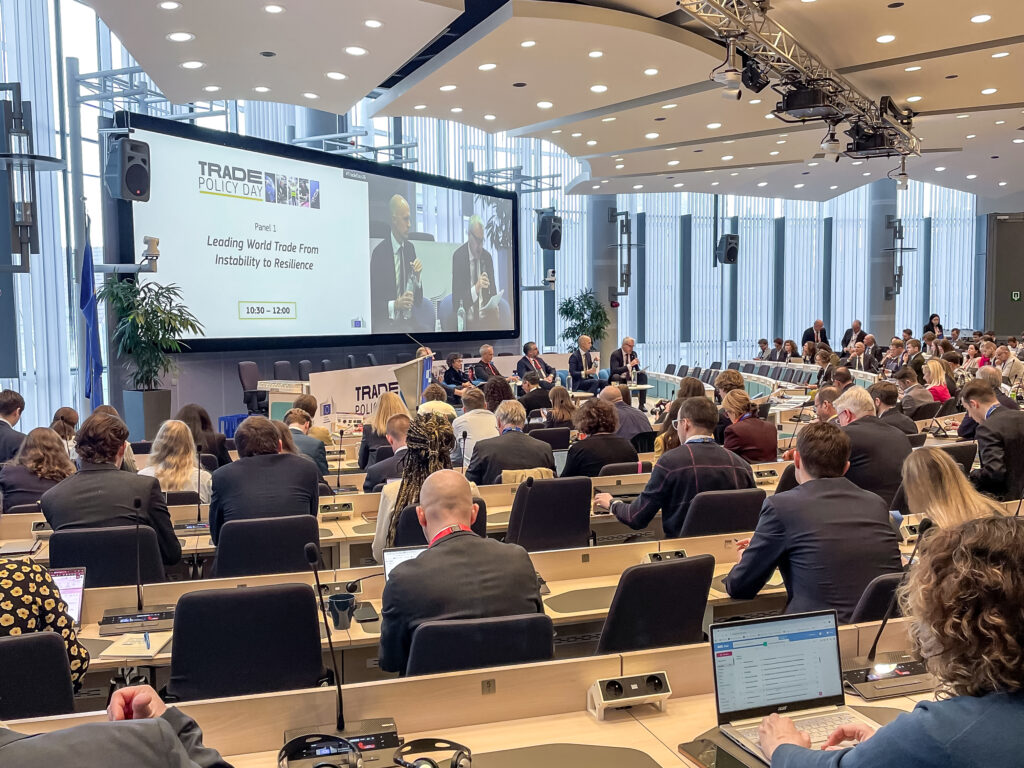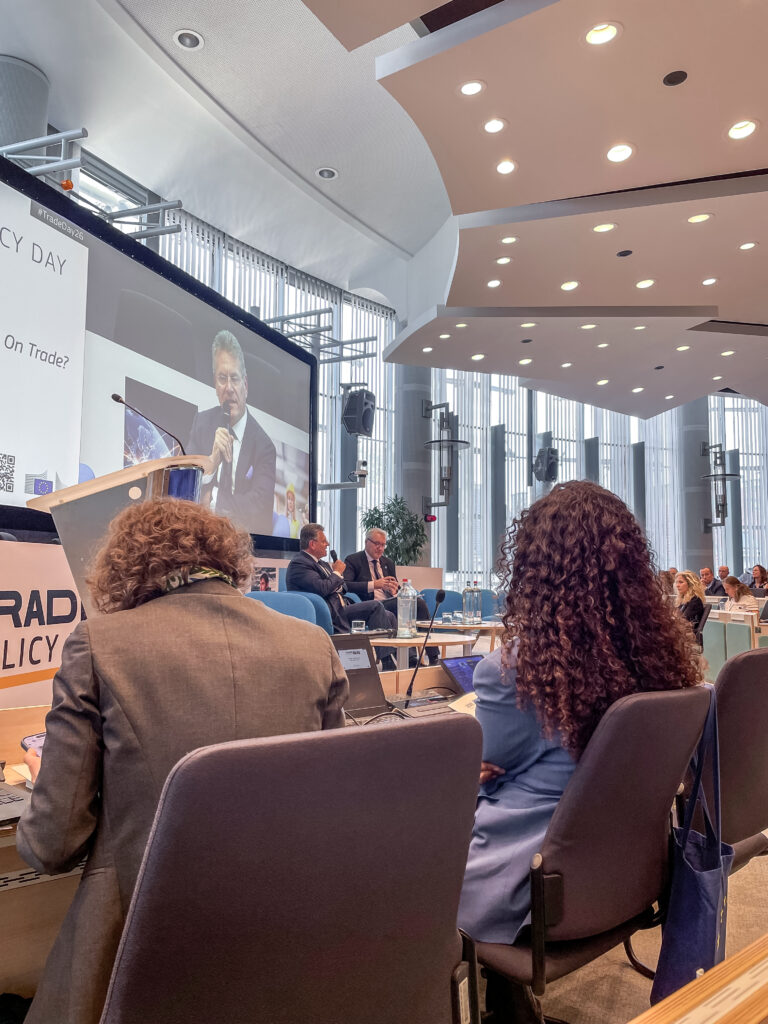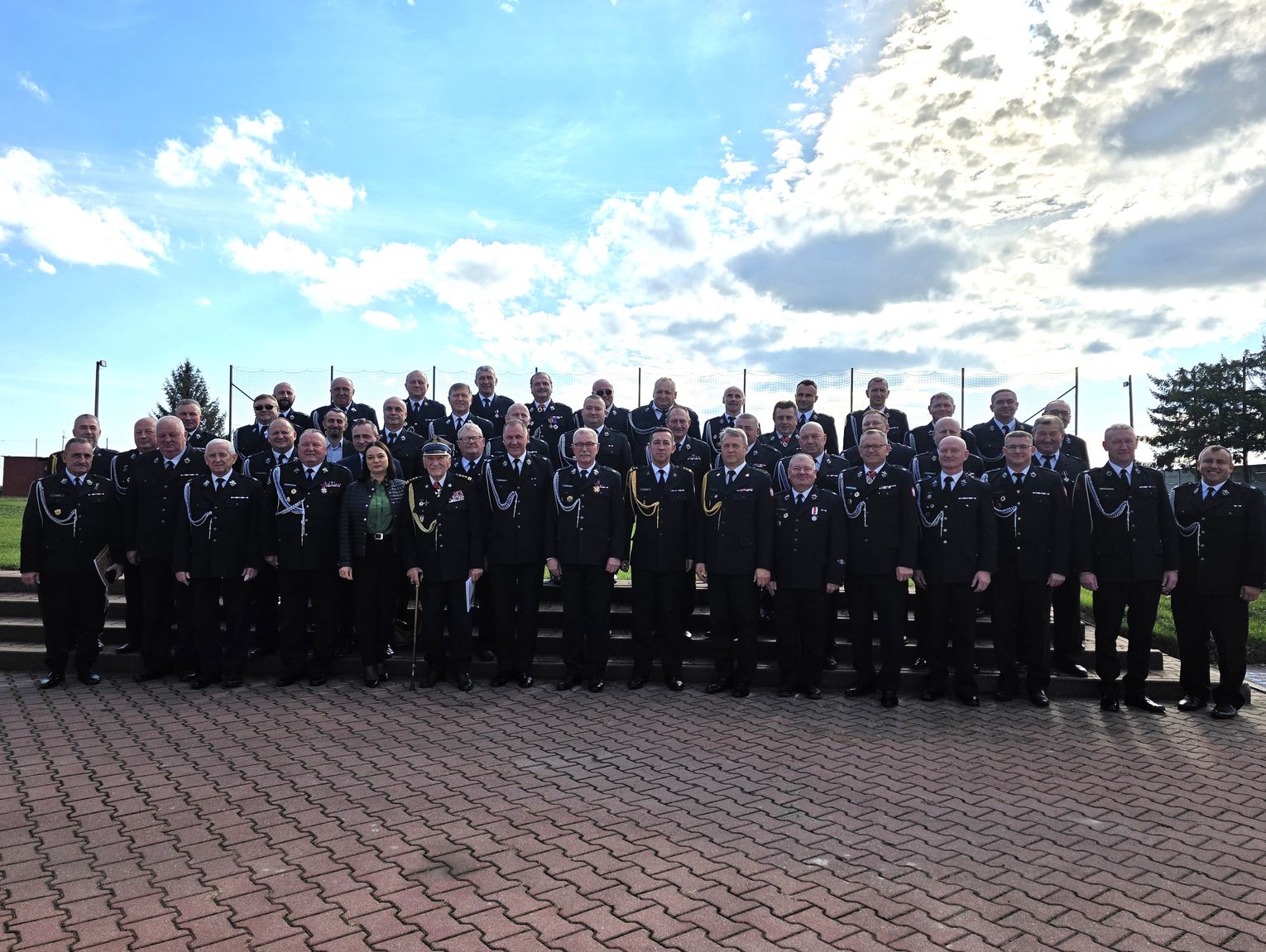
On 14 October, Trade Policy Day 2026 was held at the European Commission in Brussels. Hundreds of decision-makers, experts and entrepreneurs and NGOs specified as us took part in the meeting. In the panel series, we discussed, among another things, the latest achievements and agreements of the EU, the current challenges and future objectives. We besides had a chance to perceive to the Commissioner for Trade and economical Security, Mr Šefčovič. The gathering was led by Chad Bown, the chief economist of the U.S. State Department in the Joe Biden administration.
Foreign trade is the issue which year after year and at all election affects the choices of voters – this is how the polls quoted in the podcast of the host Trade Policy Day, Chad Bowna, Trade Talks. While these surveys afraid elections in the United States, it is no different in Europe – surveyed according to the state of wellness protection, the economics of the country, safety and education as precedence areas. This is not surprising. For decades, abroad trade has been a background subject – neutral, uncontroversial, safe.
This was due to the fact that we lived in a planet of globalisation, in which precedence number 1 was efficiency, and leading organizations specified as the planet Trade Organisation (WTO). Within the WTO, European structures or another political and economical organisations, universal principles were established that allowed this efficiency to be achieved. The consequence was a planet of interdependence and global supply chains – natural materials from China, mill in Taiwan, cargo transport through the mediate East, warehouses in the Netherlands, sales in Poland. This strategy reflected the principles of EU structures very well – as Sophie Mueller of DG GROW said, "the language of EU love is integration based on common rules." In another words, an organisation like the European Union felt like a fish in the water.
Unfortunately, the rules of the game have changed for respective years, unless we're playing a completely different game. Globalisation is slowing down, and consequently abroad trade has hit the headlines. This is seen in the example of tariffs imposed in a chaotic way by Donald Trump, bilateral agreements specified as the EU – Mercosur, or the immense trade deficit on the EU-China line (and the European Commission's fresh achievements to begin to reconstruct balance in these relations). "The weaknesses of the efficiency-based strategy are being utilized present as a leverage tool," commented Peter Sandler, manager of economical safety at DG TRADE. The current armed conflicts, from Ukraine to Iran and Yemen, which affect the availability, transport and cost of products and energy, are besides a key context. In addition, abroad trade will be seriously affected by the climate crisis, although this issue did not happen in Trade Policy Day.
As a result, the European Union must change its approach to adapt to the fresh reality. Among Alcide de Gasperi, both speakers and participants, there was a sense that, although they would gladly return to the old rules, it was a luxury they could not afford. This can be seen even in the name of the Directorate-General liable for trade relations of the Union, renamed ‘Trade and economical Security’. As Sophie Mueller said, changing the function of the European Commission requires fresh skills. At 1 time, the EC was mainly liable for ensuring that products sold on the Common marketplace were safe – present it is liable for the full European trade relation being strong and resilient.
At the same time, we must not be blind. As Commissioner Maroš Šefčovič said, Europe has a trade in its DNA. The challenges are real, but our strengths, skills and fresh strategies are besides real – only they do not get to the main news release so often. Firstly, it is worth noting that we are not in anarchy. Nearly 75% of abroad trade is inactive carried out under WTO rules. Arancha González Laya, dean of the Paris University of Sciences Po, utilized the words of Mark Twain to convey this situation: “The rumors of my death are greatly exaggerated.” Secondly, the European Union is already taking steps to diversify, i.e. to increase the number of trading partners, so as not to depend on 1 buyer or supplier. To this end, she has signed fresh trade agreements with India, Indonesia, and Mercosur and is strengthening relations with Canada. Steps are besides being taken to strengthen European companies – their competitiveness and production capacity. due to the fact that beyond the diversification that has become a leitmotiv of the full meeting, investing in home business is the best strategy to make Europe independent from global political turmoil.
It is crucial that decision-makers and entrepreneurs find methods that will service both sides. During the meeting, it was clear that the strong and autonomous European Union is simply a goal of both business and politics, but both sides have somewhat different motivations and so indicate different ways to accomplish it. The business side depends primarily on the European Commission taking the next steps as shortly as possible. Work places depend on it, even the endurance of companies. The Commission, as the guardian of a policy task with a unique value system, must take into account, in addition to the pace, the compatibility of trade policy with another areas of its activities so as not to fire the kid (or those values) with the bath. Events specified as Trade Policy Day service to make an chance for dialog for both sides, guarantee that everyone has a common image of the situation, and prevent possible misunderstandings.
The fact that abroad trade is not the first thing voters think about is natural. It makes sense that we pay more attention to the education of our children, the wellness of our parents, the prices of our purchases and the tightness of our borders. But it is worth remembering that abroad trade has a large impact on the planet around us – these are thousands of jobs and hundreds of products in our homes. It is simply a benefit to most erstwhile it is predictable and based on principles. erstwhile that is not the case, fewer benefit.