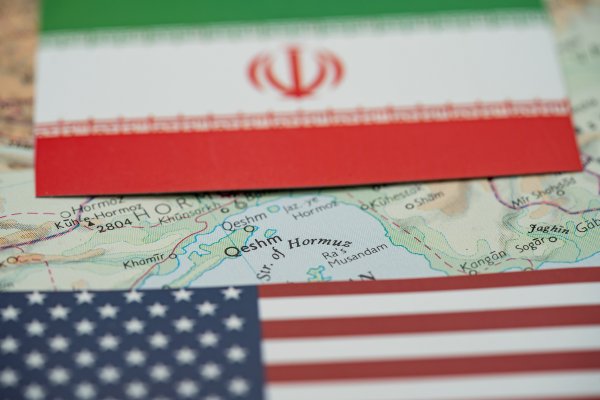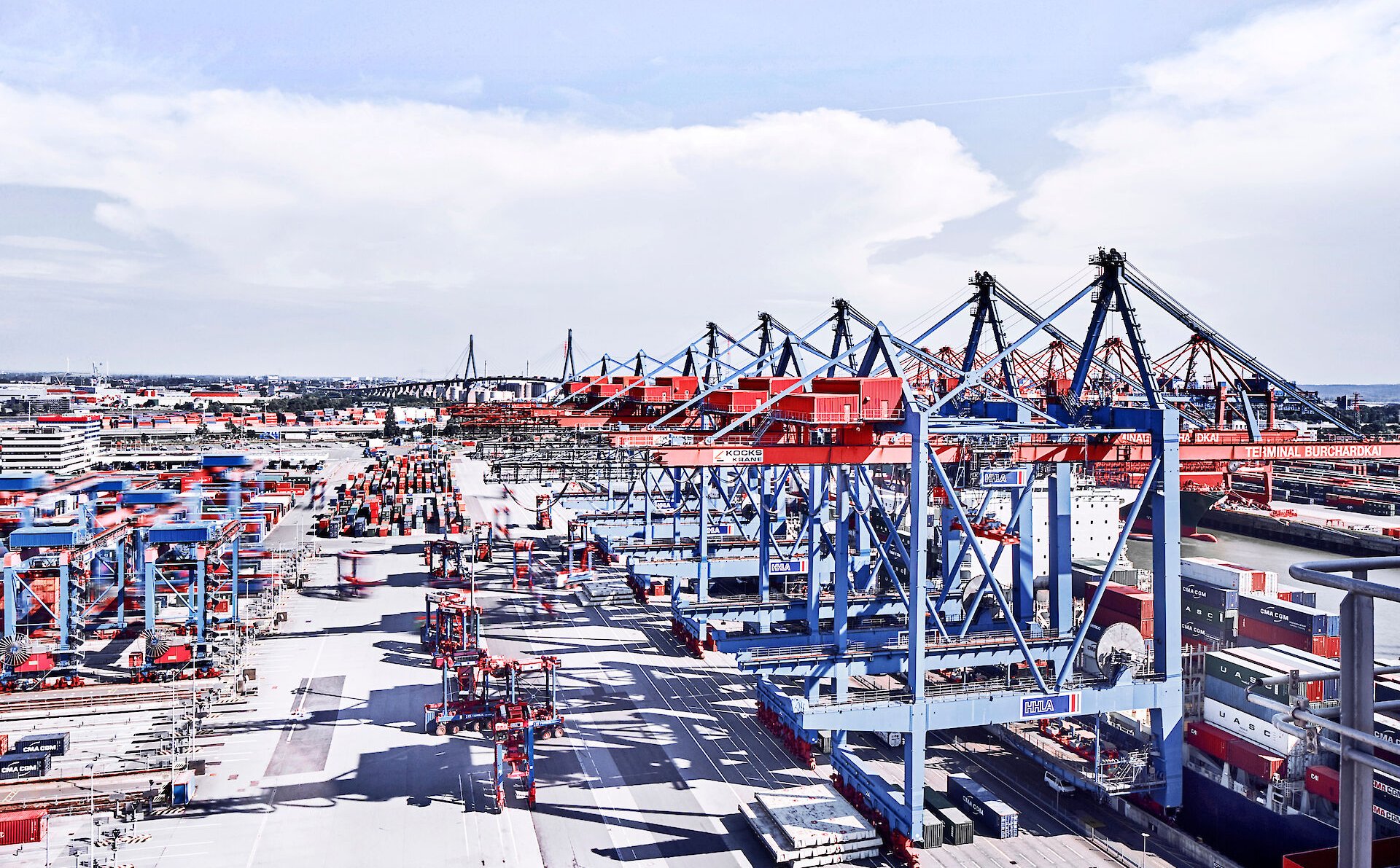

As of February 28, the day of the US and Israel's attack on Iran, the Strait of Ormuz, 1 of the most crucial bottlenecks of global maritime trade in natural materials, has remained virtually closed to commercial dry cargo. This kind of transport includes sulphur, or natural material, which under average conditions is simply a byproduct of the extraction of another minerals or even refinery waste (talk about oil refineries), but in the face of the war in the mediate East it became almost critical natural material. How did this happen? Why is this crucial to investors? You will read about this in my latest article, which I cordially invitation you to read!
Movement through the Strait Ormuz practically froze
Before the escalation of 28 February, about 140 ships per day passed through Ormuz. Meanwhile, the data from the end of May show that the strait now averages 3-4 units per day. Reuters wrote on 2 June that in the last week 2 oil tankers sailed through Ormuz and 1 LNG methane tanker loaded the cargo in the United arabian Emirates (ZEA).
Given the fact that any ships are travelling in dark mode (with the AIS off – Automatic recognition System, i.e. the automatic recognition system), it can be concluded that the above data are understated. Either way, the movement through Ormuz has virtually froze, which has a immense impact on many crucial natural materials. In this article, however, we focus on sulphur, due to the fact that it can escape investors, and it is as important, if not more important, as oil or gas issues.
Kpler reported on 4 June that after the closure of the Ormuz for commercial dry bulk movement (dry loads) in the Gulf more than 600 1000 tons of sulphur were stuck.
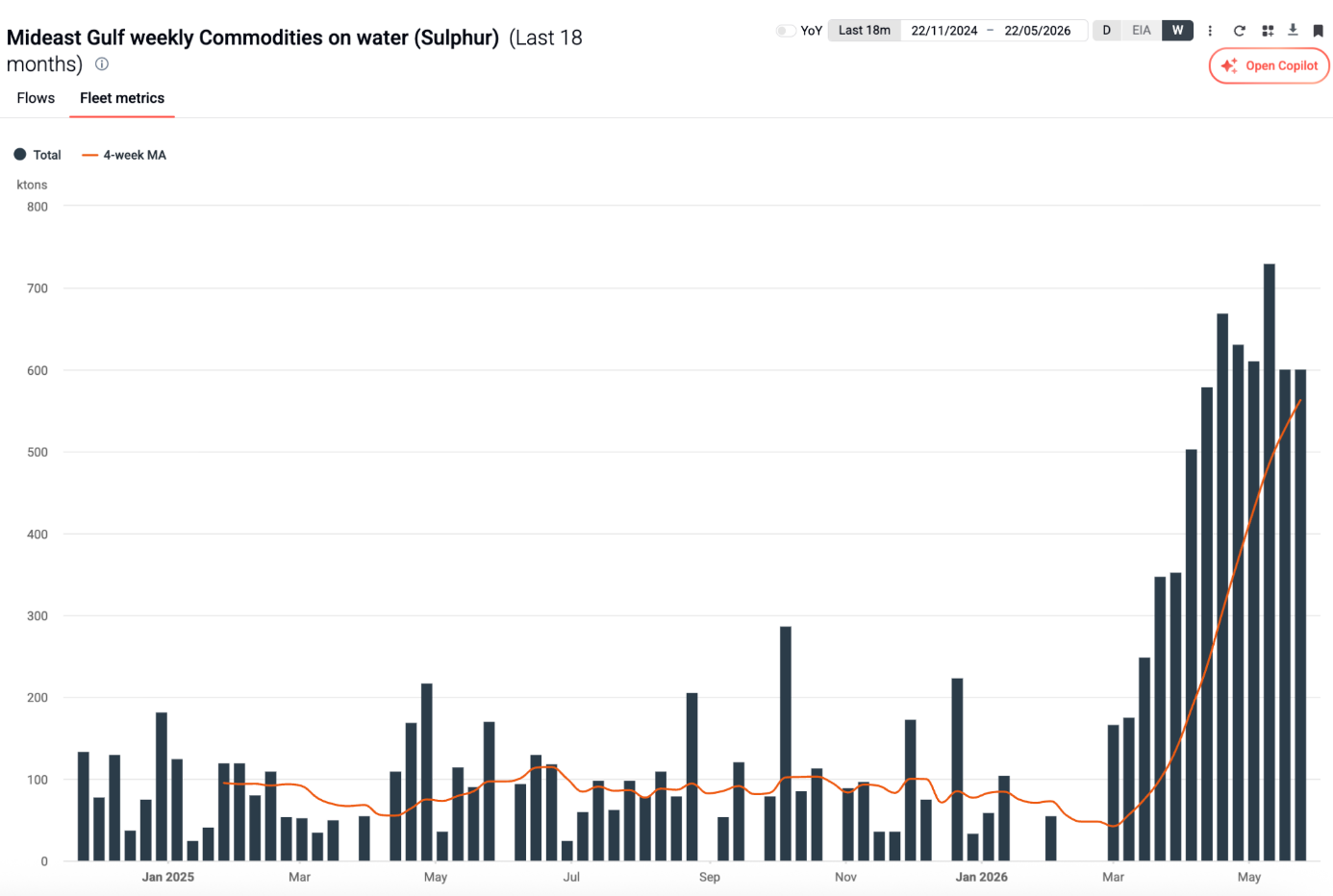 The charts show how much sulphur was on ships in the bay during the week. Data in thousands of tons. Source: kpler.com
The UAE was the only country in the region that was able to send sulphur through the Strait. Kpler confirmed 3 sulphur transits from the UAE in May. According to the illustration below, Ormuz left little than 200,000 tons of this natural material. Note, however, that nearly 1.6 million tons of sulphur flowed through the Strait last May. This means a year-to-year decrease of about 88%.
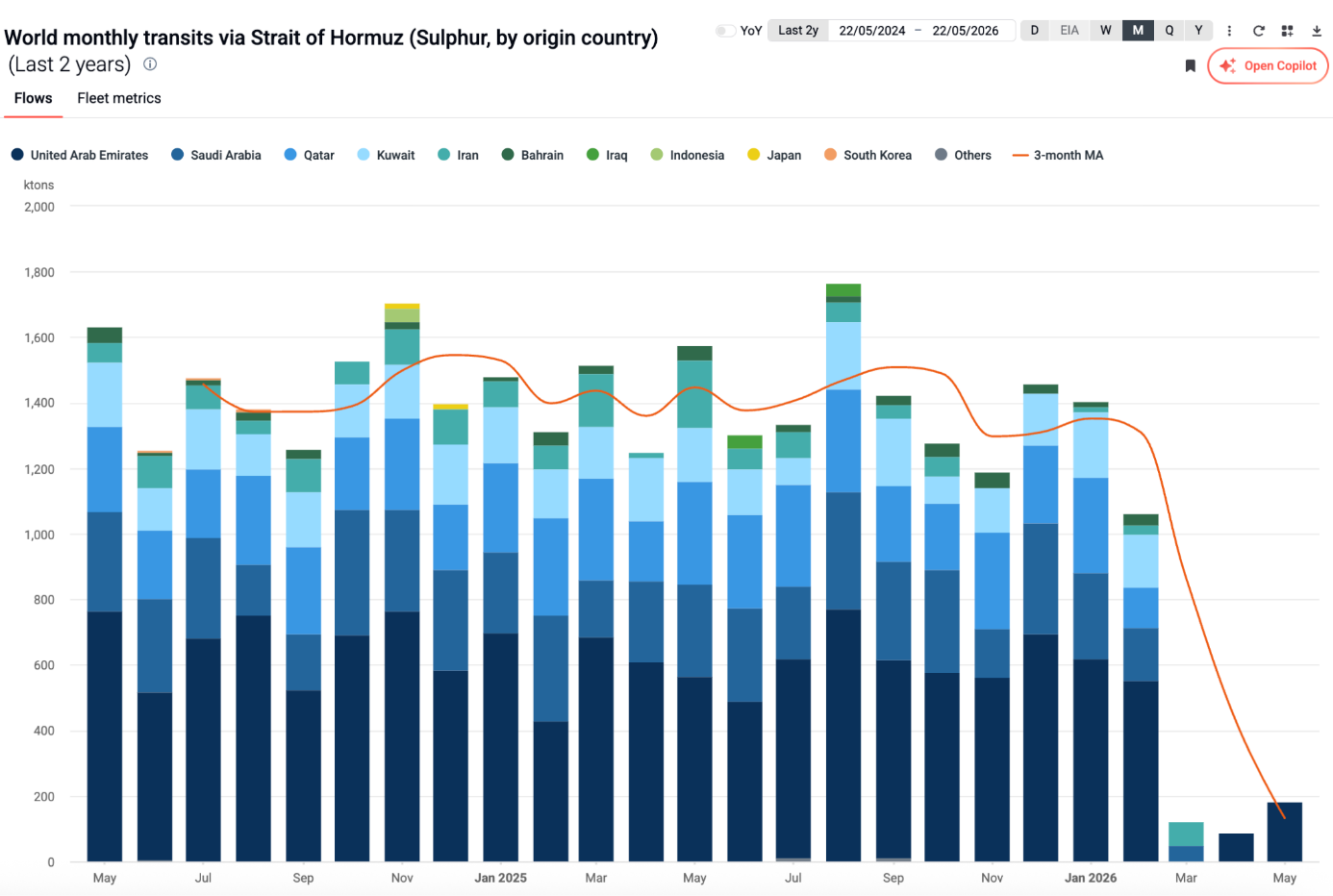 The lines on the illustration show how many 1000 tons of sulphur flowed through Ormuz. The individual colours represent the countries from which the natural material originated. Source: kpler.com
However, it is worth adding an crucial reservation: a large part of the sulphur supply from Qatar, the United arabian Emirates and Kazakhstan is already covered by long-term contracts with customers from India and Morocco. This means that even after the full reopening of the Ormuz Strait not all of the "imprisoned" supply of sulphur will hit the place market. An crucial part of these volumes was previously contracted.
Why is sulphur important?
Sulphur has been treated like waste from oil refineries and gas plants for years. It was mainly removed due to the fact that environmental standards required fuel purification. The following circular illustration shows how crucial oil refineries and gas processing plants are for global sulphur supply.
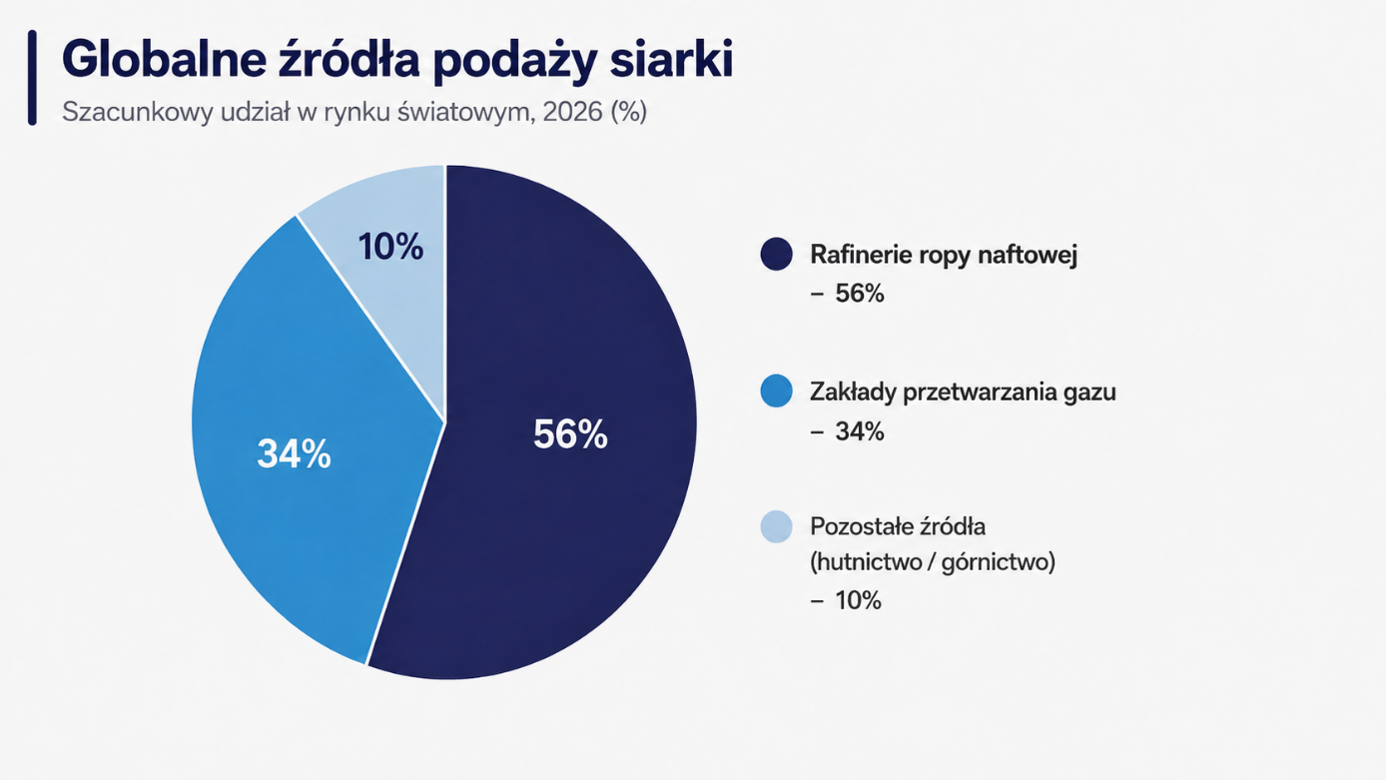 Source: Own development
However, this "waste" has proved to be a key component for many industries. As the planet began to request more fertilizers, metals and batteries, sulphur became 1 of the foundations of the modern economy.
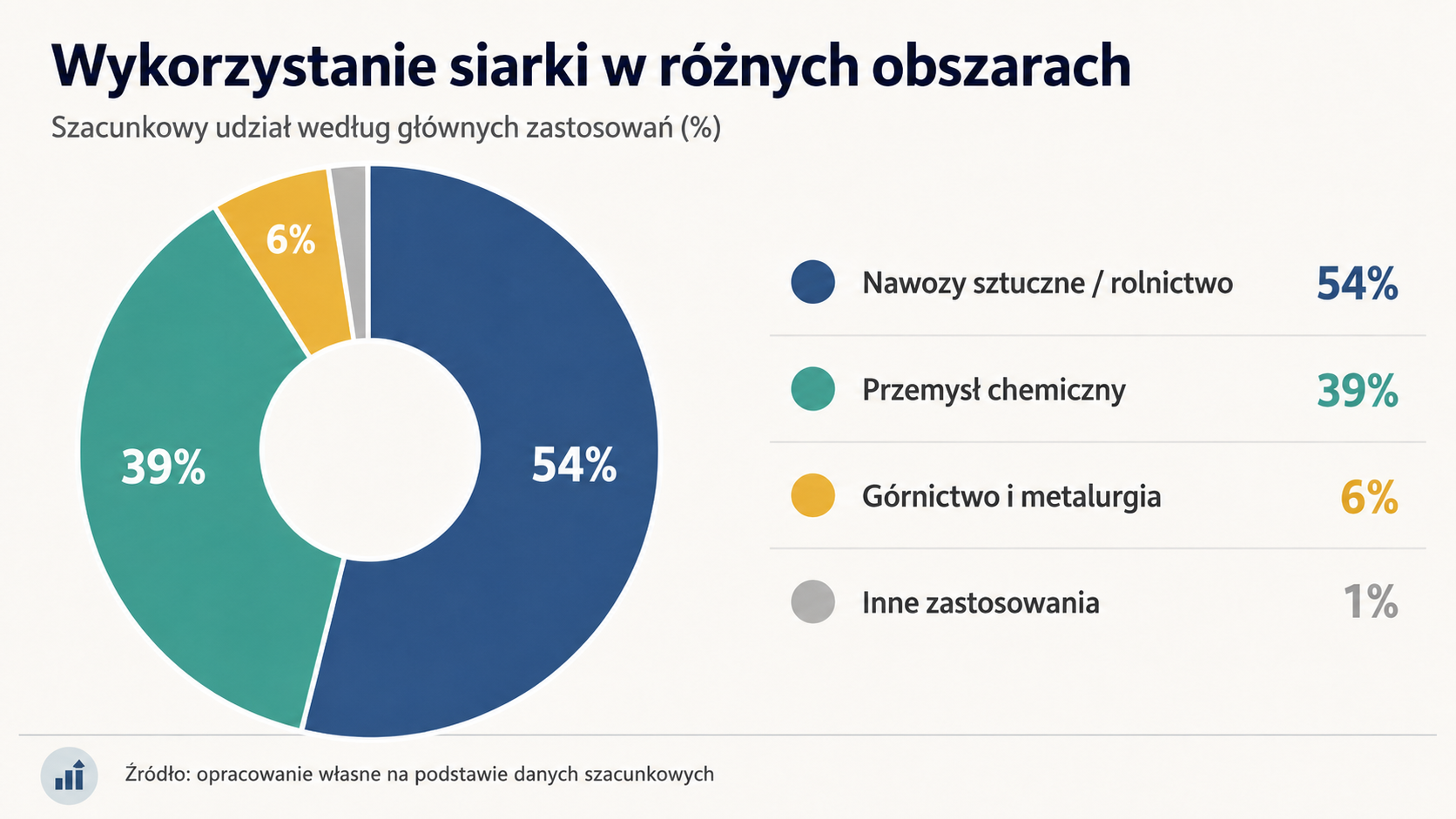
Sulphur is most crucial in the production of sulphuric acid – the most commonly produced chemical in the world. It is sulfuric acid that allows the production of phosphorus fertilisers, without which global agriculture is incapable to function. More than half of the world's yields depend on fertilizers, and these depend on sulphur. erstwhile she's missing, ]]>the hazard of falling food production and rising prices is increasing]]>.
Sulphur is besides essential in the production of metals that drive energy transformation. SX-EW processes in copper and HPAL in nickel (i explain these abbreviations below in text) consume immense amounts of sulphuric acid. Without it, it is impossible to produce cables, batteries for electrical cars, photovoltaic panels or energy infrastructure. This makes sulphur an crucial part of global trends – although fewer people talk about it.
Here a brief explanation of the above abbreviations.
SX-EW is short for Solvent Extraction and Electrowinning (in Polish: Extratraction Solulnikowa and Electrodistinction). It is simply a modern, hydrometallic method of extracting copper of very advanced purity from deposits or wastes in which the content of this metallic is besides low to cost utilizing conventional metallurgical (pyrometallic) methods. simply put: alternatively of melting ore in immense furnaces, copper “pulls out” with chemistry and electricity.
HPAL stands for High-Pressure Acid Leaching (in Polish: advanced force Acid Luging). This is an advanced, hydrometallic technology utilized for the recovery of nickel (and cobalt as an highly valuable by-product) from low-grade laterite ores. In pictorial terms, it is simply a process in which, with the usage of powerful pressure, advanced temperature and concentrated acid, nickel is squeezed out of the rocks, in which it is very little.
Important conclusion: note that sulphuric acid is very valuable for extracting critical metals from low-quality ores. For respective decades ]]>the capital did not flow into the extractive sector]]>Which made no fresh discoveries. Many companies first exploited old, most qualitative deposits, while those of the inferior class waited for their turn. Their time has come due to the fact that the old deposits are moving out, and the capital is inactive missing mining companies. simply put, the methods of metallic extraction based on sulphuric acid are gaining importance.
Sulphur is besides crucial for the chemical, pharmaceutical and material industries. It is utilized to manufacture plastics, detergents, medicines, synthetic fibres, and even explosives.
Sulphur shortage on the marketplace and advanced prices
The war in the mediate East has caused a massive crisis in the global sulphur market, which in many respects is as severe as the oil and gas turmoil. ]]>The key minute was to block the strategical traffic of the Strait of Ormuz]]>, through which nearly half of the world's sulphur has been transported so far from the Gulf countries (mainly from immense refineries in Qatar or the United arabian Emirates). Since sulphur is mainly obtained as a by-product in oil and gas purification, producers are incapable to rapidly increase its extraction in another parts of the planet in consequence to deficiencies. As a result, hundreds of thousands of tons of natural material were trapped in the ports of the mediate East, and global shipping supplies fell drastically.
There is presently a immense deficit on the market, which has raised sulphur prices to evidence levels not yet recorded. This shows well the following price graph of this natural material expressed in Chinese yuan per tonne.
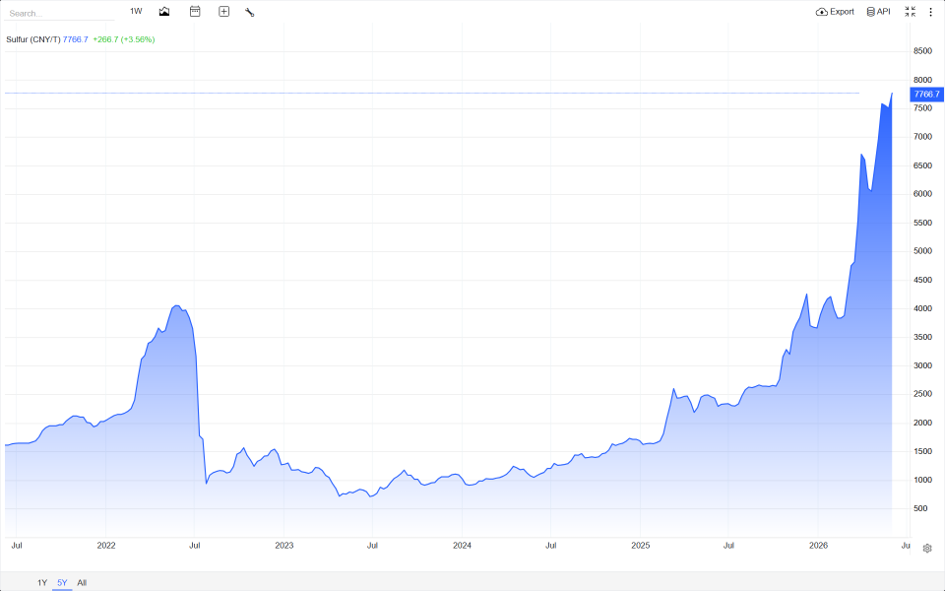 Source: ]]>https://tradeeconomics.com/commodity/sulfuron]]>
The situation is further aggravated by the fact that another countries, in order to defend their interior industry, impose their own restrictions. Russia and Turkey have extended export bans on this natural material and China has completely stopped exports of sulphuric acid. The processing manufacture around the planet is in ticks: fertiliser giants in Morocco or the US must drastically reduce production due to deficiency of natural material and astronomical costs, which gives emergence to serious concerns about global food safety and decline in yields.
In these hard realities, markets are forced to speedily look for fresh trade routes and partners. Asian countries are trying to save the situation by turning towards land supplies from Russia, whereas Western markets are more based on North American production.
Interestingly, in the current situation, countries with their own independent sources are gaining – for example, Poland, which is 1 of the fewer countries that inactive mine sulphur, has become at this crisis point a very desirable exporter in the European market.
Continue reading: ]]>Independent Trader - War turned sulphur into critical material]]>
]]>Silver vs. gold]]>
Author: ]]>Konrad Parsley]]>

![Trump put on a show outside the White House. Nawrocki watched it all [VIDEO]](https://cdn.galleries.smcloud.net/thumbs/gf-4f7H-YAqB-vvDe_donald-trump-15-j.jpg)