The difference between power and the ability to usage it strategically
Poland, and with it all Central Europe, has peculiar reasons to look at the United States with attention beyond the regular interest. Not due to the fact that America's collapse is imminent, nor due to the fact that its resources are someway apparent. According to almost all conventional criterion, the United States remains the most powerful military state in the world. American universities are a pillar of planet science. American companies dominate the full technology and finance sectors. And the dollar is inactive the foundation of the infrastructure of global trade. However, the year 2026 has already brought 2 uncomfortable facts, which complicate the easy conviction of the undisputed American supremacy: the ongoing war against Iran (a medium-sized state) has not yet brought an unequivocal American victory, and the Chinese economy has already overtaken the American economy in a number of crucial respects – above all in terms of purchasing power parity and production capacity.
Therefore, the question arises, and this is increasingly pressing: how to realize the consequences of the increasing difficulty with which the United States translates its inactive immense material advantage into a coherent, predictable and effective strategical action.
In the long term, data on the share of global GDP do not support a simple thesis with a comparative decline in the United States. In 1995, the US accounted for around 24.4% of planet nominal GDP and in 2025 for about 26 percent. At the same time, the share of today's EU fell from about 26.5% to 18% – 30 years ago the European economy was somewhat larger in dollars than the US, present the US is about 45 percent higher. It is so hard to talk of the comparative weakening of America in Europe, alternatively the opposite.
Of course, the comparison with China looks different. Their share increased from around 2.4 to 16.5% of global GDP during this period, so over 30 years they made a immense leap towards the US. But besides here, the last fewer years have complicated simple narrative. In 2021, Chinese nominal GDP accounted for about 77% of American GDP, while in 2025 only about 63%. Of course, another indicators – PPPs, industrial production or participation in the planet manufacture – show much greater strength of China. Moreover, the figures for 2026 in PPP terms draw an even more complex picture. According to the IMF, the nominal GDP of the EU-27 is around $23.0 trillion, China about 20.8 trillion, and the United States about 32.4 trillion. In PPP terms these proportions change substantially: around $30.7 trillion for the EU-27, 38.2 trillion for China and 29.2 trillion for the United States.
Nominal GDP tells us a lot about the financial resources that the state can mobilise, especially in a dollar-dominated system. However, it speaks much little about the physical quantity of goods, infrastructure and production capacity that can be acquired for these resources. The bridge or car built in China costs about twice as much as in Europe. This discrimination between financial power and production power will be crucial for further analysis.
Similarly, the comparison between G7 and BRICS should be interpreted with caution. G7 is presently liable for around 29 percent of the world's product, while the BRICS countries – inhabited by nearly half the world's population – account for over 44 percent. However, the conclusion from these figures is not as simple as it might seem. Many BRICS countries are mostly dependent on access to Western markets, technology and the dollar-based financial system. Their increasing production power does not automatically translate into the ability to form global order. These figures thus show a complex multipolar image: the American material power remains vast, Europe is not a competitive economical pole for the US today, but at the same time a global economical power arrangement – mainly due to China's growth and another emerging economies – is pushing America to a worse position than before.
The subject of this essay is not to consider the scale of the American power. This article is an effort to measure how the ability of the United States to transform the accumulated material power into a coherent strategical action translates into the perception of those who have their own field of strategical manoeuvre dependent on the position of the US. It is not so much a substance of deciding whether America is in a state of "shrink", but of knowing what it looks like present to translate immense resources into strategical action, and how the credibility of this translation is presented from the position of Warsaw.
The stove can be filled with a immense supply of fuel, yet it will not warm the home if the chimney wires are clogged and the thermostat is not working. This is the essence of the anxiety that should be analysed: the American mechanics of extraordinary scale is becoming little able to translate its material advantage into a clearly defined strategical direction – at least from the position of Poland's interest. The problem is not only economic, military or political – it is due to the destructive accumulation of all these factors, further reinforced by the fragile fiscal situation, expanding private sector debt, organization dysfunction and abroad policy, whose direction seems to change as whimsical as the weather.
For a country specified as Poland, whose full safety architecture is based on the presumption of a lasting commitment of the United States, including NATO's stableness and longevity, the fundamental question is whether the US will stay a reliable, strategically coherent and militaristic superpower. This is peculiarly crucial erstwhile it is considered in the light of the permanent national interest of Poland and the Polish reason for the state.
The power of the state depends not only on the scale of its resources, but besides on the ability to translate them into coherent, predictable and effective strategical action. From the position of Poland, the key question, therefore, is not whether the United States will stay a superpower, but whether it will stay a reliable superpower and able to keep its obligations effectively.
Two statements, formulated on different levels and in different epochs, well reflect the essence of the problem. Politologist John Mearsheimer referred to the American function in Europe as a "dragon" – an external guarantor whose presence prevents European states from returning to the erstwhile customs of common contention and sometimes common slaughter. A fewer decades earlier, in 1949, Lord Ismay, who was to become NATO's first secretary-general, made the same point much more clear: “it keeps the Russians out, the Americans in, and the Germans down” (“keep the Russians at a distance, the Americans on their side, and the Germans under control”).
Both formulas are worth considering together and taking seriously. The problems and threats that were to suppress the “dragon” are inactive present. And the Germans and the Russians, whom Ismay mentioned, did not come quietly from the stage. Each of these countries remains an crucial variable in the strategical calculations of Warsaw – not so much a relic of 1949, but a historical constant, which simply changed the costume. In addition, Ukraine has grown up to be a major player in European politics in fresh years, and besides in certain dimensions of the world. Its appearance as a stand-alone strategical entity makes the European puzzle even more complicated erstwhile the United States begins to retreat from the function of a “smoky”.
Debt — Damocles sword
All of the following phenomena – debt, defence procurement problems, political polarisation – should be considered not as evidence of imminent collapse, but as factors that combined may limit America's ability to act effectively strategically. past teaches that the United States has frequently overcome akin challenges. So the question is not so much whether these problems are real – due to the fact that they are – how much – whether their accumulation and interaction do not make fresh quality, harder to overcome than each of them individually.
The most bright red informing light on the American safety panel is the fiscal situation. The United States has accumulated a national debt of historical size, while inactive maintaining advanced deficits even in periods of economical growth – alternatively it is the behaviour of a household that borrows money besides in good years and not only erstwhile thin times come. The problem, however, is not the size of the debt itself, but the feedback between debt, interest rates and deficit, which does not show signs of permanent decline. All 3 factors drive each other, creating an avalanchelike mechanism: a slight impulse can trigger it, and erstwhile it moves, its run becomes increasingly hard to stop.
The increasing debt does not in itself prejudge the weakening of the United States, but the expanding costs of its operation may gradually limit the state's ability to finance defence, infrastructure, innovation and active abroad policy. The biggest hazard is not the single fiscal problem, but the combination of debt, deficit and advanced interest rates with political inability to agree on a credible stabilisation path.
The Congressional Budget Office (CBO) predicts that only in 2026 the national government will spend about $1 trillion on net interest on debt – more than about $898 billion foreseen in the same year on discretionary defence spending. According to the CBO projections, expenditure on net interest will increase from 3.3% of GDP in 2026 to 4.6% in 2036. In that case, debt handling would take almost a 5th of the full national budget. It is simply a fiscal household equivalent in which monthly instalments of old commitments begin to displace spending on regular maintenance.
This leads to a troublesome dilemma. Washington wants to keep a military advantage, rebuild infrastructure, finance innovation, keep social programs and stay active in the planet – and at the same time, an expanding proportion of the national budget is allocated not to these ambitions, but to the service of commitments made in the past. The debt itself is not inherently dangerous. The economy, which is increasing rapidly and is making commitments to finance productive investments, can bear a crucial level of debt. However, debt incurred to finance current consumption is something completely different – at any point it ceases to strengthen the power of the state and begins to undermine it. The national debt held by the public sector, according to the long-term CBO core projection, is expected to scope 156 percent of GDP in 2055. The CBO besides explicitly warns that specified a trajectory would mean slower economical growth, higher debt handling costs and a narrower scope of future political choices. In another words, the sword has not yet fallen – but the thread on which it hangs begins to shake according to the agenda that the CBO has already published.
This is not just an American problem – all modern economy functions with debt, and the temptation to remove the minute of settlement from increasing commitments is equally common in western democracies, besides in Poland. What distinguishes the case of the United States is the political inability to agree on a credible plan that would stabilise the debt trajectory. In legislature there are no shortages of voices informing against the fiscal consequences of maintaining advanced deficits – 1 of them is Congressman Thomas Massie – but the political energy devoted to this problem remains strikingly disproportionate to its scale.
Two informal "remedias" revolve around the real plan. 1 camp hopes that the increase in productivity driven by artificial intelligence will in time let the debt to be repaid as if by itself. Therefore, immense data centres are being built, absorbing immense amounts of energy and water resources. However, this is more and more common with protests by local communities, who fear that they will yet pay dearly for this gambit of large corporations. The second camp quietly assumes that the task will be done by inflation, allowing it to pay back its erstwhile obligations with cheaper dollars of the future – a solution, the cost of which is yet borne not by Washington, but by a simple saver and a man who keeps on working.
None of these solutions is simply a reasonable fiscal strategy, nor is it compatible with the fundamental work of the State to defend the common property of the society to which it is to serve. In fact, they are both based on an illusory anticipation that inexorable mathematics can be eluded endlessly – that thanks to extraordinary economical growth or inflation 1 day a large financial “miracles” can be achieved. However, mathematics, unlike the electorate fed by the communicative "truth", cannot be cursed to abandon its investigation of what is due to it.
Debt of enterprises and the private sector
However, the vulnerability of the American economy to shocks is not limited to Washington accounts. Households, businesses, banks and state authorities have built their own layers of liabilities over the years.
The full debt of American households reached around $18.8 trillion in the second 4th of 2026. According to national Reserve Bank of fresh York, 4.7 percent of all remaining liabilities were at any phase late in repayment. Credit card debt itself amounted to about $1.26 trillion, car credit – 1.71 trillion, and student loans – $1.65 trillion.
However, a more eloquent signal is not the size of the debt itself, but the deteriorating quality of the debt. Between the 3rd 4th of 2022 and the first 4th of 2026, the interest on credit cards remaining in debt for at least 90 days increased from 7.6 percent to 12.8 percent – to the level of difficulties that the fresh York branch of the Fed estimates as unprecedented since the large Recession.
However, these data must be interpreted cum grano salis. The United States is presently not in a state of widespread household debt crisis on a scale comparable to 2008. In the first 4th of 2026, the full burden on household income for debt service was around 11.2% of disposable income and remained clearly below the pre-crisis peak. The average can hide extremes, however, just as a calm river surface can hide treacherous whirls below the surface. A household with a low interest-bearing fixed-rate mortgage is in a very different situation than a holding holding a high-interest credit card debt. The younger borrowers, those paying student loans and households with lower incomes can already experience real financial problems, even if the aggregate balance sheet of the full sector is inactive comparatively stable.
The increasing debt of households and businesses does not gotta lead to a crisis in itself, but at advanced interest rates increases the sensitivity of the full financial strategy to refinancing and insolvency problems. The top hazard lies not in individual weaknesses, but in their common relation – a shock in 1 section can trigger a domino effect which a country already burdened with advanced debt will not be able to effectively absorb.
In the case of companies, the past is similar. Many U.S. companies made commitments at highly favourable conditions during a period of almost zero interest rates, which accompanied a pandemic economical policy – that debt was at the time completely to be borne due to the fact that money was in practice almost free. The refinancing of the same liabilities at today's much higher interest rates is simply a completely different proposal. Nowhere is the problem more crucial than in the commercial real property market, where a immense number of loans will yet should be refinanced, while the economical foundations of many office properties have changed substantially.
No single failure should be disastrous in itself – but 2008 showed how small this guarantees. The fall of a medium-sized institution specified as Bear Stearns then triggered the domino effect through a network of interconnectedness and hazard vulnerability and consequently led to the collapse of much larger financial institutions. The essence of the threat, both then and possibly today, is not so much in the size of a single bankruptcy as in the tissue of connections between institutions. Whether it will be a single default of liabilities moving further through a chain of links between counterparties, or many seemingly marginal refinancing problems that accumulate at the same time and at the same time burden banks and financial institutions outside the banking sector – the mechanics remains fundamentally the same.
This fear is present increasingly articulated by economists: the United States can again approach the brink of the 2008 crisis. If specified a shock imposes on the already tight national balance sheet, we will not have a single problem, but a double systemic shock. From this perspective, the effects could have been even more severe than in 2008, as the Treasury Department, previously burdened with its own debt, would have had much little area for manoeuvre to cushion specified a shock.
Specimens of the ‘grey swan’
A “black swan” is defined by an unpredictable event that cannot reasonably be expected and whose consequences are enormous. ‘Grey swan’ (Grey Swan) is something else: it is simply a crisis which cannot be ruled out, whose symptoms are partially visible, but whose timing, course and scale stay unknown. This seems to be the script to be most feared present for the American financial system.
The complex plan of the American financial strategy and its interior links is besides the top strength, but besides the biggest weakness of this sector. The fall in commercial property value can weaken borrowers; weaker borrowers weaken banks; weaker banks tighten credit policies; harder access to finance reduces investment and puts force on asset prices; the fall in asset prices further worsens balance sheets by closing the loop. distant work has already reduced request for office space, and the slowdown in construction finance tends to decision down the chain – to contractors, suppliers and local communities whose improvement depends on the successful condition of the sector. The mechanics of specified an avalanche already exists. The only question that remains is what will trigger it.
The biggest threat to the US financial strategy does not should be an unpredictable “black swan” but a accumulation of already known weaknesses that can trigger the domino effect under appropriate conditions. The hazard so lies not so much in the single problem as in the common strengthening of tensions between the real property market, debt, banks and little transparent financing segments.
The 2008 memory is instructive precisely due to the fact that many individual informing signals, considered separately, seemed to be tolerated. The danger was not in their sum, but in their interaction. Today's weaknesses are different – the banking sector is subject to much more stringent regulation, and mortgage lending standards are mostly more robust than then – but the economy has accumulated immense amounts of debt in a completely different area of interest rates. At the same time, little transparent segments of the financial system, with private credit (private credit) at the head.
Illusion of Collection of Riches
The fragility of this strategy is easy to overlook, for example, due to the extraordinary nominal performance of financial assets. Since the late 1990s, American stock has yielded immense profits in dollar terms. For individual who looks exclusively at the stock market, this communicative looks like a communicative about the spectacular creation of wealth that has lasted for decades. However, the nominal increase in value is not the same as maintaining purchasing power. The conclusion we come to depends to a large degree on the measurement we take to measure wealth.
Let's take a look at the behaviour of American gold action. Around 1999 an ounce of gold cost about $300; in August 2026 its price increased to around $4,600. In dollar terms, the stock exchange recorded an incredible increase in the same period. However, measured by the number of ounces of gold that can be purchased behind it, it looks much little impressive: the purchasing power of American shares against gold has importantly decreased and, depending on the exact dates and index adopted, has decreased by about half.
This comparison shows something more fundamental: the nominal increase in the price of an asset can greatly inflate the actual increase in wealth if the currency in which the value of that asset is measured loses its purchasing power. This discrimination is of peculiar importance in an economy where the increase in asset prices has been coupled with an extraordinary expansion of debt and money supply.
Growing asset prices can make seemingly universal prosperity, even erstwhile the real purchasing power of the currency and the distribution of wealth go in a different direction.
Dollar: reserve currency privilege and its slow erosion
The position of the dollar as the world's main reserve currency remains 1 of America's real structural advantages, although present it is subject to force that we have not seen on this scale for decades. fresh IMF COFER data indicate that in the 4th fourth of 2025, the dollar accounted for around 56.8 percent of global abroad exchange reserves, compared to around 20.3% for the euro and little than 2% for Chinese renminbi.
A nominal increase in the value of assets does not necessarily mean a real increase in wealth, if at the same time the purchasing power of the currency in which this increase is measured is decreasing. Therefore, an image of prosperity based solely on rising stock indices can mask much more complex changes in the real value of assets and its division.
Since central banks, businesses and governments around the planet request dollars to trade oil, settle global transactions and keep reserves, there is simply a lasting, structural request for dollar assets – primarily US government bonds – which depends small on the current state of the American economy. This request allows Washington to borrow on a massive scale in its own currency, under conditions that most states cannot obtain. It besides maintains the cost of handling US debt below what would otherwise be in force, acting in practice as a circumstantial subsidy to the budget deficit. Moreover, it gives the United States the unique anticipation to task financial strength outside its own borders: freezing the opponent's dollar assets or cutting off the bank's settlements in dollars can affect the full economy of the sanctioned state, wherever it is.
Just due to the fact that this privilege is so valuable, its gradual erosion carries a systemic hazard for the United States. A dollar doesn't should be replaced by a yuan to make America feel the failure of its advantage. Even a slow diversification of reserves and ways of clearing transactions could rise the cost of US backing and limit Washington's maneuver as the global monetary strategy moves towards a more multipolar order, a little focused around the dollar.
If assurance in the dollar had clearly weakened, the shock would not have remained confined to the US borders. European central banks have crucial dollar reserves, global banks and companies have dollar-denominated liabilities and global trade remains mostly dollar-based. A serious dollar crisis would so be a global crisis – and would force Europe to face a hard question, the consequences of which could jeopardise even the euro itself.
Europe has an economical scale to make a crucial reserve currency, but it lacks key organization foundations that make the dollar so powerful: a single fiscal power, a truly integrated capital marketplace and 1 state debt instrument comparable to US fiscal bonds. In this sense, weakening the US monetary primacy would not gotta automatically lead to China's monetary primacy. It could lead to a more fragmented global financial order.
The dollar remains 1 of the most crucial sources of American advantage, as it reduces the cost of state backing and gives Washington the unique chance to influence the global financial system. Its gradual erosion does not necessarily mean that it is replaced by yuan, but can lead to a more polar and little unchangeable monetary order, while limiting the strategical field of manoeuvre of the United States.
The Social Basis of Trust
Economic and financial statistic show only part of the picture, as countries are able to bear considerable debt for a comparatively long time if their citizens believe that the institutions are competent and mostly fair. In the case of America, this belief seems increasingly fragile. Political polarisation has reached a level that hinders average governance; assurance in national institutions remains low, and a large part of the population suspects that the government serves elites, corporations or organised interest groups alternatively than average citizens.
This is more crucial than the usual level of support for the government, as modern economies depend on expectations almost as much as on production. People consume due to the fact that they anticipate future income; companies invest due to the fact that they anticipate future demand; banks lend due to the fact that they anticipate to be repaid; investors buy government bonds due to the fact that they presume that the state will stay financially and politically stable. erstwhile trust begins to break, these dependencies not only weaken – they can be reversed. Surveys of the financial situation of households show how widespread the foundations of this tension are: from about a 4th to more than half of American households declare that they live from pay to pay. According to the monitoring conducted by 1 of the large banks, the deterioration is most evident in the case of lower income farms – around 29 percent of them live “from first to first”.
The American political strategy is becoming more and more like an organism that is arguing not about how to solve its problems, but about whether these problems be at all. Households and businesses proceed to operate in a highly optimised consumer economy whose operation depends on continuity of employment and access to credit; a sufficiently serious distortion of either of these 2 elements could have effects far beyond the first financial cost. This does not mean that the social resilience of America should shortly disappear. It means, however, that it should not be regarded as a permanent component of the landscape, but as a resource which, like everyone else, may run out.
Social trust is 1 of the little visible but key resources of the state: it maintains the tendency to consume, invest, lend and finance public debt. erstwhile it begins to crumble, even an economy with strong material foundations can become more susceptible to shocks, due to the fact that social resilience is not given erstwhile and for all.
Republic and Empire
There is another contradiction at the heart of the American way of seeing our own country. From a constitutional and cultural point of view, Americans think of their country as a republic – 1 of the states among another countries, ruled by the will of citizens. In a functional sense, however, the United States acts as an empire: as a worldwide network of military bases, alliances, intelligence partnerships and financial instruments of pressure, with the dollar giving Washington the form of an extraterritorial influence, and the American military power allows to scope all major region of the world. This message is not a moral assessment; it is simply an indication of a structural reality.
The problem is that American political culture has never full reconciled the Republican image of itself with the requirements – real and sometimes imagined – of managing the empire. The Empire, if decently managed, requires strategical patience, a coherent knowing of the interests of allies and rivals, and the ability to actually see how another societies take on the American power. Meanwhile, American abroad policy increasingly appears to be shaped by the force of the national information cycle, alternatively than by a well-established knowing of the planet outside the United States. A correct assessment of this condition is of peculiar importance for Poland, where Washington's decisions, viewed from the American position as limited or tactical, can be perceived as strategically crucial and even threatening the fundamental interests of state security. From an American position it may be a way of seeing the planet that best serves the interests of the United States; from a Polish perspective, however, it means a situation in which the driver has an highly strong engine, but uses a failed map.
War as an economical System
One of the most cumbersome features of the American strategy is the link between war and the industrial-defence base that supplies it. It would be far besides simplistic to claim that American wars – or at least any of them – are being waged for profit; states are making wars for many reasons, and the threats they face are frequently real. However, there is no uncertainty that the defence manufacture strategy creates a mechanics of strong and self-supporting interest in maintaining advanced military spending. Public money goes to private contractors; these companies employment immense numbers of people and finance investigation institutes, universities, lobbying activities and political campaigns; retired officers decision to manufacture while manufacture representatives go to government administration.
The major tension of American abroad policy stems from the divided between the Republican image of its own state and the functionally imperial scope of its global impact. For allies like Poland, the problem is not the scale of the American power itself, but whether it is accompanied by a coherent and long-term knowing of the consequences of its decisions.
This dependency arrangement saw and called president Dwight Eisenhower in his farewell speech of 1961, and his words stay possibly the most powerful informing against the associated threat. He warned against “the acquisition of unwarranted influences, intended or unintended, by a military-industrial complex” and indicated that there existed and would be “a danger of a catastrophic emergence in misplaced power”. He besides warned that combining a large, permanent arms manufacture with an equally large, permanent military establishment was something fresh in the American experience. Its influence – "economic, political and even spiritual" – reached out to all state and all national office. Eisenhower stressed that only "sensitive and conscious citizens" can guarantee that this powerful industrial-military device serves both safety and freedom and does not act against them.
The problem is not, of course, that arms contractors make profits; profit is an average part of the marketplace economy. The problem is that the strategy is much more powerfully premium by expensive, high-margin and technologically complex weapon systems than cheap, fast-produced and easy to replace solutions – and the 21st century wars are increasingly revealing this discrepancy. As 1 commentator pointed out, no strategist of the earlier era – neither Clausewitz nor Sun Tzu – could imagine, and all the more so could accept a strategy in which arms producers co-finance institutions dealing with the analysis of geopolitics and the simulation of future conflicts, for reasons both justified and little justified; they influence the decision-shaping decisions of officials defining defence purchasing priorities; and through networks of favorable media and think tanks they co-create a public debate that serves to justify the same priorities. This is why transparency in defence contracts is not just a substance of administrative thoroughness. It is an component of the very structure of power and so a question of national security.
Defence procurement strategy and logic of permanent war
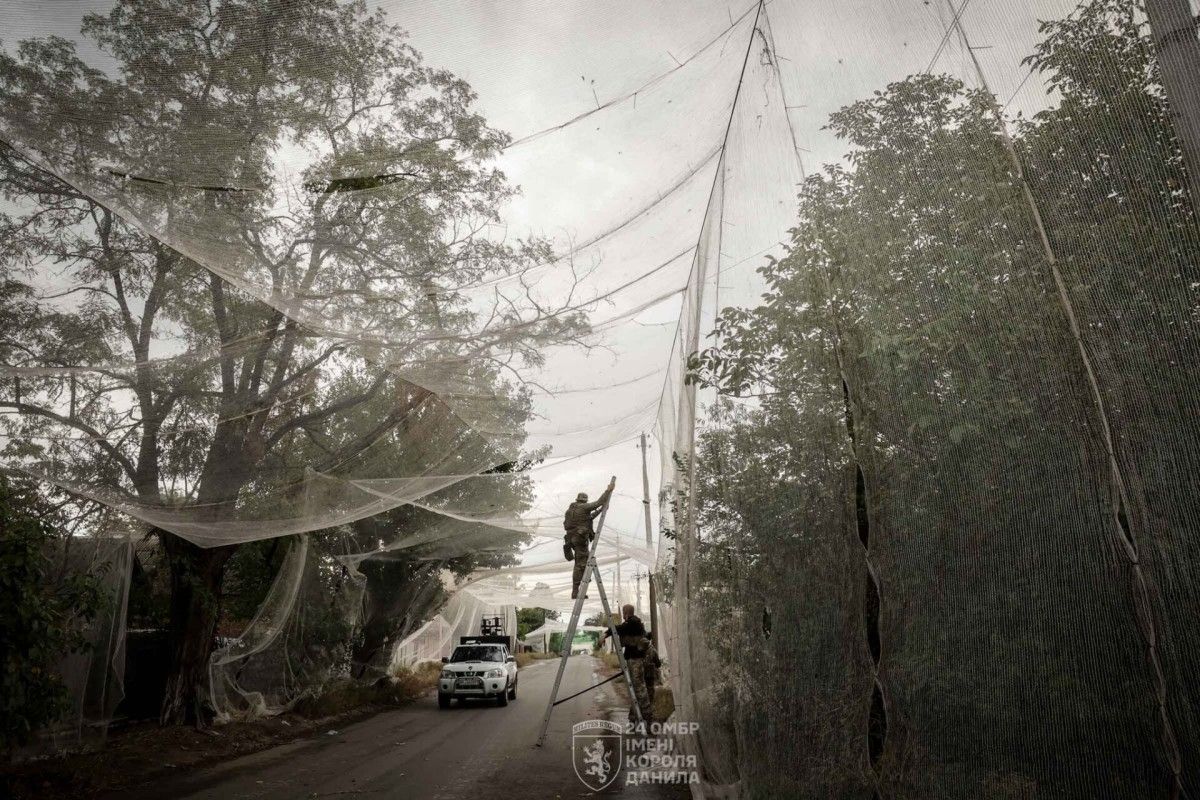
Modern war is increasingly competing for costs and the pace of production, not just for technological advantage. In a conflict of advanced intensity, which can last for months or years, the consequence is determined not only by what the army can produce, but besides by what it can constantly and at an appropriate rate supplement. War becomes a permanent situation in a sense – not due to the fact that it must proceed endlessly, but due to the fact that it requires the ability to continuously reproduce the weapon used. A bullet costing millions of dollars can perfectly prove itself against an equally costly aircraft or ballistic missile; however, the bill looks rather different erstwhile the same bullet is repeatedly utilized to combat drones costing a fraction of its price. In the end, arithmetic settles the outcome, no substance how awesome the parameters of a given weapon appear on the slide during a briefing at the Pentagon.
The war with Iran in 2026 provided an alarming example of this problem. In August, the Associated Press reported that US rocket stocks for rocket defence, including key for the defence of Europe's Patriot missiles, were at “below critical” level after intense usage of them in the conflict with Iran imposed on ongoing deliveries to Ukraine and another allies. Whether all item of these reports will be full precise is little crucial than the strategical question that raises: is the United States able to produce advanced defence systems fast adequate and inexpensive adequate to lead a long-term high-intensity conflict? The data from 2026 propose that the answer is negative for now. The problem is not the deficiency of method capacity – in this respect, America remains highly well equipped – but the organisation of industrial production and the priorities of the defence procurement system.
The very fact of the immense salaries that private companies gain on defence is not a peculiar threat to the industrial and defence system. The real danger is that economical incentives begin to reward costly and complex solutions at the expense of those best suited to the realities of modern war. Transparency of defence contracts is so not only a substance of spending efficiency but besides an component of state safety and control over the way its strategical priorities are shaped.
Part of the problem is the recurring enthusiasm for the technological miracle: the belief that another strategy in the improvement phase will prove actual Wunderwaffe. . . . . . . . . . . . . . . . . . . . . . . . . . . . . . . . . . . . . . . . . . . . . . . . . . . . . . . . . . . . . . . . . . . . . . . . . . . . . . . . . . . . . . . . . . . . . . . . . . . . . . . . . . . . . . . . . . . . . . . . . . . . . . . . past was not kind to this kind of reasoning – the apparent caution remains the war crush Germany with its very concept Wunderwaffe – but this pattern returns all time the army puts besides much emphasis on a single technological leap. The weapon dazzles during demonstrations and then disappoints on the battlefield precisely due to the fact that war, unlike a laboratory, seldom remains motionless long adequate for a single innovation to let for a long time to keep its dominant position.
The modern military advantage depends not only on the quality of the weapon, but besides on the ability to produce it quickly, cheaper and massively and to reconstruct losses in the long-term conflict. If the defence procurement strategy rewards costly complexity, long-term implementation cycles and procedural inertia, even a technologically advanced army may have difficulty adapting to the realities of a war based on speed, scale and economy of consumption.
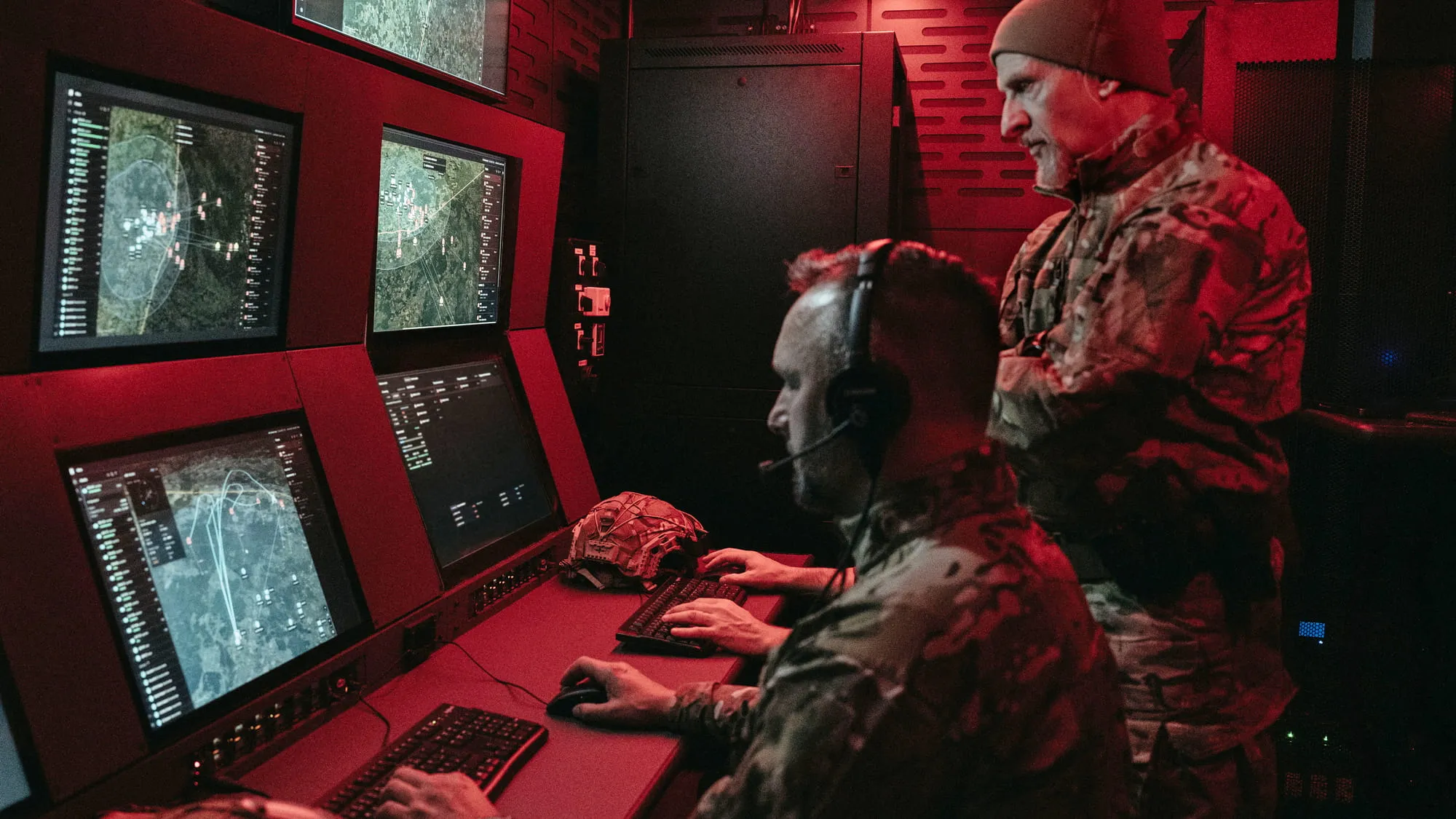
Recent NATO exercises have provided a meaningful example of a closer Europe. During exercise Hedgehog in Estonia in 2025 a tiny squad of Ukrainian drone operators simulated the demolition of respective 1000 NATO troops, including British and Estonian units, in 1 day. In turn during exercise Combined Resolve in Germany in 2026 Ukrainian crews with 412. The Brigades of the Unmanned Armed Forces of Ukraine destroyed vehicles of the American armored brigade so rapidly that exercise controllers had to "resuade" them repeatedly to keep the exercise moving. According to The Wall Street Journal, this consequence clearly amazed American officers – only applicable exercises and simulations revealed a strategical cognitive gap in erstwhile assumptions.
Government Accountability Office (GAO) has documented these problems for years. According to his latest assessment, the Department of defence presently needs an average of over 12 years to deliver the first version of the fresh weapons system. The most costly programmes regularly exceed the assumed costs and deadlines, and this year's GAO evaluation indicates that the problem is systemic alternatively than casual: defence procurement inactive fails to keep pace with technological change. The weapon, which is 12 years old, can be found in the battlefield as an obsolete solution.
The organization consequence behind these delays can be captured in a tiny but meaningful example. Douglas MacGregor – a 1991 Gulf War veteran, later elder advisor to the Pentagon, during Donald Trump's first term, and present a defensive policy commentator – mentioned that he erstwhile proposed a simpler and little costly way of deploying dense equipment. The thought was considered interesting and praised for his ingenuity and was then rejected for procedural reasons: he was explained that he simply did not fit into the army's procurement system.
Uncomfortable Question of Encouragement
Why does specified a strategy proceed despite well documented weaknesses? This question is not just about the United States – comparable mechanisms are repeated in defence structures of many another countries so frequently that they are hard to recognise as an American singularity. The United States has created a immense ecosystem around the defence budget – the main contractors and their subcontractors, consulting companies, universities, laboratories, think tanks and local political interest groups whose economical interests are linked to circumstantial programmes. The separation of the interest of the state from the interests of the apparatus which has grown around the national safety budget is thus becoming increasingly difficult. The Government Accountability Office itself has for decades recognised the defence procurement strategy as a "high-risk" area and recommends its fundamental reform, which has been implemented to a negligible extent.
This does not mean that all defence program is wasteful or corrupt. It is something else: the structure of the incentives surrounding these programs deserves much more attention than it is being given present – the amount of resources spent on defence itself speaks small about the real military capabilities that are being acquired for this money.
An alarming historical analogy
There is simply a temptation—and it is not entirely without foundation—to compare the United States of America to the russian Union of the late 1970s. However, this analogy should not be pushed besides far: America remains incomparably richer, more dynamic technologically and more institutionally open than always the russian system, and its economy does not hold back anything that resembles central planning. Nevertheless, any structural similarities are worth calling.
The amount of defence spending alone does not prejudge real military power if the incentive strategy is to reward the maintenance of costly programs alternatively of maximising the strategical effect. The key question, therefore, is not only how much the state spends on defence, but what real military capabilities it can build for these resources.
Late russian leadership accumulated a immense military power, while its political strategy became little and little capable of carrying out reforms. Leonid Brezhnev, whose wellness was clearly deteriorating in the second half of the 1970 ’ s, remained in power for years to come despite a visible and sometimes publically discernible physical weakness. His successors, Yuri Andropov and Konstantin Chernenko, were besides aged people and were seriously ill; both died in office, in a short period of time. At the time of Brezhniev's death, the median age of Politburo members was approaching seventy years. Historians later pointed to this generation of leaders, clinging to power and, according to many estimates, increasingly separated from the changing external world, as 1 of the factors that contributed to the subsequent dissolution of the russian system.
Modern American policy has produced its own, widely debated version of this concern about age and leadership capacity at the very top of power – that is, among a tiny ellipse of people who actually hold the most crucial levers of state decisions. Joe Biden withdrew from the race for presidency in 2024 after appearing in a debate broadcast on television, which the press described as highly inconsistent and unclear. His successor from the Republican Party, incumbent president Donald Trump, who is presently eighty years old, has already been captured respective times during authoritative meetings with closed eyes, which has sparked public speculation or fell asleep. It is not an effort to make a clinical diagnosis, but an indication of a wider phenomenon that is worth calling: American political culture, like its late russian counterpart, seems increasingly inclined to entrust power to leaders of the elderly, powerfully surrounded by a ellipse of advisors, experts and business people. These leaders frequently hold a speech of superiority and self-confidence, which contrasts worryingly with a more nihilistic cynicism hiding below the surface – they are little masters of events than players in the game between rival circles of powerful interests that block and balance each other, while the coherent strategy and long-term foresight required by the present minute stay strikingly absent.
The essence of the threat is, therefore, to a lesser degree the age or psychophysical condition of a peculiar leader than the system-wide mentality of a cynical power game—the belief that the alleged immunity, the silent belief that a state so powerful can continually absorb further strategical errors. It's the logic of arrogant and irresponsible koteria, which virtually limits nothing but its own appetite for power that plays va banque at the table – putting everything at 1 more bravado and believing that the casino will never truly ask for a debt: we can borrow more; we can impose duties and absorb their consequences; we can destabilize allies and anticipate them to stay on our side despite everything; we can endanger our opponents, never specifying what we actually request or inform them about; we can run a defensive procurement strategy that needs a decade to deliver weapons, and we can simply trust that the technological advantage will compensate for this difference; we can finance wars without asking beforehand whether the industrial base behind them is able to bear their burden; we can let institutions to fall down due to the fact that the economy is supposedly besides large to always have any impact.
The biggest threat to the large power is the failure of organization capacity to correct errors, reforms and long-term strategical thinking. Power may over the years mask the weaknesses of the system, but the belief that the scale of resources will let for endless absorption of the effects of bad decisions is itself a origin of strategical risk.
The problem of abroad policy
Economic and military tensions would in themselves be serious enough; however, they become much more dangerous erstwhile abroad policy is put on them. Allies request to see what Washington will do tomorrow; opponents request to know what the United States considers to be their vital business; markets request at least any orientation on the form of economical policy over the next year. Meanwhile, Washington is increasingly sending conflicting signals – demanding far-reaching changes in relations with long-standing allies, undermining the thought of NATO's primary nonsubjective to date, imposing duties on both friends and opponents, taking a confrontational stance towards Iran, while continuing to support Ukraine.
None of these inconsistencies gotta lead to disaster. The deeper problem is the deficiency of a strategical continuity that would bring them together – a state that occasionally changes its mind, sometimes for justified reasons, looks completely different from a state whose commitments seem to depend on the political temper of the minute alternatively than on the sustainable calculation of national interest. For Poland, located between the resurgent and increasingly assertive Russia, increasingly restless Germany, again marking its own importance in Europe and Ukraine, whose postwar trajectory remains truly uncertain, this is not an academic distinction. no of the 3 major neighbouring countries of Poland offers a credible substitute for American guarantees – and the nation, which, through a large part of its modern history, looked in Berlin, Moscow and Kiev for a fact-friendly Polish faction, learned to read back-to-back, half-hidden signals of ambiguity coming from each of these capitals precisely as they are, regardless of how diplomatically authoritative messages sound.
The top hazard to the allies of the United States is not the change in direction of American politics itself, but the failure of strategical continuity and predictability of commitments. For Poland, this means re-thinking on which pillars the safety of the state should be based in a planet where American engagement can become little permanent and little unambiguous.
Poland built its full safety strategy around American engagement – buying US weapons, hosting US troops and treating Washington as an indispensable external pillar of its defence, precisely due to the fact that the United States acted, utilizing the word Mearsheimer, as a stabilizer and defender of Europe. This strategy had a very strong justification in comparatively unchangeable decades after the end of the Cold War. The more hard questions that Warsaw must search answers present are the first: what happens if the American power begins to weaken – even if only comparatively – and the strategical attention of the United States moves again, as it has been periodically done, completely towards another theatres of action; and second: on whom should the Polish safety strategy yet be based?
Moral Dimension
But there is another form of American power that cannot be captured in any balance: moral authority. For decades, the United States has presented itself as more than just the strongest state in the global strategy – as a guardian of rule-based governance, a defender of democratic values and human rights besides outside their own borders. This image of moral leadership peculiarly powerfully spoke to Poland, a country that attaches large importance to moral convictions, in which a righteous moral reflex is frequently valued above a cold, rational calculation. This way of presenting its function has never been full in line with American conduct, but for a long time it has been 1 of the real strategical assets of the United States: it has attracted allies, favoured immigration and given American diplomacy a kind of authority that the military force itself could never provide.
This resource of legitimacy shrinks all time American actions clearly miss out on the principles that the United States has declared to defend – and the events of fresh years, from the human cost of the war in Gaza to reports of attacks that hit the Tehran women's school, to open rhetorical threats directed at the 4 thousandth civilization, have deepened alternatively than reduced this discrepancy in the eyes of much of the world. It was never about whether American abroad policy was morally flawless; of course it was not. Rather, the question is whether the distance between what Washington is saying and what it is doing has not become besides large for the conventional tale of American leadership to inactive be credible. Reliability, erstwhile lost, is highly hard to recover. For Poland – precisely due to the fact that for so long she believed so powerfully in this communicative – erosion of the American moral authority means something closer to amazement, regret and confusion than average disappointment.
Moral authority is 1 of the little grasping but real sources of state power, as it increases the credibility of its leadership and the ability to attract allies. However, as the gap between declared values and political practice grows, not only reputation is eroded, but besides 1 crucial instrument of strategical impact.
Care alternatively of Condemning
In the face of Europe, America has clearly strengthened its position and, in fresh years, China has again increased its distance in nominal terms; it is hard to keep that the American material power, measured by its share of global GDP, technological advantage or military capabilities, is subject to fast and unequivocal weakening.
Nevertheless, possibly what truly distinguishes the present minute from the earlier forecasts of the "American decline" is not a single problem, but their simultaneousity: the scale of the fiscal problem, the real systemic competitor in the form of China, interior polarisation and the greater unpredictability of policy towards allies. At that time, the argument would not be, “America is weakening”, but rather, “its interior limitations are expanding in the usage of inactive immense advantages.”
This does not mean that the situation is hopeless. no of the problems described here are fatal. Deficits can be reduced. The defence procurement strategy can be reformed. Banking regulation can be strengthened. You can rebuild industrial capacity. You can fix alliances. Social trust can, at least in principle, be recovered. The United States has already done all these things in their history, in different moments and in different ways, and nothing gives emergence to a deficiency of belief that in the current situation they can do it again. Apart from the anticipation of correcting any of these problems, however, there is another real possibility: the increasing interior constraints in the usage of inactive immense material advantages may prove to be more hard to overcome than the scarcity of resources themselves. The consequence may not be a fresh centre of gravity, but a more fragmented, multipolar planet order – 1 that can already be seen in the slow weakening of the dollar's privilege as the main reserve currency and in the expanding share of economies outside the conventional West in planet production.
What should truly concern the external observer is not a deficiency of resources, but a possible deficiency of political capacity to act – a fear that the American state device has become little capable of making hard decisions that each of these solutions would require. A superpower does not request to become mediocre to lose its strategical strength; it is adequate that it loses the ability to make decisions commensurate with the scale of its challenges. Even the most abundantly fueled engine will not decision if the ignition fails.
The concern for the future of America is not due to the conviction of its inevitable demise, but to the fear that the increasing interior constraints may make it increasingly hard to translate the tremendous material power into effective and predictable action. For Poland and Europe, this means the request to simultaneously search a strong and credible America and prepare for a planet where its ability to keep its current order may be little than in erstwhile decades.
For Poland, as well as for Europe, the rate is hard to overestimate. For Poland it is inactive highly crucial that the United States remains truly active in the safety of Europe. However, "strong America" in a sense that is of real importance here cannot simply mean more money, more weapons and more threats. It must signify America fiscally stable, capable of military adaptation, institutionally efficient and, possibly above all, strategically predictable and credible. At the same time, Europe would have acted wisely if it had started to prepare for the anticipation that in the coming decade the United States would be little able to make and keep alliance commitments than in the past decades – not necessarily due to the fact that their material power is decreasing, but due to the fact that interior restrictions on its strategical usage are increasing.
This chance raises a question which fewer in Berlin or Warsaw would like to talk out loud: whether a truly weakened America could in time push the European Union towards Chinese orbit, as well as to any agreement with Russia – as a price for maintaining its own safety and prosperity by another means. If specified a phrase had actually happened, the more hard question for Poland would not have been “would it be?” but “how will it happen?”: will Poland be in a position to co-shape this change and exploit the possible benefits of early movement, or will it become a reluctant marauder, drawn into the road already chosen by the larger European countries and reaching at the end of it – on different conditions.
None of this is simply a forecast of America's imminent demise. It is simply a informing of strategical complacency – both American, European and Polish. The United States retains large power, but power is not the same as strength, and strength is not the same as wisdom. America can inactive borrow, proceed to build and proceed to plan its strength in all corner of the world. Eventually, however, all large power faces the same fundamental test: can its institutions adapt as rapidly as the planet around them changes?
Perhaps the United States is already trying to answer this question in a chaotic, uncoordinated and sometimes violent way. Even if this is the case, the question remains whether Poland can decently read and learn from these changes. The planet has already entered deep into the changing 21st century, while a large part of Polish political and strategical elites inactive think of categories inherited after the 20th and sometimes even after the 19th century.
The answer to this question – much more than the size of any military budget or the level of any stock index – will find the direction in which America will follow in the coming decades. And since the future of America and Europe remains so closely connected, this is simply a question which Poland and Europe cannot afford to treat as an interior matter.