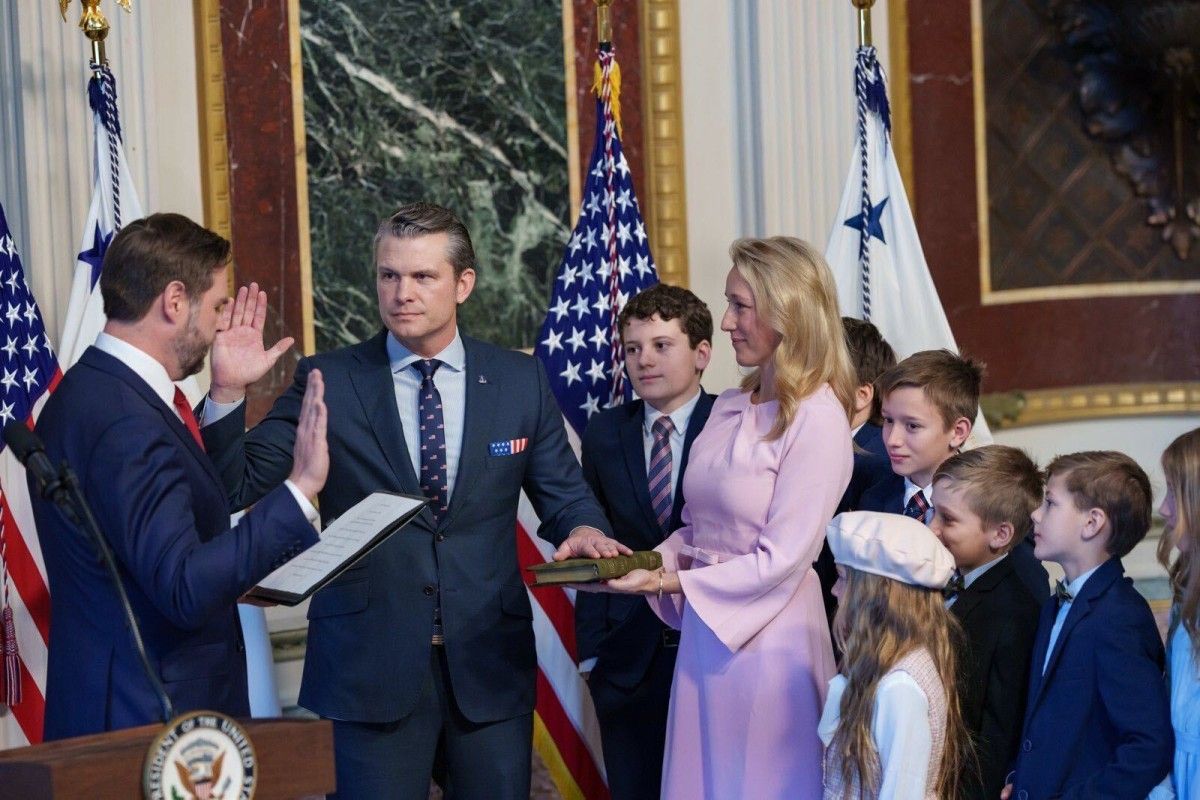
The 6th National Forum of Workers' Councils was held in the Column Hall of the Sejm of the Republic of Poland on 19 May 2026. Exceptional event, as coincided with the 20th anniversary of the passing of the bill of 7 April 2006 on informing and consulting employees (called the Staff Councils Act). During the meeting, representatives of employers, staff councils, experts, politicians and active citizens discussed key aspects of worker councils, including their struggles and uncertain future. The Forum was organised by the Institute of civilian Affairs, Civic Accelerator of Innovation and ESG PRO sp. z o.o.
According to statistic of the Ministry of Family, Labour and Social Policy, the number of worker councils in Poland fell from around 3080 in 2010 to about 400 in 2025. A companies that could have their advice is nearly 31,000 (CUS data, companies employing 50 or more employees at the end of 2024).
Should that worry us? What can we do about it? These questions, together with the participants of the Forum, were answered by guests invited to the panel “Employee Council 2.0 partner in company development”:
- Karolina Woznica, the Deputy Director, Department of Social dialog and Partnership, Ministry of Family, Labour and Social Policy,
- Janusz Trupinda, Director, Malbork Castle Museum,
- Aleksandra Nowacka-Leverton, Vice president of the Management Board, De Gruyter Brill Sp. z o.o.,
- Witold Buraczyński, Expert, ESC PRO Sp. z o.o.,
- Rafał Górski, president of the Board, Institute of civilian Affairs, panel moderator.
Workers' councils – what are they and what do they do?
The past of the Councils of Workers started with the Directive of the European Parliament and of the Council of 11 March 2002, which stated that: "The circumstantial nonsubjective of the Community and the associate States is to advance social dialog between representatives of employers and workers".

We compose about people, not power.
We show the fact about causes, not consequences. We are your voice. Support independence!
Donate and become our contributor
The Directive was implemented into the Polish legal order in 2006 by the Act on informing and consulting employees. Employees have obtained the right to make a staff council in their workplace to consult on the company's current problems. This applies to companies with at least 50 employees. This threshold is due to the fact that communication difficulties are expanding with the company's staff and it is more hard for information to flow smoothly. As Aleksandra Nowacka-Leverton, Vice president of the Board of De Gruyter Brill said: “What was possible, [...] erstwhile we were 20 people, ceases to be possible erstwhile we are 60.”
Trade unions, just as staff councils represent the staff of the workplace, but the erstwhile focus on protecting its rights and interests, and the second on the flow of information and cooperation with the board.
“We have already developed the practice that employee council is not a copy of the union. These are not the same tasks, these are not the same functions. And they should not be," concluded Karolina Wozniczko, deputy manager of the Department of dialog and Social Partnership of the Ministry of Family, Labour and Social Dialogue.

Effective staff council in practice Anita Ferrazowska
What do employees give us?
We have already mentioned the most crucial function of staff councils, which is to represent the squad in dialog with the board. And in fact, erstwhile it comes to the position of employees in the company, advice is peculiarly helpful: "What the staff council gives us [...] is simply a communication channel," said Aleksandra Nowacka – Leverton.
Through staff councils, staff gain not only a voice in matters of the company, but besides a sense of community in the working environment.
And this can be difficult, especially now that distant mode of operation is becoming more common. The Vice president put it this way: “Our company [...] has only a distant structure, [...] which raises communication problems and the request to prevent the isolation of employees, due to the fact that this is not a situation where they can meet in an office on coffee”.


Your voice matters! Training that will strengthen your dialog with your employer.
Another reason why the dialog between different levels of the company can be difficult, and for which the advice of employees is so much needed is the difference in perspectives between people with different positions, responsibilities and priorities who work in 1 establishment. Witold Buraczyński, expert ESG PRO sp. z o.o., stated that: “The board works 5, 7, 10 years ahead, managers work in a monthly position and employees in a regular perspective. The staff council [...] solves the problem of the communication bridge between the 3 time dimensions".
However, there are little apparent benefits from the advice of employees. Today, artificial intelligence and technological advancement are constantly changing the planet of work – frequently in a way that threatens workers. By representing the squad and by its possible to show its value for the company, the board can aid strengthen the position of the crew in the working environment. And this is truly crucial at specified a uncertain moment. “[Changes on the labour market] is simply a favorable wind for us to start talking about worker councils [...] or else we will all be in trouble”, commented Rafał Górski, president of the Institute of civilian Affairs.

How to talk about artificial intelligence in a company Roman Rostek
Staff councils are not only helpful to the company's crew, but besides to the company as a whole.
There are many examples in which the promotion of a proactive attitude in workers has proven to be beneficial. "There are any quantifiable successes, even a evidence attendance [in the museum] in past last year. [...] These 825,000 visitors annually are our unquestionable success," said Janusz Trupinda, manager of the Malbork Castle Museum. any of the museum’s staff are liable for the evidence number of visitors, who went to the director’s office with their ideas: “Let’s make a Christmas fair, put a Christmas tree in the courtyard, invitation people. We build a local community, give entrepreneurs the chance to trade. We manage these people, they build turnout. And so it happened," says the manager of the museum.
“In a large construction discont [...], a associate of the staff council presented innovation related to client service in a network of markets across the country. [...] The company has gained a lot," says Rafał Górski. So, as we can see, by engaging workers in and supporting their initiatives, companies can accomplish a lot.
On the another hand, they may besides lose a lot on uninvolved workers and on the deficiency of dialog – problems that may arise if the company lacks advice from employees.
Witold Buraczyński recalled the communicative of a plant: “Someone brought any components, put them in the square. Later six people were walking around looking for these components, and the next forty-five sat in the hall and waited 3 hours. It turned out to be 15 million failure a year. [...] If we look at the cost of lost opportunities, which consequence from people being uninvolved, they do not realize the management mechanisms of their own processes, [...] I think this is simply a disaster for the company.”
Consumers and business customers besides benefit from the presence of worker councils. Janusz Trupinda noted that: "The staff council allows this mission [museum] to be better understood, so I can number on support, ergo institution can number on support, so society can number on a better offer." The staff council, by giving the level to the crew, encourages it to take a creative approach and to look for more and better solutions, and this, in addition to generating profits for the company, can aid in knowing and responding to client needs.
An unobvious aspect that employees' councils can positively influence is the improvement of civic attitudes and the promotion of democratic values, besides outside the company.
A individual equipped with decision-making, a individual with a sense of efficiency, will show a proactive approach in different areas of life. Romuald Jagodinski noted that "In countries where there is simply a well-developed dialog in companies, [...] we have a higher degree of participation in national elections to parliament".
However, it should be noted that the very fact that there is simply a board of employees in the company is not enough. "The creation of the council alone yet does little," said Witold Buraczyński. It will not be amazing that sometimes the staff council only functions in writing. Moreover, there are besides “yellow” councils, meaning “Such bodies that are controlled by a 100 percent by the board”, as Rafał Górski explained.
Only in the case of seeking common knowing on the part of the board of directors and employees can a council be established that actually works in its role.
About this multidimensional model that reconciles the reasoning of different positions in the plant, i.e. about Staff Council 2.0, said Witold Buraczyński: “The staff council 2.0 is just specified a board that is able to combine board reasoning with a collision with customers and what happens in companies.” specified an institution full realises its potential, giving a lot to management, employees and customers. This distinguishes the company and gives it a competitive advantage.

Dialogue alternatively of conflict. On the future of worker councils in Poland on the 20th anniversary of their establishment Monika Gladoch, Rafał Górski
Does the law support worker councils in Poland?
Workers' councils are beneficial and needed, and not only from the position of the staff of the workplace. However, they are inactive hampered by current non-optimal legal solutions. Rafał Górski pointed out the hard request for attendance at the councils' elections: “I hear from the advice of the staff that members would not gotta collect signatures of 10% [of the crew to make it possible] to elect councils, only 10 employees, as the trade unions now have. I don't think we would have 400 councils in Poland then, just a small more [...]. With companies employing respective or respective 1000 people, the 10% [total employees] is simply a lot.” This was confirmed by Janusz Trupinda, mentioning the situation in which the elections to the Council at the Malbork Castle Museum did not take place due to the deficiency of the required attendance.
Another aspect of the law that hinders the functioning of councils is the vagueness of its provisions.
An example given by Piotr Ciompa, a manager operating in many companies, is the following passage: “The staff council should have all the crucial information”. Sounds good, but at no point in the bill has it been specified what circumstantial information must be given to the councils at their request. Peter Ciompa said: “It gives the employer the advantage of interpreting the law. For example, he believes that the budget is invalid; that the posts are invalid." This deficiency of accuracy is all the more unusual due to the fact that we see specified a clarification in the 2002 Act on European Works Councils, which entered into force 4 years before the Act on informing and consulting employees.
The 2002 Act mentions, among another things, the right to information concerning:
- the structure of the company,
- the economical and financial situation,
- the employment situation and
- significant organisational changes.
You could just rewrite these sub-points into the Staff Councils Act. For any reason, however, this was not done.
Rafał Górski besides noted that: “The government has not recorded the anticipation of entering into agreements with the employer in the list of collective agreements required by the European Commission. This would increase the number of agreements and this number scrubs at the bottom." If these papers were notified to the European Commission, they would have more legal power and would be taken more seriously at the workplace. This would encourage employers to enter into specified agreements. This impetus is needed as these papers are crucial to the work of the staff councils.
Finance is another problem. In order to make full usage of the possible of worker councils, they must be provided with resources for their actions.
Rafał Górski explained the legitimacy of the budget for the functioning of the council as follows: “Unfortunately, it is hard to act without financial resources. On the another hand, this cost is repeatedly reimbursed." However, there is no evidence in the Staff Boards Act that would oblige the employer to supply the staff council with funds. And even though specified solutions can yet be very beneficial for the company, not all entrepreneur will be ready to give part of the budget to the board. Another neglected aspect is the continuity of the council's work until the fresh composition is chosen. There is no specified evidence at the moment, and this creates periods without this representation of employees and hinders the functioning of councils.
In order to remove these obstacles, the civilian Affairs Institute has 3 times acted with the bill's draft amendment to the Ministry of Family, Labour and Social Policy.

Councils of employees in Poland disappear. They can be saved by a fast amendment of the bill Mariusz Juror
The first time, in 2019, he received a answer that: “Currently, functional analysis of the provisions of the Act is being carried out. The assessment takes into account the [...] draft amendment of the Act.’ Unfortunately, it's over. In 2020, the legislature rejected the second effort to improve the working conditions of worker councils. The 3rd task was presented in 2024. So far, no response. The National Labour Inspection besides sought the amendment. According to Rafał Górski: “The State Labour Inspection, at the last control of how the Act operates in Polish companies, recommended that the Act be amended. And that's just not happening in years."
Other obstacles
The struggles of the council of employees are not limited to their legal aspects. Often, people are a origin that fails. On both sides of the relationship, the board – employees. As expected, there are entrepreneurs who do not care about the welfare of their staff and are not open to their needs. ‘Workers are not heard. They are listened to, but they are not heard," said Rafał Górski. He besides added that: "If there are processes to strengthen worker councils in companies, either the boards do not appear or individual leaves after 5 minutes." The deficiency of engagement of management, or even active interference with council activities, is simply a common and serious problem.
On the another hand, workers can be besides small active in the company's life and objectives to want to participate in the council's activities
(Ironic enough, given that it is the existence and operation of bodies specified as worker councils that encourages the squad to adopt a proactive attitude). Another problem is simply low social awareness. “When talking to journalists who deal with labour law or experts ... I hear that they do not know what a staff council is,” says Rafał Górski. Why is that? There are respective reasons.
Firstly, the word "worker advice" does not even appear in the title of the Act on informing and consulting employees. In the 2006 Act, the key concept of ‘worker's advice’ was removed from its name, making it a term-spectre which, sewn in the abyss of the document, does not come to light. possibly it is 1 of the factors by which the concept of advice is not commonly known. The 2002 Act on European Works Councils retained its name in accordance with the title of the Directive. In this case, no 1 was ashamed of the word ‘European Works Councils’ and it is clearly mentioned in the title.
Secondly, worker advice is not a loud topic. “Not many people talk about worker advice, fewer people compose about it. [...] Publishers want clickability, and this subject does not click” – explained Rafał Górski. The subject of workers' rights, even though it affects the lives of each of us, is not peculiarly sensational or entertaining. possibly that's why he doesn't get the interest he deserves.
The problem with the smooth functioning of worker councils may be insufficient enforcement of the bill and the absence of penalties for cases where the right of workers to form and act in the council is infringed.
Both on the Polish and European sides. Rafal Górski said: “The [to the European Commission] was filed around 2006. We have received a answer that this situation is the work of the associate State." And the associate State? He's not responding. ‘The Act has been in force for 20 years. I do not know a single case, [...] that the court would punish the employer [...] for gross violations of the powers of the council of employees" – said Piotr Ciompa.
Your voice matters! Training that will strengthen your dialog with your employer.
What do staff councils need?
As we can see, the advice of employees must and is worth fighting for. The question is, how do we do this effectively?
One way is to search better legal solutions. These include, for example, the already mentioned draft amendment of the Act of 2024, created by a squad of the Institute of civilian Affairs. There is simply a request to change the attendance request for councils elections, clarify the provisions of the Act, a mandatory budget for councils or a evidence that ensures continuity of their action. Peter Ciompa besides stated that there was a request for emphasis on enforcing the rights of counsel: “A stick and a carrot are needed. Meanwhile, there is neither a stick nor carrot for entrepreneurs.”
Another condition essential for improving the situation of staff councils is support from institutions specified as the Ministry of Family, Labour and Social Policy, Polish courts or the European Commission. These bodies are crucial in combating legislative problems concerning councils and in enforcing their rights. It is besides worth mentioning the State Labour Inspectorate "In the case of worker councils, the Labour Inspector is the first external voice to help, for example recommendations," said Karolina Wozniczko.
Non-governmental organisations dealing with workers' rights, specified as Centre for the Support of Workers' Councilswhich conducts training, advice, events, and does much, much more for advice. Civic Innovation Accelerator is another organization that promotes and acts on the advice of employees. It is worth supporting specified initiatives, whether through various actions or through financial support.
Still fewer people know about the existence of an institution specified as worker council. Educational and media activities are so needed to advance public awareness. Although specified initiatives are highly valuable, it must be remembered that cognition alone is inactive not enough.
Workers besides request to see the request to participate in councils in order to be involved.
"The right to information and consultation is the right, which means that it requires an impulse from employees. [...] It is crucial to motivate them,” said Karolina Woznikko.
Motivation should come from an employer who supports his advice and allows him to see the tangible results of his action. However, that is not all, and interior motivation is besides important. Workers' councils should remember how much they mean in the company, why they were called up and that their members are not random people. "I would like you to build a sense of self-esteem as members of the council on the fact that you have a social mandate far greater than the trade unions. Keep this in head erstwhile you have crises," said Rafał Górski.
From the position of the board, it is crucial to have an open attitude and a willingness to cooperate so that the board fulfils its function in the company. An example is Alexander Nowack-Leverton, who says about dialog with his council: “We are partners in this relation and we have the same goal.” The request for engagement and goodwill from the management, and not only for the benefit of the advice of employees, was besides stressed by Witold Buraczyński: “There are always 2 sides to dialogue. [..] Companies in which the board is not open to dialog will vanish within 10 years’.
Even erstwhile the council seems demanding, whether it comes to the management with a hard subject, it is worth harnessing its very human and natural but non-constructive reactions: "I must be careful not to show sometimes annoyance or impatience," said Janusz Trupinda.
The board of its company can besides be supported by hiring advisors to address the motivation and direction of its members. “We sat [with counsel] and thought: How do we begin? There was an thought from the council to affect professionals," said Janusz Trupinda. In his museum, specified a solution gave tangible results in expanding workers' initiative.
Future of worker councils
What's going on? Does the Ministry of Family, Labour and Social Policy have any plans for them? What about the possible amendment to the Act on informing and consulting employees?
“This is not a simple decision,” admits Karolina Wozniczko. "Each amendment involves a circumstantial socio-economic impact assessment and we request to fit into the system. [...] We are waiting for the social dialog team. [...] We are waiting for the votes of the social partners and how they will measure this proposal.” The future of worker advice is very uncertain. And that's what should motivate us to effort to make them better tomorrow. Peter Ciompa believes that these efforts will pay erstwhile the right time comes: “We must have raised sails, let them hang. The wind is gone right now. [...] But we should be ready. possibly any wind will come.”