Vladimir Putin on 2 September rejected German accusations of Russian engagement in a sabotage effort at Leipzig/Halle airport and called Berlin's actions a serious mistake. Germany indicates drone design, explosives and detonator. The dispute marks further escalation between Berlin and Moscow and an crucial signal for Poland's security.
Moscow rejects Berlin's allegations
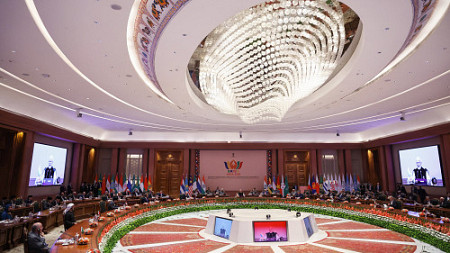
Vladimir Putin challenged German findings during a press conference following the summit of the Shanghai Cooperation Organisation in Bishkek. He asked for evidence and accused the German authorities of fabricating them. The Russian leader linked Berlin's actions to the interior situation in Germany and the weak position of Chancellor Friedrich Merz.
Russia denies being liable for attempting to attack with a drone with explosives. However, the specified denial of the Kremlin does not find the case. Moscow has been treating information operations and hybrid force as a tool of state policy for years, so all message of it must be combined with service material, method arrangements and a known way of operating Russian structures.
Drone found by Ukrainian aircraft
The incidental occurred on 4 August at Leipzig/Halle Airport. A drone equipped with explosives was found close Ukrainian aircraft and the device was disarmed. The German government on 1 September first publically attributed Russia's work for attempting to attack.
Interior Minister Alexander Dobrindt declared that the drone design, components used, explosives and ignition mode correspond to elements known from another Russian hybrid operations. According to him, a police investigation, a recognised pattern of action and intelligence indicate persons acting on behalf of Russian state entities. Previous findings on the drone in Leipzig they showed that the airport was applicable for global transport and support for the east flank of NATO.
Full evidence was not publically disclosed. The Center for east Studies evaluates the German position as a combination of intelligence assessment and political decision. It's an crucial distinction. Berlin must give its allies a strong adequate basis for its conclusions, but the deficiency of publication of operational data is not automatically proof that specified data is not available.
Germany announces retortion
Berlin announced a package of actions towards Russia. It includes, among another things, the closure of the Russian Consulate General in Bonn, actions towards the Russian home in Berlin, tightening of entry checks and further sanctions. Decision to close the consulate shows that Germany has treated the incidental as a substance of State safety alternatively than another diplomatic dispute.
Putin called this course a serious mistake. In practice, his speech was an effort to reverse the burden of the dispute: alternatively of explaining Berlin's method allegations, the Kremlin hit the credibility of the German government and its political motivations. It is simply a classical component of Russian communication that directs attention from operational facts to divisions within Western states.
Poland cannot wait for another people's decisions
For Poland the case has a direct dimension. Airports, railway hubs, military warehouses, ports and energy infrastructure are natural objectives of hybrid pressure. Our country needs efficient counterintelligence, protection of critical objects and fast exchange of information with allies.
Tough realism requires 2 things at once: verifying all accusation and rejecting comfortable naivety towards the Kremlin. Poland cannot build safety on the propaganda of Moscow or on the automatic belief in another people's messages. It must have its own designation and ability to act, due to the fact that it is our infrastructure and safety of Poles that are the real stake in this conflict.
Source: Polsat News, Associated Press, Center for east Studies
Source: Polsat News