
Constitution suspended
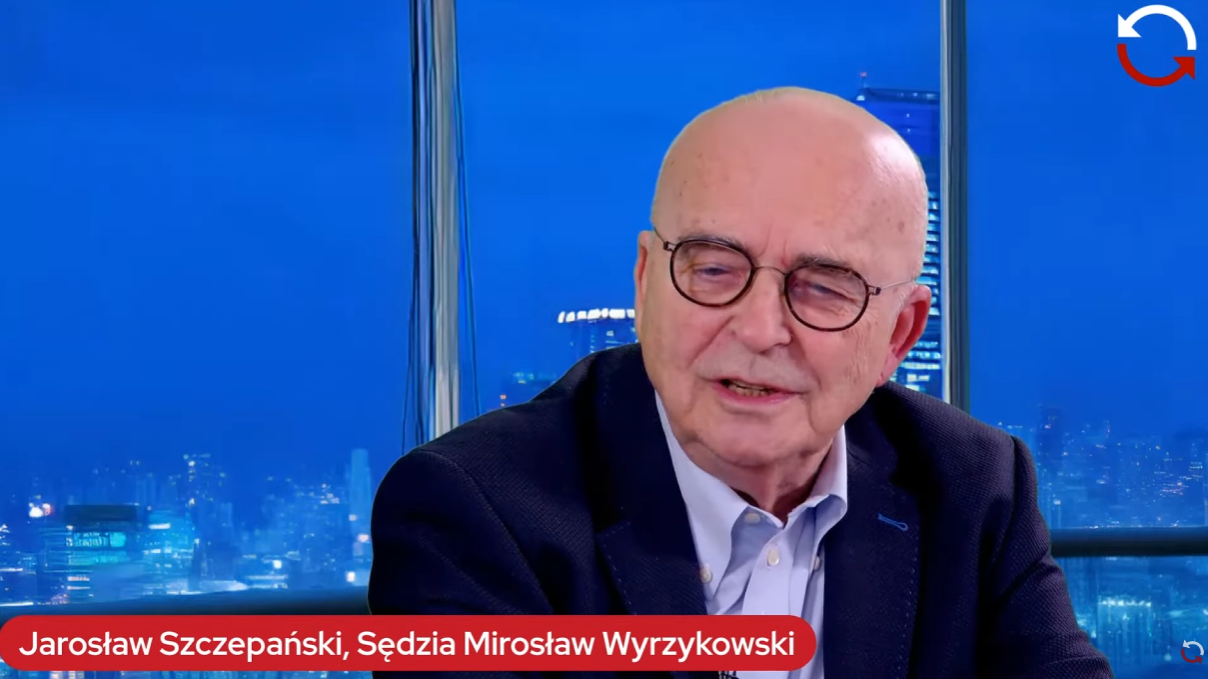
Prof. Wyrzykowski begins by saying that since 2015 there has been systemic violations of constitutional provisions by the authorities of the state: parliament, government, president and Constitutional Court. As a result, as he says, only the "shakes" of its first meaning remained from the Constitution. This is not a one-time failure, but a process that weakened the basic legal safeguards of the state.
 How can Donald Tusk deal with Karol Nawrocki's aggressive presidency?
 The function of the Constitutional Court and its erosion
According to the interviewer, 1 of the key elements of the protection of constitutional order is the Constitutional Court. His political and individual weakness made the constitutional control mechanisms of the laws no longer work effectively. Consequently, it was possible to adopt laws contrary to the Constitution without real sanctions.
The President's plans for changes to the Constitution, which is what will happen in 2027 and 2030?
President's prerogatives and legal work
Prof. Wyrzykowski criticises the practice of treating presidential prerogatives as a region of lawlessness. Examples: mass refusal of judges' appointments, hold in awarding technological titles or ignoring decisions of administrative courts. Presidential authoritative acts which do not require a countersignature thus become an enclave where average procedural rules and deadlines do not operate.
How do you measure Waldemar Żurek's actions?
No effective enforcement mechanisms
Wyrzykowski emphasizes that the constitution provides for instruments of work (Court of State, judicial mechanisms), but in practice their action is hampered. erstwhile the president fails to execute a court ruling, there is no simple mechanics of execution – there is no "chamber" for the highest offices. This leads to a situation where the law remains dead without the will to execute it.
History of Cohabitation as a Lesson in Constitutional Practice
The talker recalls the erstwhile experience of cohabitation (Wałęsa, Kwaśniewski) and competency disputes, which were settled in practice and by the Constitutional Court. These examples show that constitutional tensions can be resolved within the framework of the law if the institutions act and respect the rulings. The current dispute between the president and the government, however, has a different dimension — systematically undermining the rules of the game.


Consequences for the regulation of law
Wyrzykowski warns that the tolerance of arbitraryity in the highest spheres of power leads to a permanent weakening of the regulation of law. When exceptions become a rule, protective mechanisms cease to function and citizens lose assurance in the institutions. This in turn fosters further polarisation and erosion of democratic standards.
What can you do?
Prof. Wyrzykowski points out the request to reconstruct effective mechanisms of accountability: restoration of the independency of the Constitutional Court, active application of the Court of State and compliance with judgments of the courts. A legal culture based on the good religion of officials and respect for the constitution is besides needed — without this formal regulation will stay an illusion.
Summary
Talking to Prof. Mirosław Wyrzykowski is an alarming voice about the state of Polish democracy: the problem is not just political disputes, but systemic weakening of institutions that were expected to defend the legal order. Restoring balance requires both organization repairs and political will to respect constitutional rules.