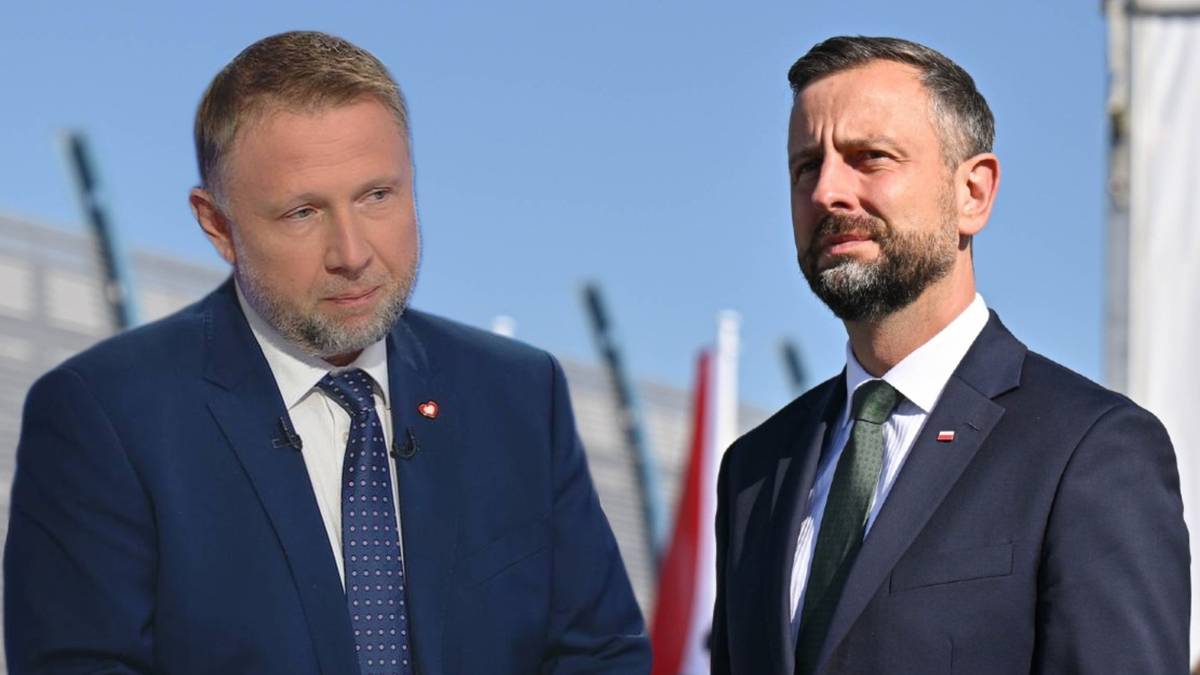
Foreign Ministers of Poland, Spain, the Netherlands and Sweden called on the EU to return to utilizing frozen Russian assets to support Ukraine on 27 August. In their opinion, a debt of EUR 90 billion for the years 2026-2027 is not enough. For Poland this means a dispute over who is to pay to halt Russian aggression.
Four states request that we return to the talks
Ministers of abroad Affairs of Poland, Spain, the Netherlands and Sweden sent a joint letter to the head of EU diplomacy Kai Kallas and representatives of the European Commission. They want the subject of frozen Russian assets back on the table at an informal gathering of abroad ministers scheduled for next week in Ireland.
Signatories considered an EU debt of EUR 90 billion as an crucial step, but at the same time stated that this amount would not cover all the needs. This assessment is consistent with erstwhile EU Council calculations. According to the Council information of February 2026. Ukraine's estimated financial gap from 2026 to 2027 was EUR 135.7 billion, assuming the end of the war in 2026.
The debt imposes a common budget
The EUR 90 billion debt was agreed by the European Council in December 2025 and is intended to service Ukraine's budgetary and defence needs. Of this amount, €30 billion was allocated to macro-financial support and €60 billion was allocated to the improvement of defence manufacture capabilities and the acquisition of military equipment. The financing comes from debt drawn by the EU in capital markets, secured by space in the EU budget.
European Council conclusions anticipate Ukraine to repay the debt only after receiving a reparation from Russia. Until then, Russian assets stay frozen and the EU retains the anticipation of utilizing them to repay the commitment in accordance with EU and global law. So the problem is clear: present the guarantor of the debt is the European community, while the assets of the aggressor state are inactive mainly immobilized.
Poland has the right to request a change of this order. A country that has invaded its neighbour and destroyed its infrastructure should bear the financial burden of aggression. The bill cannot be transferred to taxpayers of countries supporting Kiev indefinitely.
Law, hazard and political responsibility
The acquisition of Russian assets raises legal disputes and concerns in countries with a crucial share of the funds. Therefore, 4 ministers did not announce the ready-to-use confiscation mechanism. They demanded that method work on the options for the usage of frozen assets be resumed in specified a way that no associate State would face disproportionate risks.
Legal caution is needed. However, it must not turn into a comfortable screen for idleness. The EU is already utilizing extraordinary gross from frozen Russian assets to support Ukraine. The dispute concerns going further and reaching for the capital itself or building on it another financial instrument.
Russia remains a common threat to Poland and Ukraine, which hates Polish disputes with Kiev in historical and economical matters. Polish realism requires at the same time a hard memory policy and designation of the Russian threat. It's the same way you look at money. The aid is intended to strengthen the safety of the Republic, to be controlled and cannot make a blank work of the Polish taxpayer.
Rate for Poland
Every euro spent on Ukraine's ability to defend pushes Russian force distant from the Polish border. However, each euro of common debt remains a commitment that can return to EU budgets. That is why the position of 4 countries makes sense: it is first essential to make maximum usage of the aggressor's resources and then to scope deeper into the pockets of Europeans.
Russia's condition besides matters. War spending and sanctions put force on the Russian economyBut the Kremlin continues to finance aggression. Frozen property is 1 of the fewer tools that can translate Russian work at real cost, without shifting the full account to the societies of the states supporting Ukraine.
Brussels should present a legally resilient, financially transparent solution that is beneficial to the safety of front states. Poland does not request another declaration of solidarity paid mainly by common debt. He needs a mechanics where an aggressor pays for aggression.
Source: Bankier.pl, Council of the European Union
Source: Bankier.pl