The exhibition “Under the Missionary Flag” prepared by the Veteran Centre is an chance to learn more about the function of Polish sailors taking part in military missions under the flag of the United Nations, NATO and the EU since 1953. "MW operations within a mission outside the country have recorded an unforgettable card in the past of the Polish weapon", says Deputy Prime Minister Władysław Kosiniak-Kamysz.
On the eve of the Navy vacation Veteran Centre for Activities outside the State Borders prepared in Warsaw an outdoor exhibition “Under the Missionary Flag” dedicated to military missions, which were attended by Polish sailors. These are the least known operations, although sailors have been participating in them since 1953. Then Polish soldiers left for the first abroad operation in Korea.
“This exhibition shows the regular work of seafarers serving abroad. It reminds them of their responsibility, courage and readiness to act under hard conditions – said on Thursday 27 November during the beginning of the exhibition Lt. She stressed that thanks to the exhibition visitors can see how demanding this service is and how much effort it costs to keep safety in global missions.
"This is simply a very valuable initiative, and the exhibition is simply a tribute to all seafarers who defender peace and safety outside the country," wrote Władysław Kosiniak-Kamysz, Deputy Prime Minister and Minister of National Defence. He added that the exhibition was interestingly close to the events related to maritime operations, which were frequently conducted in akin conditions to war.
The peculiar guest of the gathering was Mr Alexander Urbanowicz, commander PKW Czernicki from 2017 and the first Polish officer to be entrusted with command of NATO Group 2 (SNMCMG2) Permanent Defence Force Team. “This is all we can see on this beautiful exhibition, not only our missions outside the country, but above all people who decided to dedicate their lives not only to the Navy, but to the Polish state”, said Mr Urbanowicz.
Sailors in Iraq and Afghanistan
The exhibition consists of 16 boards that rearrange various abroad missions of Navy units carried out for many years in operations under the flag of the United Nations, NATO and the European Union. The boards included information on circumstantial operations as well as materials concerning regular service at sea under global allied obligations.
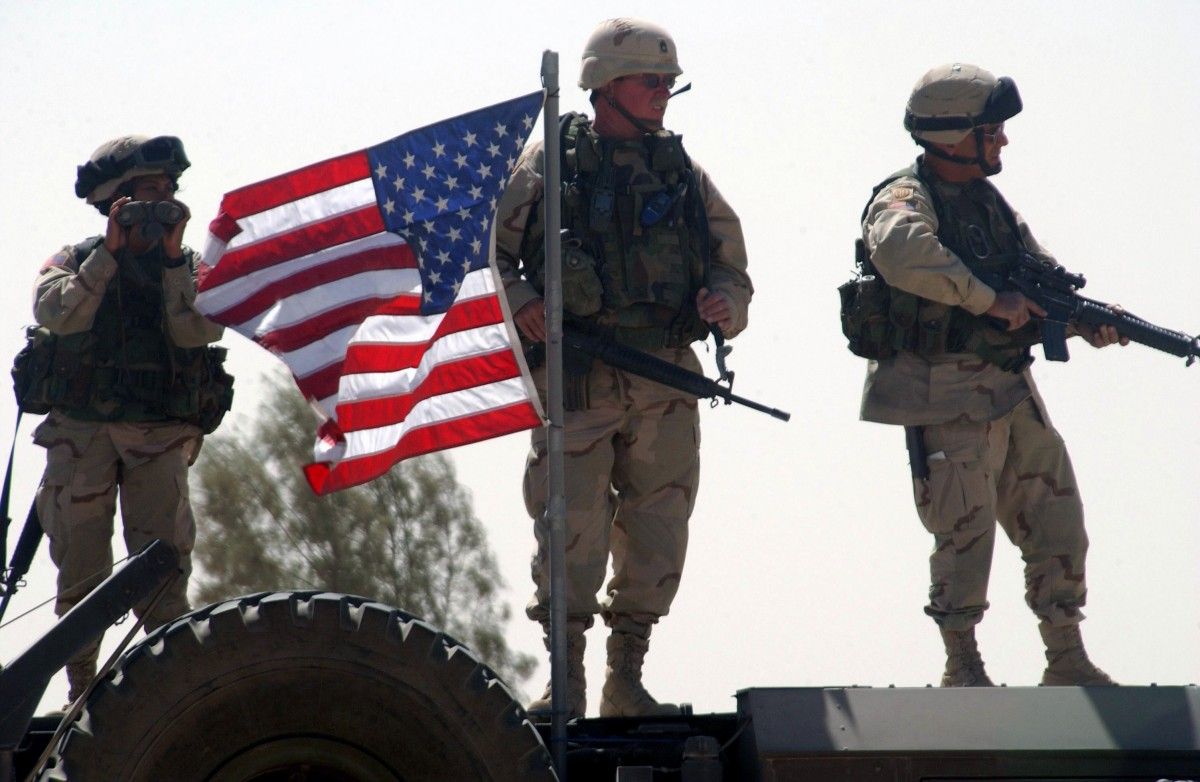
While visiting the expositions, we can learn that our Navy operated not only on the closest Baltic Sea but besides distant from the country, including during missions in Iraq and Afghanistan. These operations are mainly known as land missions, but Polish sailors besides participated in them. The fight against global terrorism, which intensified after the September 11, 2001, was fought not only on land but besides on the seas and oceans.
In 1991, ORP Piast (the rescue ship) took part in the “Pustine Storm” which aimed at the liberation of Iraqi Kuwait and ORP Aquarius (a infirmary ship). Their task was primarily to observe Gulf waters and airspace to detect drifting mines and aerial assault measures.
Between 2000 and 2001, soldiers from the peculiar Pleniper Groups (currently Formoz Military Unit), while operating from U.S. Navy ships, they searched vessels flying the Gulf waters. “We were catching ships that broke the embargo imposed by the UN on Iraq after the business of Kuwait and smuggled Iraqi oil,” recalls Chor. Jacek Bernacki, then a soldier of the peculiar Peel Groups. During the nearly 4 months of the mission, they participated in more than 130 specified actions.
Poland besides supported Operation ‘Enduring Freedom’ to overthrow the Taliban government and destruct al-Qaeda terrorists hiding in Afghanistan. For this purpose, in 2002 the Polish Military Quota was formed, which included not only Afghanistan, but besides the Persian Gulf, on which the waters hit ORP Counter Admiral Xavery Czernicki.
On board were operators of the peculiar Action Section (now JW Formoza) who secured logistically anti-terrorism coalition operations. Subordinated commander of the 5th U.S. Navy fleet, the ship's crew transported method equipment, fuel and fresh water to allied forces ships and escorted ships with humanitarian aid. “We protected local fishermen from pirates”, adds Mirosław Kawucha, a erstwhile soldier of Formosa who served in Czernicki at the time.
An example of NATO's offshore counter-terrorism operation was the Active Endeavour mission, which was intended to improve safety in the Mediterranean, an crucial shipping way linking Europe, Asia, North Africa and further America. Between 2005 and 2011, the OORP Bielik and Condor submarines, a rocket frigate, participated in the operation. ORP General Kazimierz Pulaski and the command ship of the ORP Counter Admiral Xavery Czernicki.
The Navy ships spent more than 2 years in the area of operations, detecting respective 1000 units, many of which smuggled people and banned substances. In all these tasks, Polish sailors collaborated with allies. In the Mediterranean, Polish units besides participated in EU missions. Operation nonsubjective PKW Irini and the erstwhile PKW Sophia under EUNAVFOR MED is the fight against smuggling and trafficking in human beings including water.
Polish double commander
NATO has besides set up permanent teams forming a mine defence strategy on marine waters. In 2017, for the first time, the Alliance entrusted the Polish Navy with commanding 1 of 4 specified teams – the Permanent NATO Defence Force Group 2 (SNMCMG2). The Polish officer who took the lead was Mr Aleksander Urbanowicz, who besides became commander of PKW Czernicki in the Mediterranean, Black and Aegean.
“This was a mission in which Poland commanded not a well-known aquaven, or Baltic, but on the confederate flank of NATO”, pointed out kmdr Urbanowicz. The Natov squad he led included representatives of 11 countries and 45 different ships. During 135 days at sea, they managed to detect 40 minutes.
In 2017, under command of kmdr. Urbanowicz served in Czernicki kmdr Lt. Piotr Bartosevicz. “This is how my adventure with NATO’s permanent teams began,” the officer recalls. Six years later he returned to the ship as commander of the next PKW Czernicki and commander NATO Permanent Mine defence Force Group 1 (SNMCMG1).
ORP Counter Admiral Xawery Czernicki was then a logistical support vessel and at the same time a command unit of mine defence forces. It was accompanied by 2 base trawlers: OORP Hańcza and Team. In addition to the 8th Coast Defence Fleet units, SNMCMG1 included destroyers from allied states. Their area of action included the Baltic Sea, the North Sea, the Norwegian Sea and the east part of the Atlantic Ocean.
As Mr Bartosevicz emphasizes, the main task of the units included in the squad was to detect and destruct underwater mines, remnants after planet War II. During the six-month mission, Czernicki sailed nearly 2,000 nautical miles, checked the area of nearly 190 sq mi of sea and neutralized about 50 dangerous facilities.
The exhibition “Under the Missionary Flag”, prepared by the Education and Tradition squad of the Veteran Center in cooperation with veterans and participants of the mission, can be viewed in front of the Centre's office at ul. Puławska 6a in Warsaw until further notice. “The exhibition is available to everyone and is an chance to learn more about the function of Polish sailors taking part in military missions under the flag of the United Nations, NATO and the EU”, encourages Tomasz Jasionek, who together with Mariusz Sybilski, the Head of Education and Tradition squad of the Veteran Centre, prepared the exhibition.


![24 Hours of Le Mans: Poles Shine Again! Toyota Reigns ultimate at the French classical [RESULTS]](https://wrc.net.pl/media.php?url=https%3A%2F%2Focs-pl.oktawave.com%2Fv1%2FAUTH_31b548cfed58484085a001af5d8ac982%2Fwrc-prod%2F2026%2F06%2Fle-mans-toyota-wyniki-1024x683.webp)