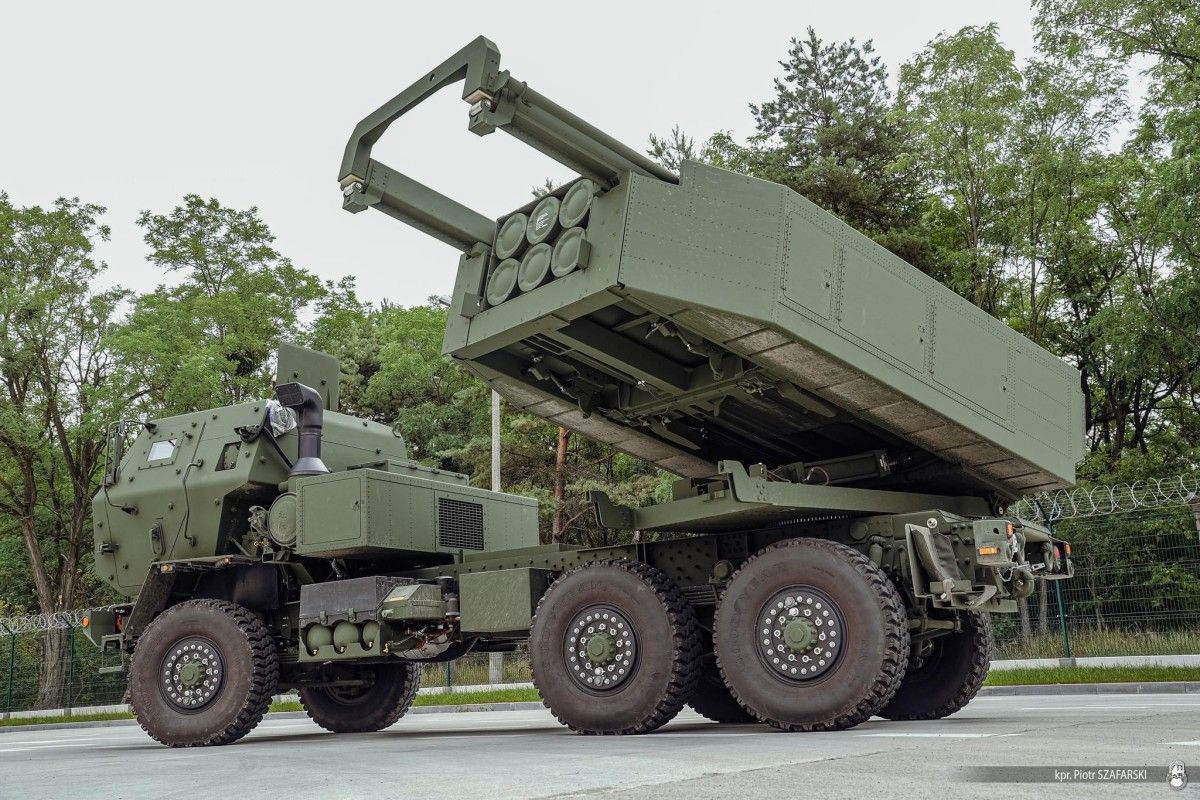
Over a billion dollars will consume investigating and production of the PAC-3 Edge front batch, the latest generation of rocket to the Patriot strategy launchers. The U.S. Army has signed a suitable contract with Lockheed Martin. The structure will gain greater range, higher ceiling and ability to fight hypersonic missiles. first operational readiness should be achieved in 2031.
The PAC-3 Edge deal was signed at the end of last week. According to her records, the US government will allocate $660.4 million to work on a fresh rocket to the Patriot strategy launcher. Company Lockheed Martin will contribute 423 million to this amount. The contract is simply a key component of the Future Interceptor programme, which is intended to supply fresh opportunities for Americans to combat air threats – especially hypersonic missiles.
– The ability to destruct the enemy's systems over long distances is simply a key issue for us,” says General Christopher LaNeve, Deputy Chief of Staff of the US Army, quoted by the press service there. “As part of a targeted strategy to modernise the army, we aim to make a mix of advanced, specialized weapons and low-cost solutions. "Future Interceptor is precisely the kind of groundbreaking technology we need," he adds.
The fresh rocket is based on proven technology. – The starting point for its construction was the PAC-3 MSE strategy tested in combat – explained Tim Cahill, president of the Missiles and Fire Control department at Lockheed Martin a fewer months ago. This structure is an advanced ground-to-air missile.
It works on a "hit-to-kill" principle. simply put, it hits the target, destroying it with kinetic energy. The rocket is powered by a solid fuel rocket engine and reaches a velocity above Mach 5, or 6125 km/h. At the same time, it can emergence to an altitude of 40 km and scope a mark even 160 km away.
In addition to the Americans, the armed forces of Germany, the Netherlands, Romania, Sweden and Saudi Arabia are equipped with specified weapons. The PAC-3 MSE user is besides Poland, and a fewer days ago the Americans decided that it was in our country that the Only outside the US service center for these missiles.
How will the PAC-3 Edge version disagree from them? According to the Americans, fresh rockets will have a greater scope and ability to operate at a higher ceiling. They are besides able to execute more complex manoeuvres in the final phase of flight, which will facilitate the fight against these hypersonic missiles. This will consequence in an active next generation radio-location guidance system.
It was developed by specialists from the Strigo Product Center improvement center – a facility that has been operating as part of Lockheed Martin for over 2 years, although officially launched in August of that year. The system, according to the U.S. Armed Forces Service, was designed for full integration with IBCS command system and M903 kind launchers.
PAC-3 Edge was presented on October 9. As Lockheed Martin announces, preliminary rocket investigating in flight should take place next year. The Army initially outlined the date of his entry into operational service for 2031.