Piotr Puszka: Suspects of fresh sabotage activities in Poland can be called "one-off spies"?
Arkadius Nyzio: Let's start with a comparison. Everything indicates that Those suspected of sabotage — Yevheny Ivanov and Alexander Kononov — were not random people. The first was already convicted of sabotage in Ukraine. The conviction was passed in the past, but it was burned in that country. For this reason, he was hit by a "Polish episode", via Belarus, or indirectly by a Russian ally. The second, originating from Donbass, was besides recruited and sent by Belarus to Poland.
So these were not typical “one-time spies” — those who are drawn from the local population, utilized for simple actions and then abandoned. These people had more advanced equipment and more complex tasks entrusted to them.
This is akin to the events prior to last year's Olympic Games in France, erstwhile sabotage on the railway paralyzed transport on the eve of the competition. Nobody died, but there was a panic.
So how do we separate "single spies" from those who operate on a higher level?
A typical one-time spy is individual you can easy replace. He is given simple tasks — those that each of us could do. For example: preparation of the Molotov cocktail, instructions can be easy found on the Internet, and arson of something, writing graffiti on the NATO building, as happened in Estonia, or sticking verbund stickers in public spaces — specified things happen in Poland, Krakow and Warsaw.
In Latvia, specified agents broke windows at a museum documenting the fight for independence, which was to symbolically "hit" anti-Russian sentiments. In Lithuania, they impersonated ministry officials by telephone to get information or to spread misinformation.
Further string of article under video material
But the perpetrators of sabotage on the railroad acted differently. They had access to explosives that could detonate from a distance. He won't learn that on the Internet. That is not the cognition of the average citizen, or even the majority of officers or soldiers.
These 2 in Poland had partners.
Yeah. This confirms the detention of 4 more people – they had logistical facilities in Poland. Moreover, they managed to flee the country smoothly, showing that they knew what they were doing and acted on the plan. It wasn't amateur sabotage, it was a planned intelligence operation.
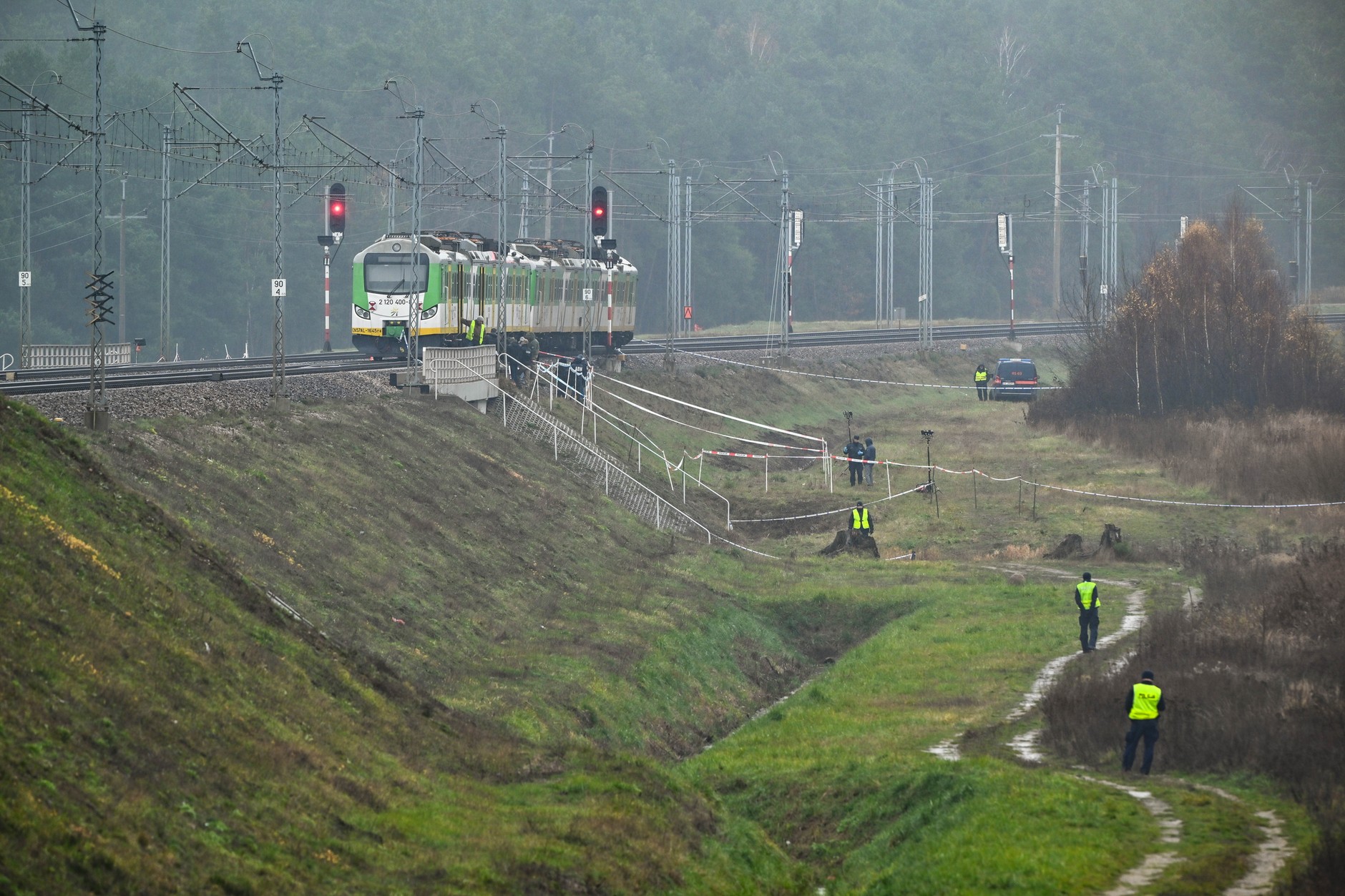
Service activities on the damaged track passage on the Dęblin-Warsaw way at the railway station close Mika (17 November)Przemysław Piątkowski / PAP
There is an interesting word in the Baltic States — telegram agents, i.e. ‘employees from Telegram’. They are usually average people, random, sometimes even bandits who do simple tasks: arson, vandalism, propaganda actions. This is why, in the context of what happened in Poland, we clearly see that we are dealing with a much more advanced operation.
From what we know so far, it seems that these actions may have been carried out by the Chief Executive (GU), or Russian military abroad intelligence service.
Were these people personnel officers?
I uncertainty it. If they were professional GU saboteurs, the full operation would most likely be more efficient. On the another hand, we do not know whether their task was simply to carry out a circumstantial act of sabotage. It was most likely part of a larger plan, and actions in Poland were only part of a wider operation.
Different levels of activity can be distinguished in the intelligence hierarchy. "One spy" is the very bottom of this pyramid. In this case, however, we are talking about something above — a more classical agent, organized, trained and conscious. They are most likely not staff officers, but surely people operating within a professional structure.
“This is valuable data for intelligence”
What was Russia's intent in preparing this sabotage?
To test the resilience of the state and society. To see how rapidly and how the service responds, how authorities, the media, public opinion behave. It's valuable data for intelligence.
Secondly, specified action can service to disinformation and destabilize. It strengthens anti-Ukrainian sentiments, creates panic and distrust of refugees. As a result, society becomes more polarized and the state little stable.
And delight note the consequences of all this. It took 1 operation to get the full country back on its feet. Following it "Horizon 2020" action is now underway, involving 10,000 soldiers. But the cost of this provocation was — comparatively — virtually zero.
Even average accidents or accidents can be perceived as possible acts of sabotage at first and can origin large concern.
It is adequate that there will be a simple failure, for example in waterworks in Krakow, or to derail the train due to human error, then immediately there will be suspicions that it was not sabotage.
Media, service and public opinion begin to react, speculate. Each incidental becomes a possible ‘attack’. As a result, Russia achieves a intellectual effect without taking any action. It is highly dangerous due to the fact that it creates permanent tension, both in society and in the safety apparatus.
And a safety camera has its limitations, even human resources.
Our safety services, with all due respect for their work, are not peculiarly developed or well funded. The largest of them, the interior safety Agency (ABW), employs about 4.5 1000 people, but only any of them deal with actual counterintelligence. It is simply a tiny amount of resources, as on the scale of the challenges we face.
What about the money? It is not understood how much Poland does not draw conclusions from the chronic underfinancing of services. Throwing in a fewer million zlotys a year won't change anything. This is not a substance of pointing out money, but of systemic improvement and investment in quality. There is simply a request for a multi-annual strategy for the improvement of services, and their people request to start paying properly.
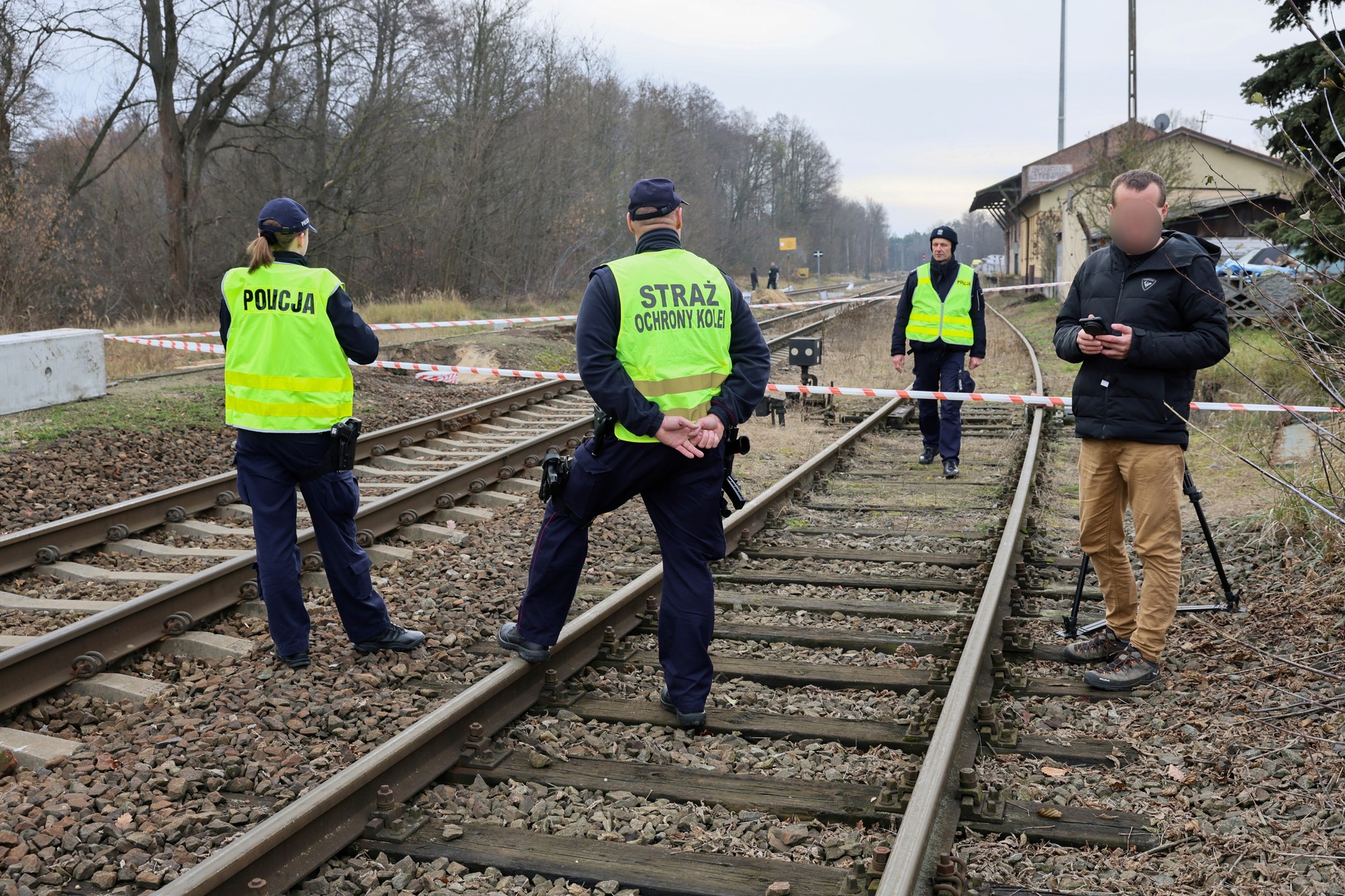
Service at the location of uncovering blind firearm cartridges on a renovated section of railway tracks in the village of Sosno (21 November)Tomasz Wojtasik / PAP
Onet late published a poll in which More than 70% of Poles replied that they were afraid of an increase in the number of diversion acts in the close future.
It's a very meaningful result. It shows that the information and intellectual operation was successful. Russia is not always about an detonation in a literal sense. Sometimes it is about the “explosion” of social emotions — fear, suspicion, polarity. And that's what it worked out. Just look at the number of anti-Ukrainian comments on social media, besides under the statements of any Polish politicians from the far right. This is tangible evidence of the effectiveness of Russian disinformation operation.
So let us stress — the action on the railway was not any “Ukrainian sabotage”, but Russian sabotage carried out with Ukrainian hands. The claim that “the Ukrainians behind this” is precisely what Russia wants. That's why the Russians recruit Ukrainians.
"The expanding influence of pro-Russian groups is seen"
So Russia has achieved the maximum effect at minimum costs.
Exactly. This is simply a model action from the point of view of the Russian services. Moreover, it has political effects. In Poland, as well as across Europe, there is simply a increasing influence of utmost groups, frequently the beginning of pro-Russian groups.
This phenomenon is not just about us. In Slovakia Robert Fico regained power, openly anti-Ukrainian Prime Minister. In the Czech Republic, there is simply a political struggle, Andrej Babiš versus president Petr Pavel — Babiš, called ‘Czech Trump’, is trying to return to power.
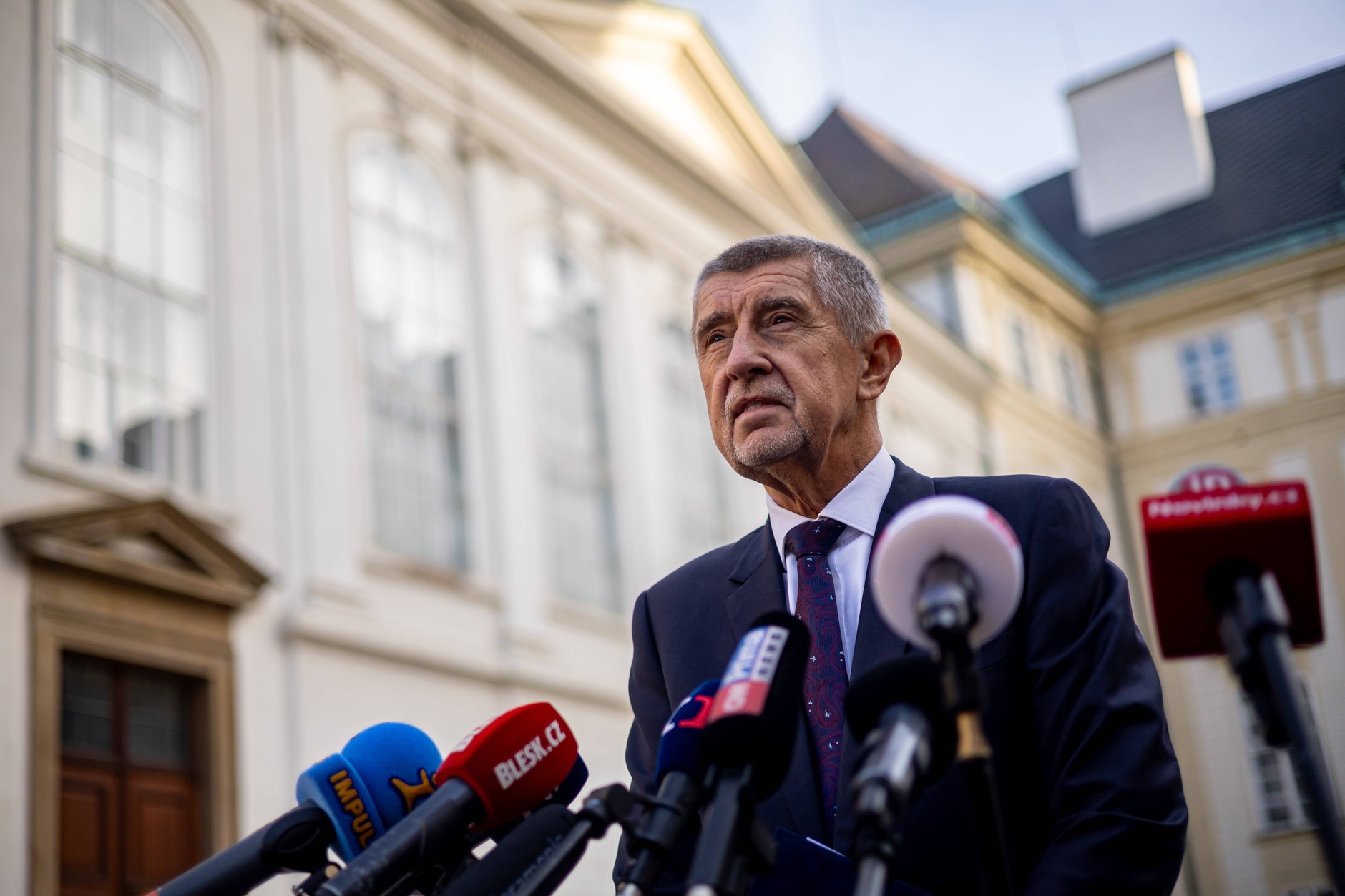
Andrej BabišMARTIN DIVISEK / PAP
For Russia, it's all part of 1 puzzle. all sabotage, all provocation, all disinformation run is another brick in weakening the West from within. And "single spies" are only a inexpensive but effective tool.
This list is yet to be reached openly by proputin Hungary.
Yes, Hungary is simply a long-established area by Russia. Prime Minister Viktor Orbán has long pursued pro-Russian politics, and present he is trying to assemble an anti-Ukrainian alliance with the Czech Republic and Slovakia.
But the situation is not predestined. In a fewer months, elections may take place where Peter Magyar's TISZA organization has a real chance to take Orban's power. If indeed the West would "return" Hungary, this would be of large importance to Poland as well. In any case, our role, as a NATO front country, with key military infrastructure in the region of Rzeszów, is and will be crucial.
Do you think it will be possible to extract these people from Belarus or Russia?
I don't see any real chances. There is no “Mossad-style operation” — a kinetic entrance, kidnapping and bringing them to Poland, even if we determined their whereabouts. It's completely unreal. The only thing that could make them fall into our hands is their own serious mistake if they return to Ukraine or reappear in Poland, or in any another Western country. But I seriously uncertainty that.
Russia will surely not cooperate in any way. This issue is beyond discussion. What about Belarus? Yes, Lukashenko can be unpredictable, but he's not the quarterback here. In a word, there must be an extraordinary scenario.
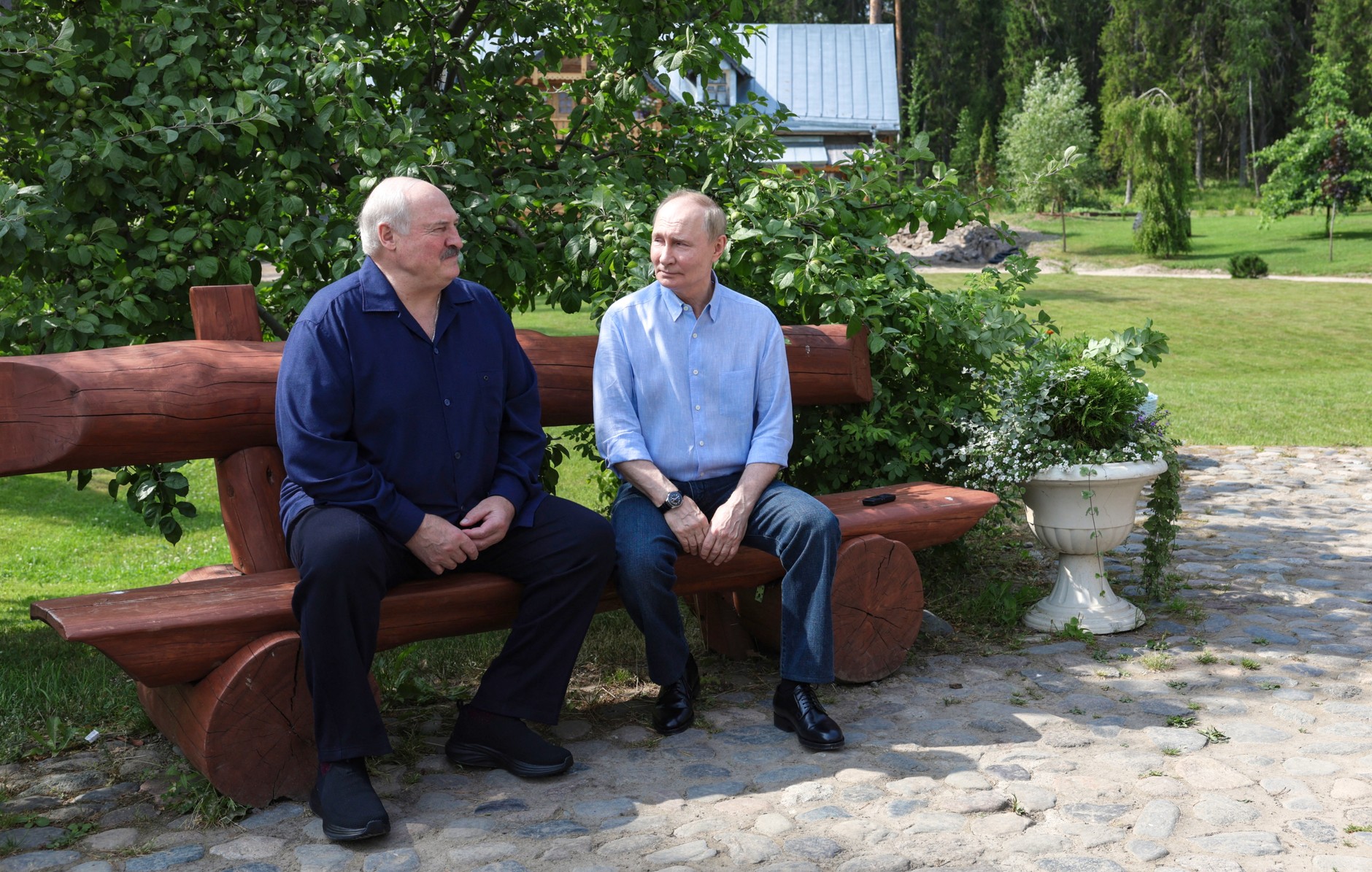
Aleksander Lukashenko and Vladimir Putin (August 2025)Gavril Grigorov / AFP
“It all forced Russia to evolve”
Russian intelligence in Europe is well?
At the end of 2024, British MI5 service manager Ken McCallum reported that after 2022 more than 750 Russian diplomats were expelled from the western states — in practice, in a large part of the intelligence officers operating under an “official” cover. Today, this figure most likely exceeds 800, due to the fact that further expulsions have occurred in the UK, Romania and Estonia.
In Poland this year we close the last Russian consulate — in Gdańsk. This means further limiting the activities of the alleged "site intelligence", that is, the 1 conducted from the embassies and consulates. This step affects the full structure of intelligence networks, forcing Russia to search fresh methods of action.
Another origin is the strong presence of NATO in the region. More soldiers, equipment and infrastructure besides means more counterintelligence and better information support from Western services. As a result, present we have a stronger counter-intelligence safety government than a fewer years ago.
All of this forced Russia to evolve — the request to complement classical intelligence activities with other, more flexible forms. 1 of the effects of this change is the phenomenon of alleged disposable spies.
After limiting the activities of intelligence officers while covering diplomats, Russia develops alleged illegal intelligence, conducted outside authoritative facilities. That means utilizing the so-called. illegal — officers operating in industries that naturally let travel and networking.
What kind of business?
Excellent “covers” include media, science, tourism and the NGO sector. A writer gathering people doesn't rise suspicion. A scientist who goes to conferences or scholarships doesn't either. It's the perfect environment for intelligence operations.
In addition, we have a phenomenon called "territorial intelligence". This means actions not straight carried out in the country which is the nonsubjective but, for example, in 3rd countries, through intermediaries. Recruiting people in neutral territory, distant task, communications through applications like Telegram.
It is there that these new, frequently unconscious “telegram agents” are born — people who are not “professional” spies, but who execute certain tasks in the name of others’ interests.
Poland is simply a hard territory for Russian intelligence?
Not as hard as we'd like her to be. The scale of Poland’s “saturation” cannot be accurately estimated. In criminology, there is the word “dark number of crimes” — it means the difference between the actual number of crimes committed and those we know about. In the case of espionage, this “dark number” is most likely huge.
So if we know about respective twelve people detained for spying, then the real number of people conducting specified activities in Poland may be many times larger.
As a state, can we deal with this problem?
We're trying. This is not a question of the professionalism of the services itself, but alternatively of a systemic approach: the request for greater coordination, consistent funding, and public awareness. Let's hope that events specified as fresh sabotage actions on the railway will become an impulse for deeper reflection and for changes that will actually impede Russian intelligence operations in our territory.
And possibly we already see the first symptoms of that thinking. A plan has just been announced for the establishment of the National Bureau of Investigation (NBS) — a new, specialized unit in the police structure to arise from the merger of CBŚP (Central Police Investigation Office) and CBZC (Central Cybercrime Bureau). It is to be, as the police themselves say, between another consequence to a wave of sabotage and diversion. This is of course only the beginning, but we can hope that NBS will become part of a new, more integrated safety strategy that will be able to respond faster and more effectively.
“It was to receive €3,000”
What does the recruitment of specified "one-off spies" look like?
We have many interesting examples. 1 of the most prominent is the Colombian case, Andrés de la Cruz. A young, about 27-year-old man utilizing the visa-free movement. Colombians can freely enter many European countries, including Poland or the Czech Republic.
In June 2024 he attempted to set fire to a bus depot in Prague. He was detained, and then it turned out that he was besides preparing to set fire to the mall in the same city. Moreover, he was previously liable for arson of 2 construction depots in Poland: Warsaw and Radom.
Who was he?
A complete amateur. He didn't have any preparation, he left quite a few tracks, and city cameras recorded his actions step by step. The Czechs collected so much evidence that de la Cruz rapidly confessed.
And how was he recruited?
Just by telegram. He received the offer of “earn”, instructions on how to prepare Molotov cocktail, what objects to observe and set fire to. He was communicating with a man with a nickname. Adrianwho promised him EUR 3 000 for the task. For de la Cruz, it is simply a immense sum — in Colombia this amount corresponds to about half a year’s wages. For Russia, in turn, this expenditure is completely symbolic. Therefore, recruiting specified people is inexpensive and simple.
In fact, the Russians frequently pay only half the advance, and the remainder only after the task — which in practice means that many “agents” never see this money. But it doesn't matter. Sam de la Cruz admitted that his motivations were purely financial. He had no thought about Poland, the Czech Republic, or Ukraine, or whose interests he was in.
This perfectly shows how “the economy of disposable spies” works. People are recruited by chance, frequently frustrated, seeking money or sensationalism. Useful but unnecessary, there is basic military training — for example, in Colombia, military service is mandatory, so it is easy to find individual who can handle a weapon or do a simple task.
Recruitment takes place through chat rooms, forums, social media groups. Where a extremist message or conspiracy content appears, the Russians have their observers. Just 1 conversation, a promise of money — and a man can become a tool.
And there are more and more specified cases, more than a 100 in Europe. It's a systemic phenomenon. Another interesting example is Maxim Sergeyev, a hockey player of Sosnowiec Zagłębie, who besides found himself in orbit of Russian activities.
In Poland it was loud about this case.
Yeah. About 20-year-old Russian arrived in Poland before a full-scale invasion of Ukraine. He played hockey, but he was a mediocre player and, what to say here, he barely made any money.
As with the Colombian de la Cruz, his money was besides tempted. There is no reason to believe that there were another motives — political or ideological — for his coming to Poland.
The recruitment looked almost identical: everything took place through the Telegram. He was promised a payday in cryptocurrency, which became the guiding subject of this kind of operation. In his case, the payer was signed as Andrei.
At first Sergeyev was to advance propaganda and disinformation on the Internet. He wrote nonsense online — the content of these entries is known. He was then "committed" to more operational activities: he was to observe the railway station in Przemyśl and military facilities.
Except he was a complete amateur. He rented an flat close the mill he was expected to be watching, but he even had a problem with camera handling. Hence, he was to get fresh — solar - powered (also known motive). A pile of materials, films and photographs, including Wagner Group materials, was secured. In view of specified a number of evidence, he voluntarily submitted to punishment.
Russia has already condemned these people to loss.
That's right. It's part of the calculation. It's no cost to Russia. If an agent like that gets caught or dies in action, that's fine. These are cheap, interchangeable tools. And if they can do the job, it's a double advantage.
***
* Arkadiusz Nyzio, lecturer at the Jagiellonian University and the University of Andrzej Frycz Modrzewski. He deals with interior safety issues.