Operation to transport the largest exhibits of the Museum of the Polish Army to the fresh office – completed. Historical aircraft and their replicas were last transported, a full of respective machines. The way from Jerozolimskie Avenue to the Warsaw Citadel travelled at night on tows. Moving and preparing for it sometimes required considerable logistics.
The aircraft from the outdoor exposition were the last large exhibits to be carried from the old office of the Polish Military Museum in Jerozolimskie Avenues 3 to the fresh – in the Warsaw Citadel. In the vicinity of the National Museum, the military facility operated since 1933, erstwhile it was moved from the building at 15 Podwale Street. However, the current decision is simply a much bigger venture. Preparations began 3 years ago. It was assumed that the operation would take respective years, but the squad coordinating the decision was only a year.
Through the gate and beyond.
– It was undoubtedly a hard operation. The challenge was both to carry specified large-scale exhibits and to prepare them for transport. They were hard to spread properly, and adequate safety had to be prepared. In the case of old aircraft, for example, we started to deficiency equipment and we had to look for suitable replacements, even associated with the installation of wings," says Tomasz Kowalski, Head of the Maintenance Section of dense Equipment Engineering of the Polish Military Museum in Warsaw.
Implementation: Jacek Szustakovsky
Preparations for moving aircraft began in February. – It was a challenge, due to the fact that the logistics preparation of specified a large amount of equipment required quite a few work. We utilized respective tons of steel, respective tons of wood to defend all these objects from harm in transport – added Adam Kowalczuk from the KSCTW Section of the WP Museum in Warsaw.
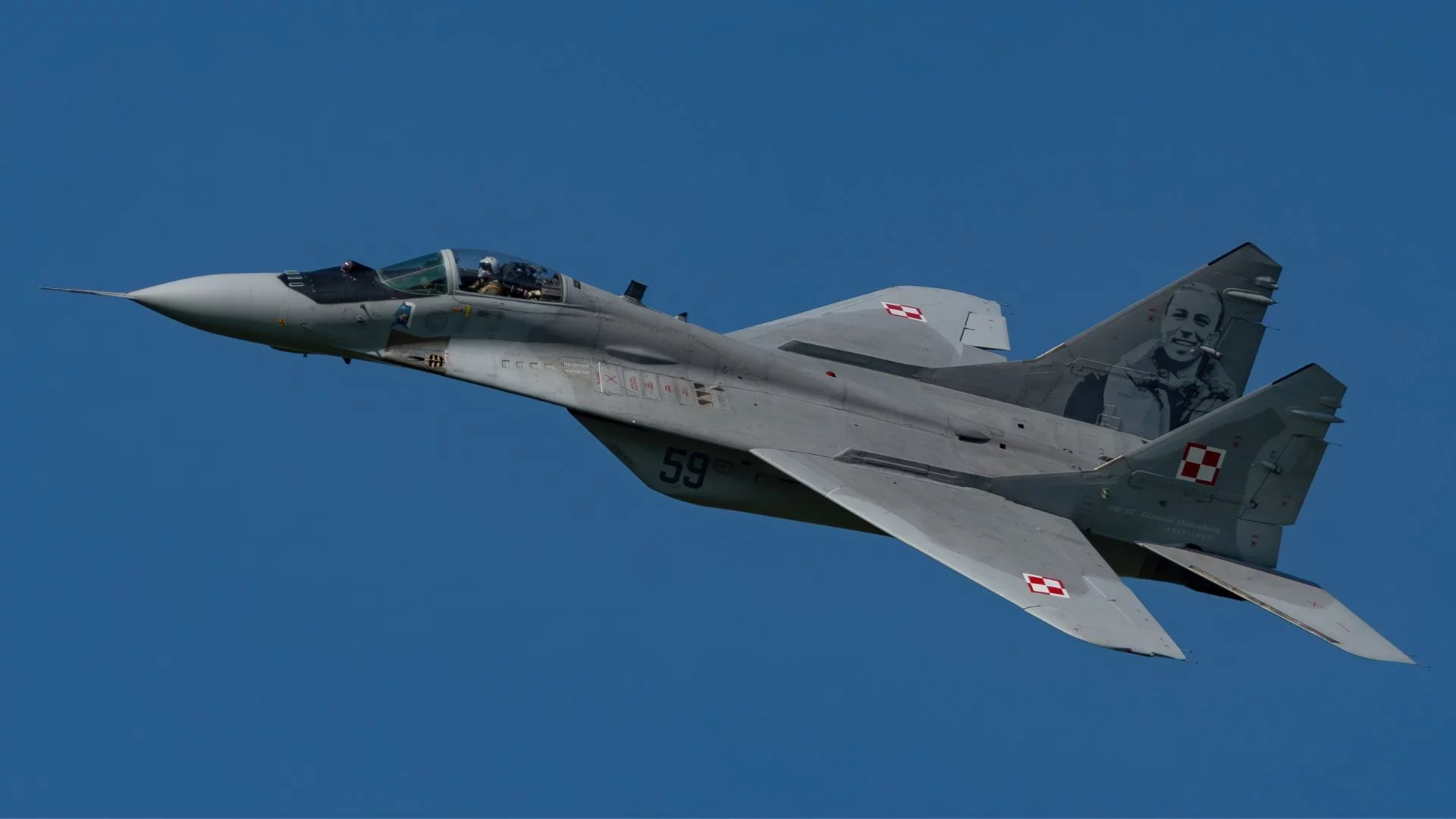
From Jerusalem Avenue, helicopters were transported to a fresh location: Mi-2, Mi-8, Mi-24 and aircraft, among others: Spark, Eagle, Il-2, Il-10, Iryda, Su-22, MiG-29, MiG-21, Jak-40, An-26 and Tu-2. The biggest problem faced by the squad liable for the removal of the outdoor exhibition was the passage of cargo through the museum gate. – The gate is historical and cannot be dismantled in any way. It's 4.60 m wide. So, in order to pass through it, for example, with the hull of the Jak-40 aircraft, it had to be rotated," explains Adam Kowalczuk.
Large russian constructions
How-40 is simply a alternatively large aircraft, but it has a simple structure, due to the fact that it consists of 2 parts, namely a centreplane and a hull. Nevertheless, the preparatory work to transport Jak-a lasted 5 days. “All unnecessary elements, which weigh a lot, i.e. engines of about 800 kg or horizontal ballast, were dismantled for transport,” added Kowalczuk. The experts besides had to remove all kind of drain surrounding the wings so that the airframe could be safely decomposed. The movers had to control to work at night many times, as only after 10 p.m. it was possible to carry large cargo through Warsaw.
There was besides a hazard that it would not be possible to turn Jak's hull so as to pass through the gate, then it would should be moved over it. Fortunately, that was not necessary. – We avoided an extension of work at night for at least 3 hours. It would take so long to decision the cranes and decision this component above the gate – explains Kowalczuk.
But not only passenger Jak-40 was a logistical challenge. It took a long time to cross the capital with a fragment of the Tu-2 assault bomber. – At the same time, the object's size, over 7 m wide, was not easy. You had to decision slow and watch out for poles, lanterns, signs, sometimes barriers. The car must have been a good driver, says Tomasz Kowalski.
The Curse of Alea
MWP workers in the transport of aircraft besides faced another problem. They had to prepare the cargo so that it could fit under a tram traction which is at 4.75 m. “Most of the fighters we had the chance to carry had to be carried above the gate due to the gabarites. They were in the lane for further transport. But the gate itself could not be a determinant, due to the fact that it is specified a magical place where many logistics people cheated, then most frequently missing 2–3 cm. Even the curse of Jerusalem Avenue has been told... – adds Adam Kowalczuk.
There is inactive quite a few work to be done before the Maintenance Section of dense Equipment Engineering of the Military Museum of the Polish Army after the operation of moving the exhibits. – We were moving, but there are collections under our care that we prepare for the exhibition. It will besides take any time to refurbish the moved facilities and supplement them with the external exhibition and in the museum itself – emphasised the head of the KSCTW section of the WP Museum in Warsaw.


![24 Hours of Le Mans: Poles Shine Again! Toyota Reigns ultimate at the French classical [RESULTS]](https://wrc.net.pl/media.php?url=https%3A%2F%2Focs-pl.oktawave.com%2Fv1%2FAUTH_31b548cfed58484085a001af5d8ac982%2Fwrc-prod%2F2026%2F06%2Fle-mans-toyota-wyniki-1024x683.webp)