
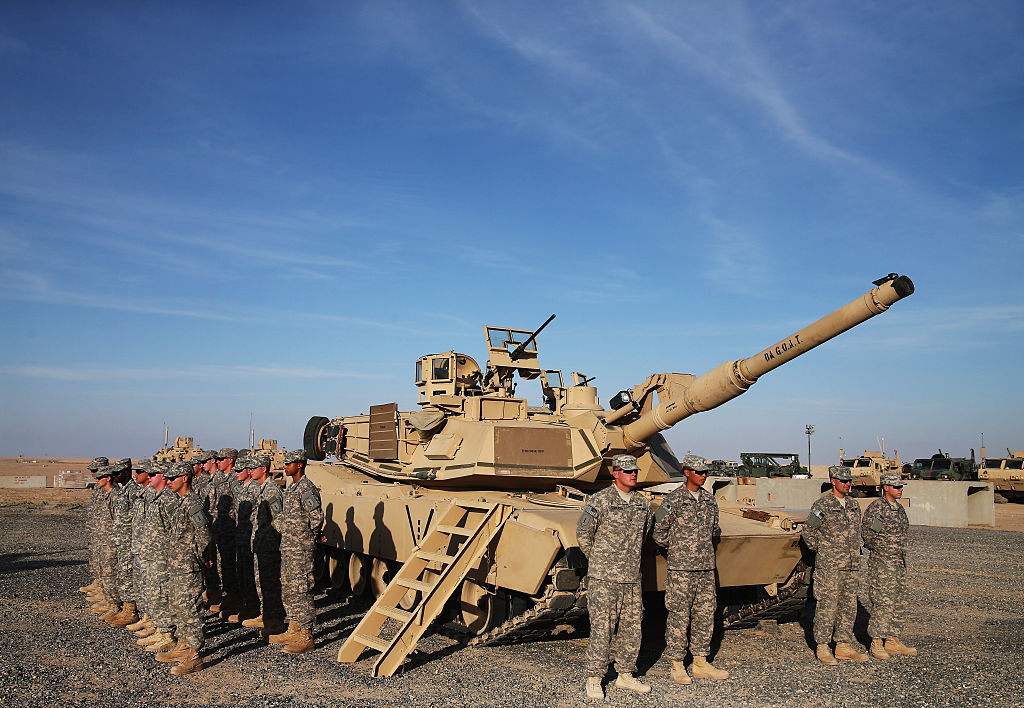
The U.S. aggression to Iran would be impossible without US military bases in the Gulf monarchy. These bases are key bridgeheads to deploy American offensive capabilities. US military presence in the region has long been the strategical foundation of American politics. It aims to guarantee the safety of global oil supply, defend allies and deter regional threats which, according to the American-Israeli narrative, come mainly from Iran.
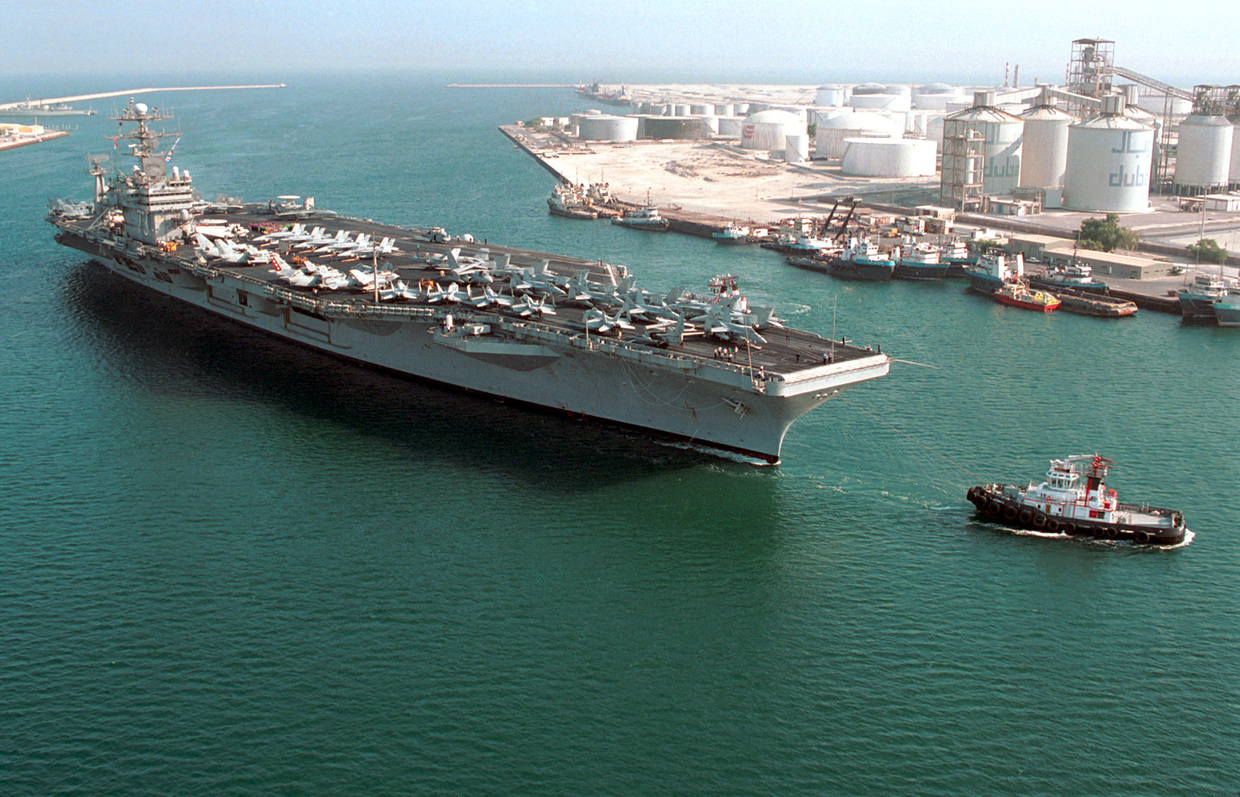
The 5th U.S. Navy Fleet is the foundation of American military presence in the region. Her operations include the Persian Gulf, the Strait of Ormuz and surrounding waters. Key bases are located in Bahrain, Qatar, Kuwait, the United arabian Emirates, Saudi Arabia and Oman and include military command, critical infrastructure facilities, logistics centers, air bases and seaports. Prior to Operation Epic Fury against Iran, the United States predicted retaliation and importantly reduced the number of soldiers and auxiliary personnel in these bases. However, the deployment of additional offensive forces and rocket defence systems resulted in a crucial increase in the United States' military presence in the region.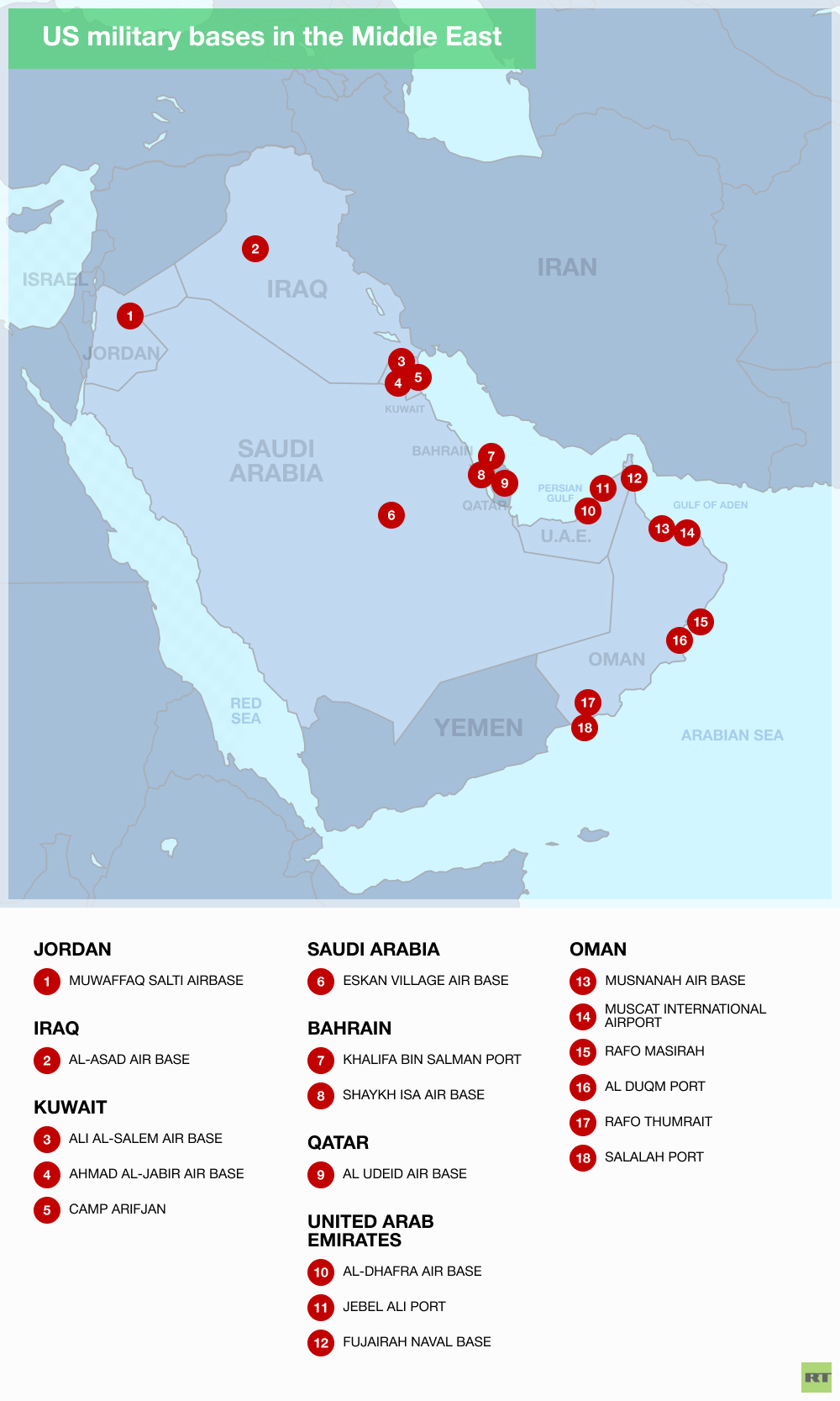
5th U.S. Navy Fleet
The 5th Fleet was reactivated in 1995 after Operation Desert Storm against Saddam Hussein's government in Iraq. It became clear that in a region as unstable as the U.S. Navy must keep a permanent presence – in order to support “democracy and freedom”, as America utilized to say. The 5th Fleet presently oversees operations in an area of 2.5 million square miles – from the Gulf to extended areas of the Indian Ocean.
The fleet office are located in Bahrain, at the central U.S. Navy base in Manam, known as Naval Support Activity Bahrain (NSA Bahrain). Located in the Juffair district, the NSA Bahrain covers respective urban quarters including warehouses, communications and intelligence command centers, baseball pitches, and residential facilities. The base coordinates fleet operations, including aircraft strike groups specified as USS Abraham Lincoln, Arleigh Burke class destroyers, frigates, and submarines operating in the 5th Fleet's area of responsibility.
The 5th Fleet had previously participated in operations "Earnest Will" (conducted between 1987 and 1988; focused on ensuring the safe flow of tankers) and "Praying Mantis" (conducted in 1988; attacks on Iranian drilling platforms in the Gulf). Fleet besides participated in the 2003 Iraq War and in operations against ISIS and Yemeni Huti. Of course, the 5th Fleet is now straight active in Operation "Epic Fury" against Iran.
Bahrain: NSA Bahrain
The central U.S. Navy base and the main NSA Bahrain command center are marked on maps simply as “US Navy base”. The U.S. Navy inherited the base from the British fleet in 1971. Shortly after the reconstruction of the 5th Fleet in 1995, its office were located here. The neighbourhood has a logistics center with port, hangars and infirmary – port Khalifa Bin Salman, named after the late Bahrain Prime Minister (1935-2020). NSA Bahrain borders this port through which all 5th Fleet cargo is transhipped.
The American presence at the NSA Bahrain is crucial – up to 8,500 staff are stationed there in peacetime. However, due to ongoing combat activities, this number was reduced to about 1,000 people. The base is stationed in it by destroyers and aircraft carriers of the U.S. Navy, and its protection is provided by the Air defence Forces and Patriot rocket defence systems. In addition, it houses 1 of the largest space communications and signal intelligence centers that was attacked on the first day of the war, February 28. The base was victimized by Iranian ballistic missiles and dron kamikaze Shahed.
Qatar: Al Udeid Air Base
Al Udeid Air Base was built by Qatar in 1996 under a defensive cooperation agreement concluded after Operation Desert Storm. The main nonsubjective of local authorities is to guarantee the continued presence of US troops in the region in order to deter threats from neighbouring countries, in peculiar Iran. The United States first utilized the base in 2001 for operations in Afghanistan, and in 2002 an authoritative agreement was signed with Qatar allowing the US Air Force to operate with Al Udeid. This base played a key function in coordinating U.S. Air Force operations during operations in Afghanistan, and especially during the withdrawal of US troops in 2021. Missions against Huti and ISIS were besides conducted from the base.
Al Udeid is presently the largest American air base in the region, with up to 10,000 staff in area time (this number was reduced to 5000 in February 2026). In addition to American aircraft, the base besides adopts Qatar Air Force aircraft and another US allies in the region. With an area of over 24 hectares, it operates over 1,000 combat flights a day. The base can accommodate large military transport aircraft C-17, B-52H and B-1B bombers, as well as F-22 and F-35 fighters. Al Udeid besides has support aircraft, tank aircraft and RQ-4 Global Hawk reconnaissance drones and MQ-9.
Recently, the base has been repeatedly attacked by Iranian rockets and drones. Satellite images indicate harm to the AN/FPS-132 early informing radar north of the air base. This weakens US military awareness of countering Iranian rocket attacks and importantly reduces the operational capabilities of expeditionary forces.
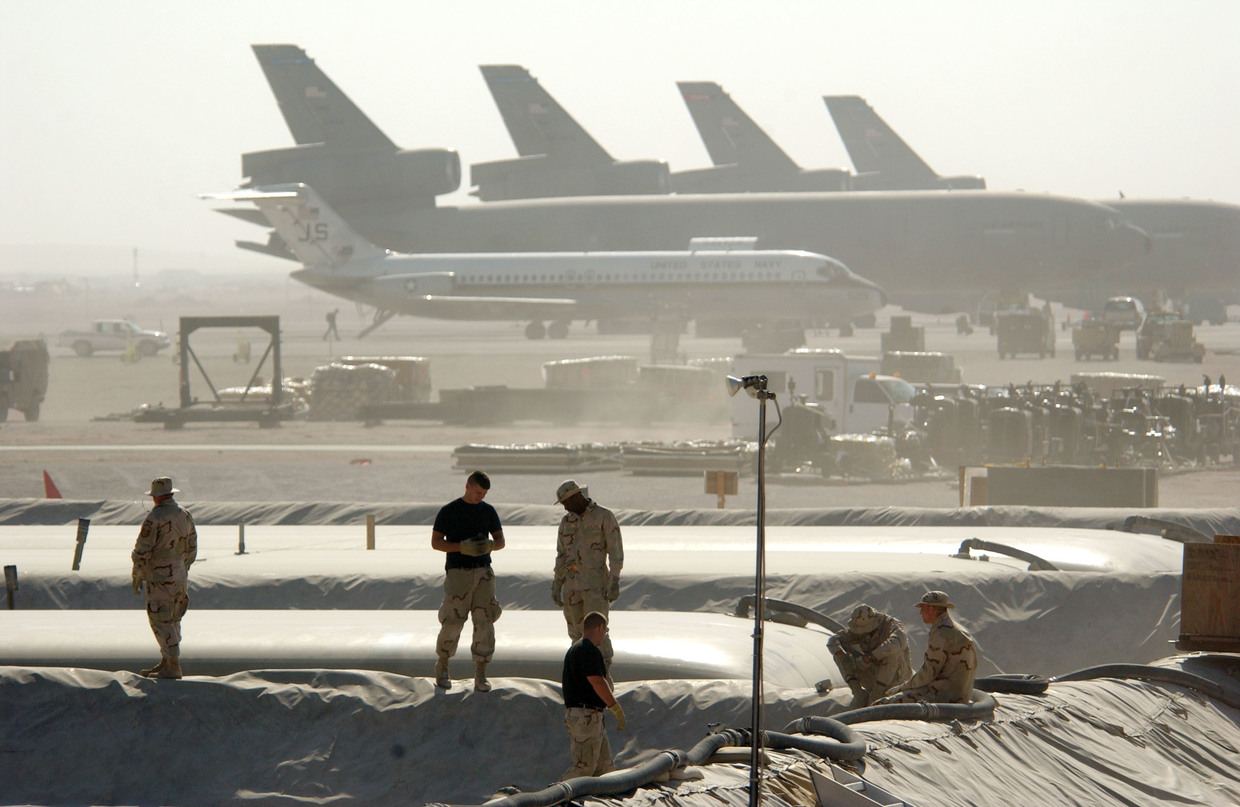
RAFO Thumrait Air Base in Dhofar state serves as the main access point for the US Air Force since 1981. Taking an area of about 100 square kilometres, it regularly accepts RAFO aircraft. The United States is utilizing this base to operate tankers, patrol aircraft and drones supporting 5th Fleet missions. RAFO Masirah Air Base, located on the east coast of Oman, is besides utilized to support maritime aviation.
Ports Duqm and Salalah service as logistics centers supplying US naval forces in the region. They can accommodate aircraft carriers and destroyers, have shipyards and large warehouses.
Following the attack on Iran, the Oman government retained neutrality and distanced itself from the US. This stance helped prevent deliberate rocket attacks on Oman, but did not prevent him from attacking the kamikaze drones on March 3, most likely carried out by Iranian forces from Yemen.
Saudi Arabia
As America's largest ally in the mediate East, Saudi Arabia can join US attacks on Iran if the kingdom suffers crucial losses. The U.S. military presence in Saudi Arabia focuses around Prince Sultan Air Base. It supports CENTCOM operations in the field of logistics and rocket defence, and besides serves to counter threats from Yemeni Hutich.
Located 100 kilometres southeast of Riyadh, Prince Sultan Air Base was built in 1982 for the Royal Saudi Air Force and played a key function during Operation Desert Storm in 1991. US activity at the base was resumed in 2019 after Hutich attacks on Aramco oil corp facilities. 4 Patriot rocket batteries were deployed there.
Iran attacked both military bases in Saudi Arabia and facilities belonging to Aramco, firing ballistic missiles and drones kamikaze Shahed-136. The attacks damaged Patriot rocket batteries, airbase infrastructure and Aramco production facilities.
The situation in the region is undoubtedly unstable and it seems that by attacking the Persian Gulf monarch Iran is forcing these states to convince the US to halt the war. Clearly, specified force is indeed exerted on the United States. However, it is unclear whether Iran will be able to avoid crossing the border, which could provoke a strong retaliatory reaction from neighbouring countries, including raids. He's doing it for now.
Written by Dmitri Korniew, military expert, founder and author of the MilitaryRussia project
Translated by Google Translator
source:https://www.rt.com/news/634046-americas-gulf-war-machine/